Wicker Furniture: Small-Room Material Guide
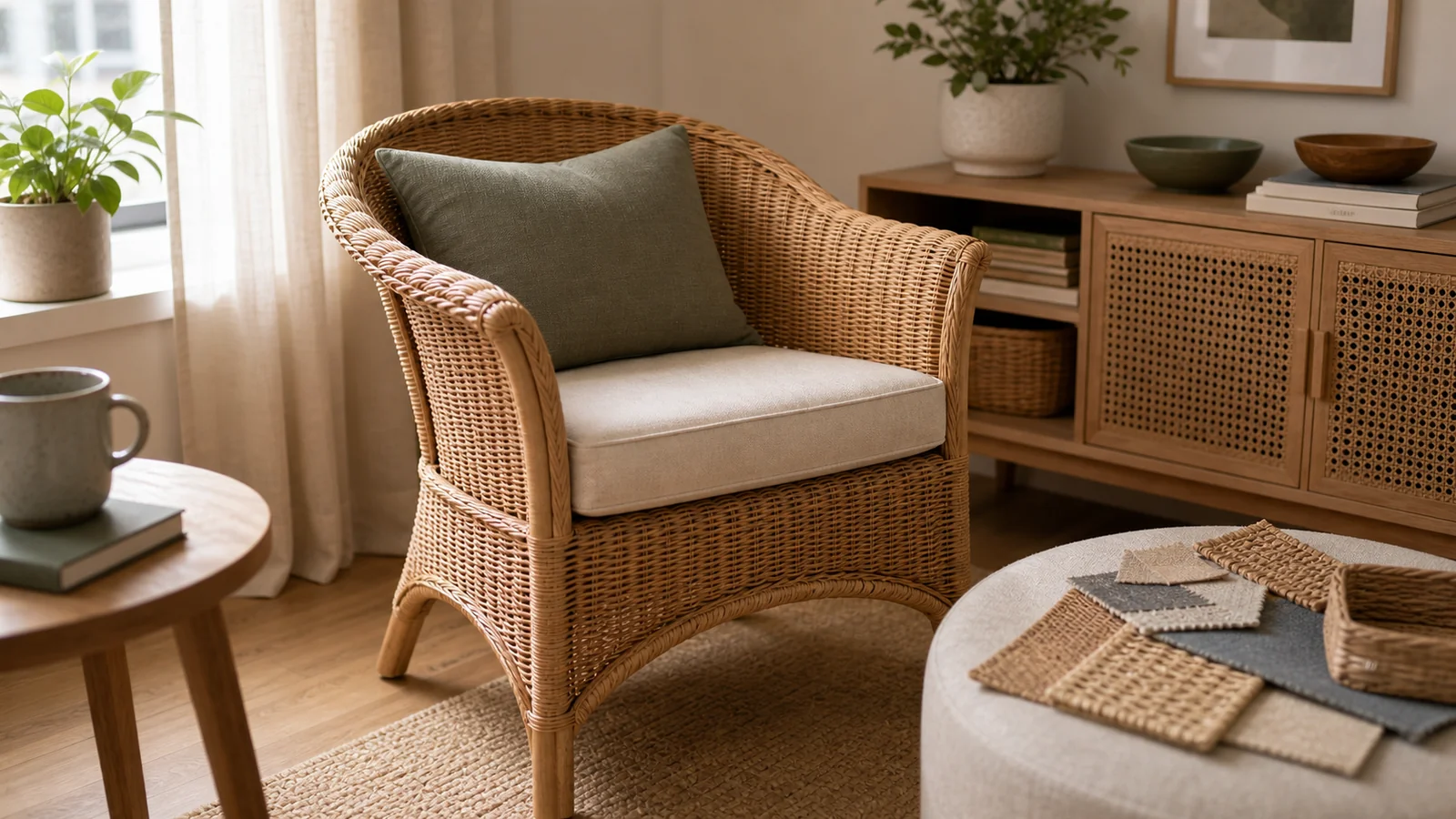
Wicker is a look, a technique, and a shopping shortcut
Wicker furniture can make a small room feel lighter, warmer, and more relaxed. The open weave adds texture without the weight of a solid block of wood or upholstery. A woven chair, bench, trunk, headboard, or side table can soften hard rental finishes and bring a tactile layer into a compact home.
The confusing part is the word itself. Wicker is commonly used as a furniture style, but it is also a weaving technique. The actual material may be rattan, cane, willow, bamboo, reed, seagrass, resin, plastic, or another flexible strand.
That distinction matters. Natural wicker and synthetic wicker can look similar in photos, but they do not behave the same indoors, outdoors, or under daily wear.
Wicker vs rattan vs cane vs resin
Before buying, sort the language. It helps you read listings with a calmer eye.
| Term | What it usually means | Small-room takeaway |
|---|---|---|
| Wicker | A woven construction or woven-furniture look | Ask what material is actually woven |
| Rattan | A natural vine-like palm used for frames, poles, and woven parts | Warm, lightweight, often best indoors or sheltered |
| Cane | The outer skin of rattan, often used in panels and chair seats | Airy and refined, but can puncture or sag if stressed |
| Resin wicker | Synthetic strands woven to mimic natural wicker | Often better for outdoor furniture and damp exposure |
| Willow, reed, bamboo, seagrass | Natural fibers used in woven furniture or baskets | Texture varies; care and strength vary too |
If a listing says only “wicker,” keep reading. The next lines should explain whether the piece is natural, synthetic, indoor, outdoor, or mixed-material. If the listing never tells you, treat that as a sign to ask questions or compare another piece.
Choose natural wicker when warmth matters most
Natural wicker can be beautiful in small rooms because it has shadow, variation, and handwoven character. It works especially well when the room already has plain walls, simple curtains, flat-pack storage, or metal rental fixtures that need softening.
Good places for natural wicker include:
- A bedroom chair used for clothes, reading, or quiet seating.
- A small entry bench under hooks.
- A woven trunk for throws.
- A cane-front cabinet.
- A side table beside a low sofa.
- A headboard in a calm bedroom.
Natural woven furniture needs a sensible setting. Too much moisture can weaken fibers, and too much direct sun can dry them. A natural wicker chair on a covered porch may be fine if the maker allows it, but an exposed balcony during rain is a different situation.
For indoor rooms, check whether the weave feels smooth, tight, and supported. Loose strands, sharp breaks, or crunchy dryness can turn a charming piece into a maintenance problem.
Choose resin wicker when exposure matters
Resin wicker, all-weather wicker, or synthetic wicker is often used for outdoor furniture because the woven strands are made from plastic-based material rather than natural fiber. It can be a better fit for balconies, patios, damp climates, and furniture that sees sun and rain.
That does not mean every resin wicker piece is equal. The frame matters. The strand thickness matters. The weave tightness matters. Cushion quality matters too.
Look for:
- A sturdy metal frame, often aluminum for outdoor use.
- Smooth woven strands without brittle cracking.
- Even tension across the seat and back.
- UV and weather information from the seller.
- Cushions made for outdoor use.
- Replaceable cushions or covers.
- A size that still leaves balcony paths open.
In small outdoor spaces, resin wicker can look bulky if the arms are thick and dark. Choose slimmer profiles, open bases, or lighter weave colors when the balcony is narrow.
Our wicker patio furniture guide goes deeper on outdoor use, cushions, frames, and weather exposure.
Use wicker as texture, not as a full-room theme
Wicker is strong visually. One woven piece can add warmth. Too many can make a small room feel like a sunroom set squeezed into an apartment.
In a compact living room, try one woven chair with a plain sofa. In a bedroom, try a cane-front nightstand instead of a full wicker bed, bench, hamper, and chair. In an entry, a woven basket may be enough if the bench and hooks are already textured.
Wicker pairs well with:
- Matte painted walls.
- Linen curtains.
- Cotton or wool rugs.
- Light oak, walnut, or painted wood.
- Quiet ceramics.
- Muted green, clay, cream, and blue-gray.
Be careful with too much contrast. Black wicker can be elegant, but a large black woven chair can feel busy in a pale room. Very orange natural wicker can clash with cool gray flooring. Bright white wicker can read sweet or coastal quickly unless the rest of the room is edited.
The softer approach is to let the weave be one layer among many, not the whole story.
Check scale through the open spaces
Wicker furniture often looks lighter than solid furniture because you can see through parts of it. That can help a small room. It can also hide real dimensions.
Measure the same way you would measure any furniture:
- Overall width.
- Overall depth.
- Seat height.
- Arm height.
- Back height.
- Leg spread.
- Clearance below the piece.
- Doorway and delivery path.
Then look at the negative space. A chair with open sides may feel visually light even if the footprint is generous. A woven trunk may look casual but still block a walkway. A cane-front cabinet may feel calmer than a solid door, but the cabinet depth still decides whether it fits.
If you need help setting limits, start with our room measuring guide. Wicker does not get a pass on scale just because it looks airy.
Sit, lean, and listen before buying secondhand
Vintage and secondhand wicker can be lovely, especially when you want character without a new-furniture feel. It also needs a careful check.
Inspect:
- Broken strands.
- Loose wrapping at joints.
- Soft or sagging seats.
- Cracks in curved arms or legs.
- Odor from damp storage.
- Flaking paint.
- Rust on metal frames.
- Wobble under normal sitting pressure.
Do not test fragile wicker roughly. Sit gently, lean back, and listen for creaking that sounds like cracking rather than normal movement. Check whether the seat needs a cushion to be comfortable and whether that cushion changes the height.
A beautiful vintage wicker chair is not a bargain if it needs repair you cannot source. If the piece is decorative, a little fragility may be acceptable. If it will be a daily dining chair, desk chair, or reading chair, structure matters more.
Think about cushions early
Many wicker chairs and sofas depend on cushions. Without them, the seat may feel hard, low, or uneven. With the wrong cushions, the piece may look puffy and take over the room.
Check:
- Seat depth with the back cushion in place.
- Cushion thickness.
- Whether the cushion ties attach neatly.
- Whether covers remove for cleaning.
- Whether the fabric suits indoor or outdoor use.
- Whether replacement cushions are standard or custom.
For natural wicker indoors, a simple linen, cotton, or textured neutral cushion often keeps the piece calm. For resin wicker outdoors, choose outdoor fabric and a fill that handles moisture. If the cushion is missing, price the replacement before buying the frame.
Our replacement outdoor cushion guide can help with measuring if the wicker piece will live outside.
Clean wicker according to material
Woven furniture collects dust in the gaps. That is part of the texture. It also means care should be gentle and regular.
For natural wicker, start dry. Use a soft brush, vacuum brush attachment, or dry cloth to remove dust. If a damp wipe is needed, use as little moisture as possible and let the piece dry fully before use. Avoid soaking natural wicker, pressure washing it, or trapping it in damp storage.
For resin wicker outdoors, cleaning can usually be more forgiving, but still follow the maker’s guidance. Mild soap, water, and a soft brush are common starting points. Avoid harsh abrasives that can scratch strands or dull the finish.
For painted wicker, be careful with flaking or older paint. Aggressive scrubbing can make the finish worse. If the paint may be old or unstable, pause before sanding or scraping and consider safer refinishing advice.
Care is not only about cleaning. Keep woven pieces away from constant dampness, excessive heat, and stress on one weak strand. Rotate cushions so the same seat does not compress unevenly every day.
Decide where wicker should not go
Wicker is not the best answer for every small room. Avoid it when the setting works against the material.
Be cautious with wicker:
- In bathrooms without excellent ventilation.
- On uncovered balconies if it is natural fiber.
- In dining spots with heavy spills and no cushion plan.
- In homes where pets chew woven edges.
- Where toddlers may pull loose strands.
- In rooms already full of basket texture, rattan, cane, and woven shades.
- Where the piece must support heavy daily use but looks fragile.
There is no shame in choosing a simpler upholstered, wood, or metal piece if it will serve the room better. Texture should support the home, not become another thing to manage.
A small-room wicker furniture checklist
Before buying wicker furniture, confirm:
- You know whether the piece is natural wicker, resin wicker, cane, rattan, or another material.
- The piece suits indoor, sheltered, or outdoor use as needed.
- The footprint fits the room and delivery path.
- The weave is tight, smooth, and supported.
- Cushions are comfortable, cleanable, and replaceable.
- The color works with nearby wood, textiles, and flooring.
- Care needs are realistic for your household.
- The room has enough plain surfaces around the texture.
Wicker furniture can be a gentle way to bring texture into a compact home. Choose it by material first, size second, and mood third. When the weave, frame, and care routine all make sense, wicker can feel light and useful rather than delicate or themed.
You might also like
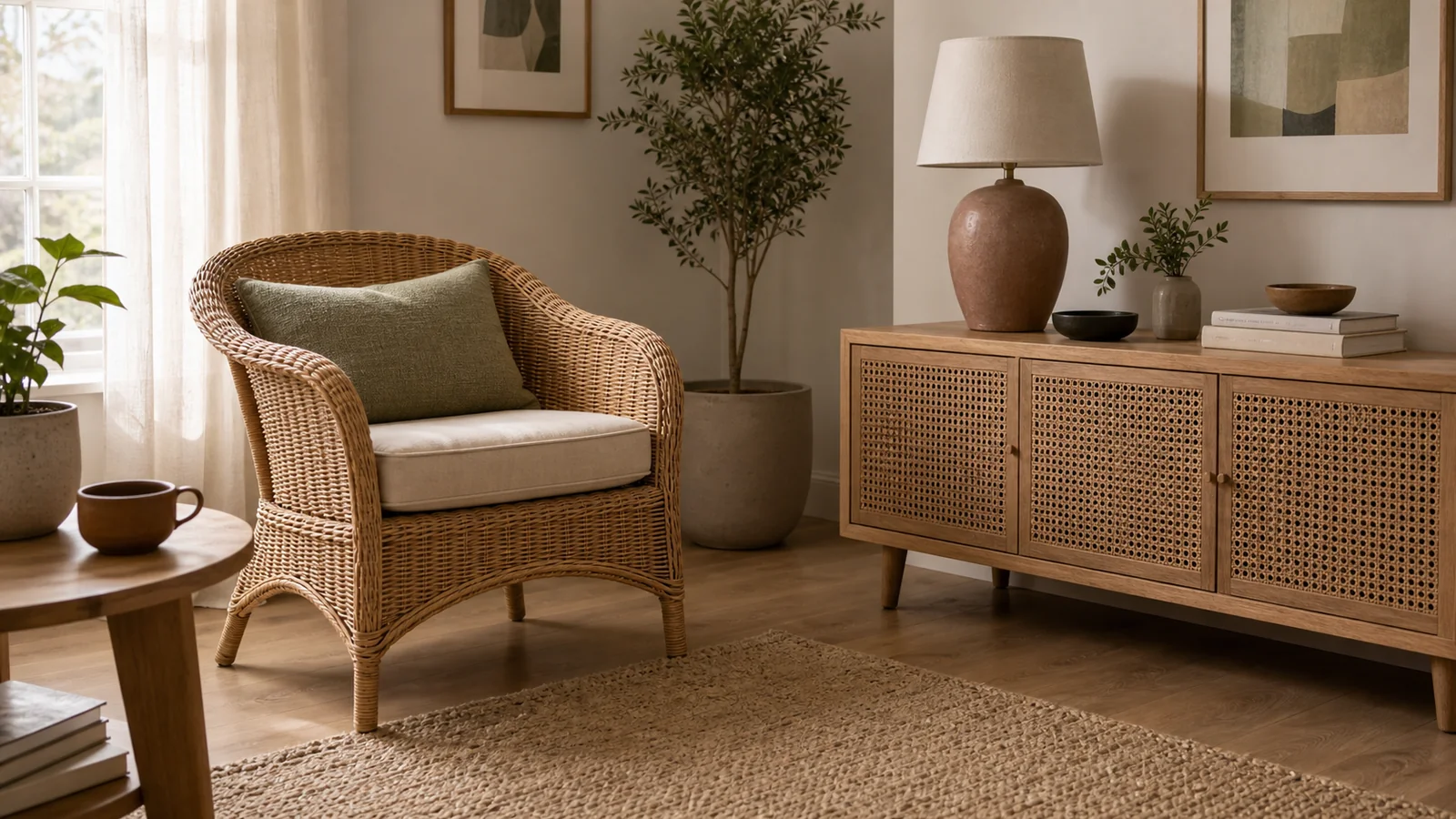
Rattan Furniture: Choose Texture Without Clutter
Use rattan furniture in small rooms by choosing the right material, scale, weave, and care routine for a lighter, warmer space.
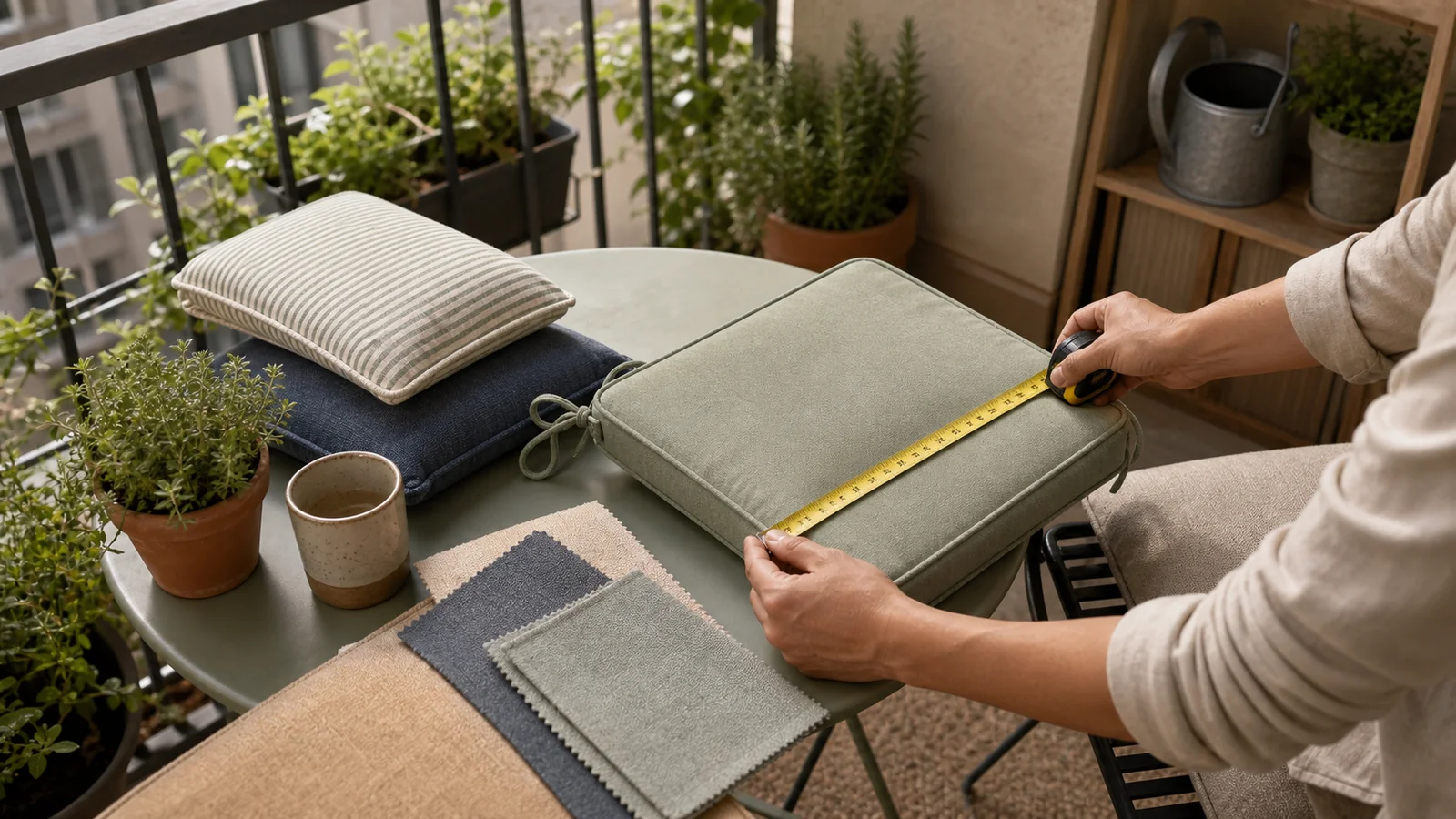
Replacement Cushions for Outdoor Furniture: Fit Guide
Measure replacement cushions for outdoor furniture by checking frame size, thickness, fabric, foam, ties, and storage.
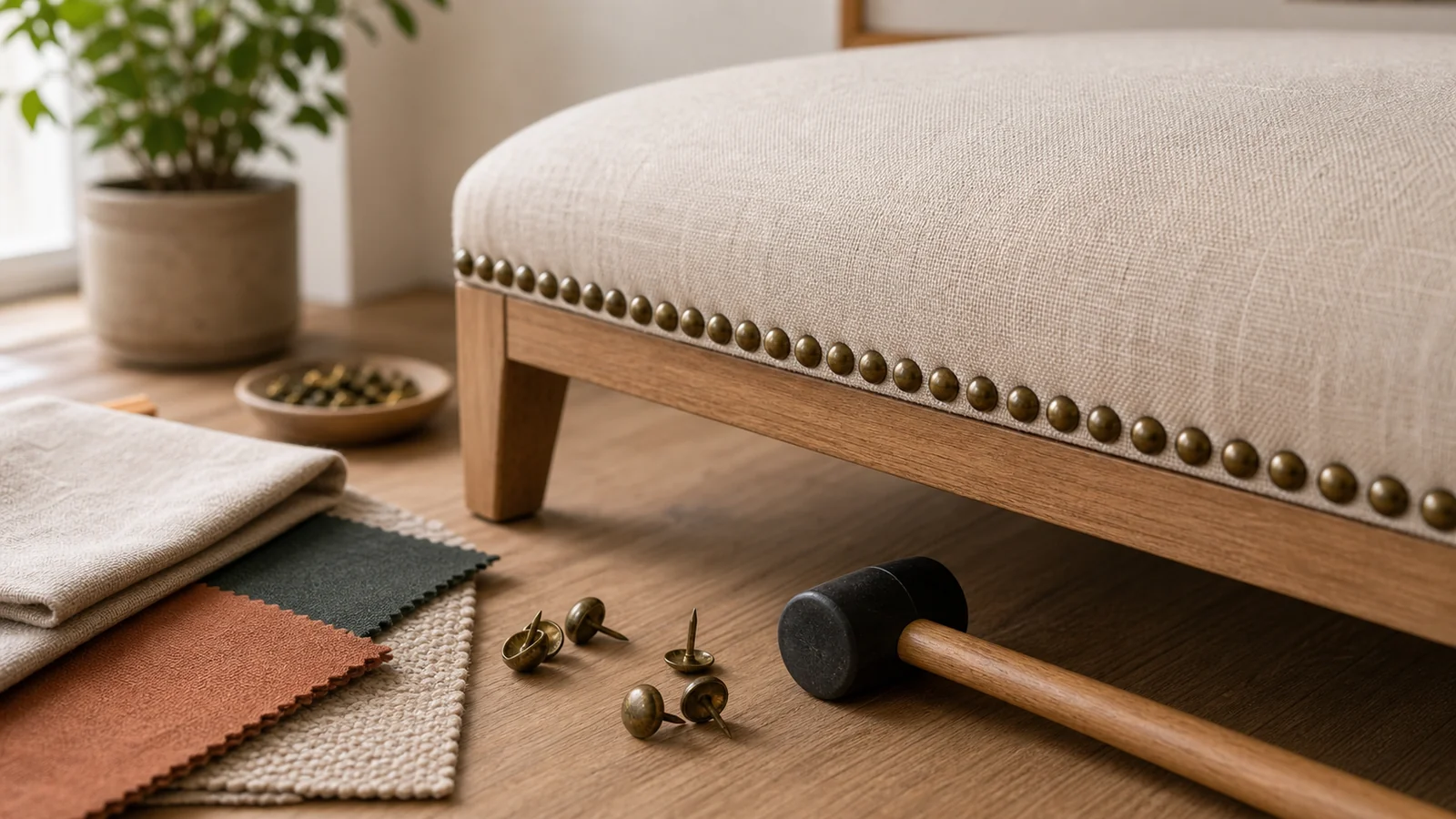
Nailhead Furniture: Use Trim Without Visual Noise
Use nailhead furniture trim carefully by checking scale, spacing, finish, upholstery, and when the detail feels too busy.