Replacement Cushions for Outdoor Furniture: Fit Guide
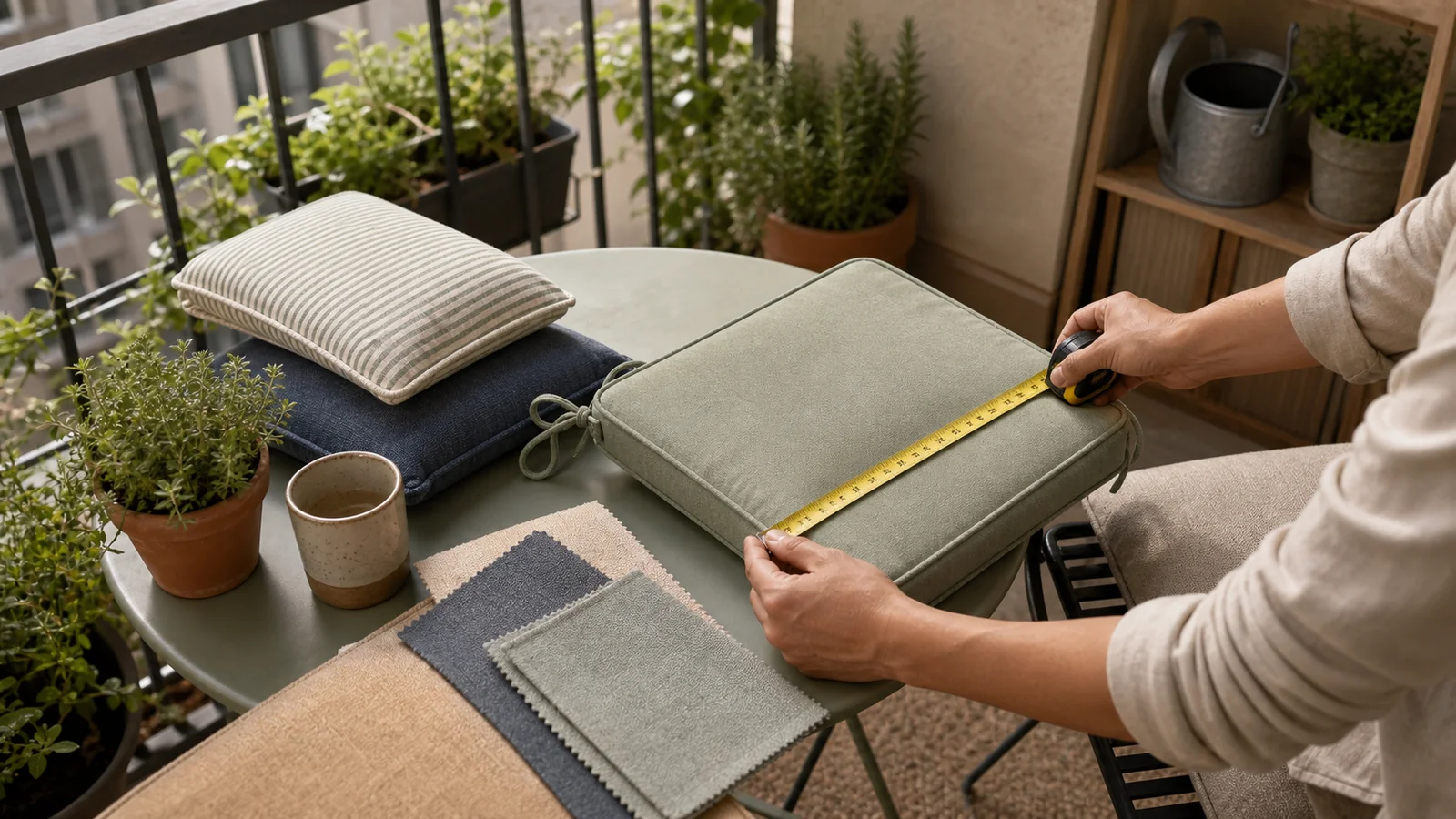
Replacing cushions is really a fit project
Replacement cushions for outdoor furniture can refresh a balcony, patio, porch, or small deck without replacing the whole set. They can also become frustrating if the new cushions slide, sit too high, hold water, or make a compact seating area feel bulky.
Treat the project like a quiet measuring job first and a color choice second. The best cushion is not simply the prettiest one. It is the one that fits the frame, feels comfortable, dries sensibly, and stores without taking over your home.
This guide walks through how to measure, compare materials, choose thickness, solve common fit problems, and care for replacement outdoor cushions in a small-space setting.
Step 1: Check whether the furniture is worth refreshing
Before measuring cushions, inspect the furniture frame. New cushions will not fix a chair that is unsafe, rusted through, cracked, warped, or too large for the balcony.
Look at:
- Chair legs and welds.
- Wicker or resin weave.
- Wood joints and screws.
- Seat support straps or slats.
- Back angle and arm stability.
- Rust, splinters, sharp edges, or broken cane.
- Whether the frame still fits your outdoor space.
If the frame is sound and still the right size, cushions are a sensible upgrade. If the frame wobbles, pinches, or no longer suits your layout, replacing cushions may only delay the better decision.
For small balconies, also ask whether the furniture folds, stacks, or stays out year-round. A deep cushion set can make a narrow chair feel luxurious, but it can also make storage harder when the weather turns.
Step 2: Gather the right measuring tools
Accurate measurements prevent most cushion mistakes. Use a rigid tape measure when possible because soft sewing tapes can bend and shorten measurements around frames.
Set up:
- A rigid tape measure.
- Paper or a notes app.
- A pencil.
- Painter’s tape for marking widths.
- A phone camera for frame photos.
- The old cushion, if it still has a useful shape.
Measure in daylight and take photos from the front, side, and top. If you are ordering online or asking for custom cushions, photos make it easier to compare seam placement, ties, back shape, and hinge points later.
Step 3: Measure the furniture frame, not only the old cushion
Old cushions can shrink, flatten, bulge, or stretch. If the current cushions fit badly, copying them will copy the problem. Measure the furniture frame as your main source, then compare the old cushion as a clue.
For a chair seat, measure:
| Measurement | How to take it |
|---|---|
| Seat width | Left to right across the sitting surface, between arms if there are arms |
| Seat depth | Front edge to the back where the seat meets the frame |
| Back width | Left to right across the back cushion area |
| Back height | Top of seat area to top of back frame |
| Cushion thickness | Height you want the seat to add |
For a sofa or loveseat, measure the total sitting width between the arms, then decide whether the piece needs one long cushion, two cushions, or three cushions. Divide the usable width by the number of cushions, and remember that small gaps can look intentional while crushed cushions look forced.
For a chaise, measure the full length and note the hinge or fold point. A chaise cushion with the wrong hinge location will never sit neatly, even if the total length looks close.
Step 4: Decide how thick the seat should be
Thickness affects comfort, height, and proportion. A thicker cushion can make an old metal or wicker frame feel more forgiving. It can also raise the seat too high, making your feet hover or the arms feel too low.
Think about:
- Existing seat height without a cushion.
- Who uses the chair most.
- Whether the chair sits at a dining table.
- Whether back cushions will take up seat depth.
- How much the cushion compresses.
- Whether the frame has sagging straps or a hard base.
Dining chairs usually need a lower, firmer cushion than lounge chairs. Deep lounge chairs may need both a seat cushion and a back cushion so the sitter is not leaning into a hard frame. A balcony bench may feel better with a firm base cushion and loose pillows rather than a very thick custom pad.
If the frame is already high, choose a slimmer cushion. If the frame is low and hard, a thicker cushion may help, but confirm that the finished height still feels natural.
Step 5: Choose fabric for exposure, not just color
Outdoor cushion fabric needs to handle sun, moisture, spills, skin oils, pollen, and storage. Common options include solution-dyed acrylic, olefin, polyester outdoor fabric, and coated or treated blends. Product names vary, so read the care and performance notes instead of assuming every outdoor label means the same thing.
Compare:
- Fade resistance.
- Water resistance or water repellency.
- Mildew resistance.
- Whether covers remove for cleaning.
- Whether the fabric feels rough, slick, or soft.
- Whether the color hides dust and pollen.
- How the pattern looks in a small outdoor area.
Light cushions can make a tight balcony feel calmer, but they show dirt sooner. Dark cushions may hide marks but can heat up and visually shrink the space. Mid-tone sage, blue-gray, clay, oat, taupe, stripe, or small-scale pattern often works well because it adds softness without turning the furniture into one heavy block.
If your balcony gets harsh afternoon sun, prioritize fade resistance. If the cushions sit under a covered porch, comfort and texture can carry more weight. If they are near a pool, rain, or damp garden wall, drying speed matters.
Step 6: Look inside the cushion
The cover matters, but the foam or fill decides how the cushion behaves after rain and repeated sitting. Many replacement cushions use polyester fiber, foam, or layered fills. Some outdoor inserts use quick-drying or reticulated foam that allows more air and water movement than standard indoor foam.
Ask:
- Is the insert made for outdoor use?
- Does water drain, or will it sit inside?
- Is the cushion firm enough for the frame?
- Does the back cushion need softer fill than the seat?
- Can the cover be removed from the insert?
- Are replacement inserts available later?
A cushion that feels plush indoors may stay damp outdoors. A very firm quick-dry insert may be practical for exposed seating but too stiff for lounging. Match the cushion core to your actual weather routine.
Step 7: Check ties, tabs, and movement
Small outdoor spaces often have wind, narrow paths, and furniture that gets moved often. Cushion movement becomes annoying quickly.
Look for:
- Ties that align with the frame.
- Velcro tabs or straps where ties would show.
- Non-slip backing for smooth metal seats.
- Enough cushion weight to stay put.
- Seat depth that does not push the cushion forward.
- Back cushions that do not tip over every time you stand.
If a cushion is almost the right size but slides forward, the problem may be depth, fabric slickness, or missing ties. If a back cushion falls, it may need a firmer insert, a taller frame, or discreet ties. Avoid adding complicated fixes unless the frame is worth keeping.
Step 8: Solve common replacement cushion problems
Most cushion issues come from one of four things: wrong size, wrong thickness, wrong material, or wrong expectations.
If the cushion overhangs too much, recheck whether you measured the old cushion instead of the frame. A small front overhang can be comfortable; a large one can wrinkle, trap water, and look sloppy.
If the cushion is too narrow, it may slide or expose the frame. On a sofa, two slightly wider cushions may work better than three skimpy ones.
If the chair feels too upright, the back cushion may be too thick. Back cushions take up seat depth, so a deep seat can turn shallow once the back cushion is added.
If the cushions smell musty, dry slowly, or feel heavy after rain, storage and insert material may be the issue. Bring cushions inside during long wet stretches when you can, and avoid sealing damp cushions inside a box.
If the color looks harsh outside, compare it at the time of day you use the space. Outdoor light can make bright white glare and dark colors feel flatter.
Step 9: Plan storage before ordering a full set
Replacement cushions can take up more indoor space than expected. A small balcony sofa, two chairs, and a chaise can create a pile of bulky fabric that has nowhere graceful to go.
Before buying, decide:
- Where cushions go during storms.
- Where they go in winter.
- Whether they must fit in a deck box.
- Whether your building allows balcony storage boxes.
- Whether covers need to dry before storage.
- Whether you can carry them through narrow doors.
If storage is limited, choose fewer cushions, slimmer profiles, or pieces you can leave out under a breathable furniture cover. For renters, avoid any system that requires drilling, permanent hooks, or outdoor storage that breaks building rules.
Our outdoor furniture store guide has more small-balcony questions to ask before buying large outdoor pieces.
Step 10: Keep the new cushions easier to live with
Once the cushions arrive, test them before removing tags if returns depend on condition. Place every cushion on the frame, sit down, stand up, and move around the outdoor area. Check that doors still open and that the furniture does not crowd the path.
For care:
- Brush off loose dirt before it settles.
- Blot spills quickly.
- Follow the fabric label before using cleaners.
- Let cushions dry fully before storage.
- Rotate cushions if one side gets more sun.
- Store them in a dry, ventilated place when not in use.
- Do not trap damp cushions under an airtight cover.
Outdoor cushions do not need fussy treatment, but they do need a routine. A little maintenance protects both comfort and color.
A replacement cushion checklist
Before ordering replacement cushions for outdoor furniture, confirm:
- The frame is sound and worth keeping.
- You measured the frame, not only the old cushion.
- Width, depth, back height, and thickness are recorded.
- The fabric suits your sun, rain, and cleaning routine.
- The insert is appropriate for outdoor use.
- Ties or tabs match the frame.
- The cushion height still feels comfortable.
- Storage is realistic for your home.
Replacement cushions can make outdoor furniture feel new without buying a full set. The calmer choice is the cushion that fits the frame, dries in your conditions, and stores without stress. Measure slowly, choose fabric honestly, and let the outdoor room stay soft without becoming harder to manage.
You might also like
Wicker Furniture: Small-Room Material Guide
Choose wicker furniture for small rooms by comparing natural wicker, resin wicker, scale, cushions, care, and texture.
Rattan Furniture: Choose Texture Without Clutter
Use rattan furniture in small rooms by choosing the right material, scale, weave, and care routine for a lighter, warmer space.
Nailhead Furniture: Use Trim Without Visual Noise
Use nailhead furniture trim carefully by checking scale, spacing, finish, upholstery, and when the detail feels too busy.