Wicker Patio Furniture for Small Balconies
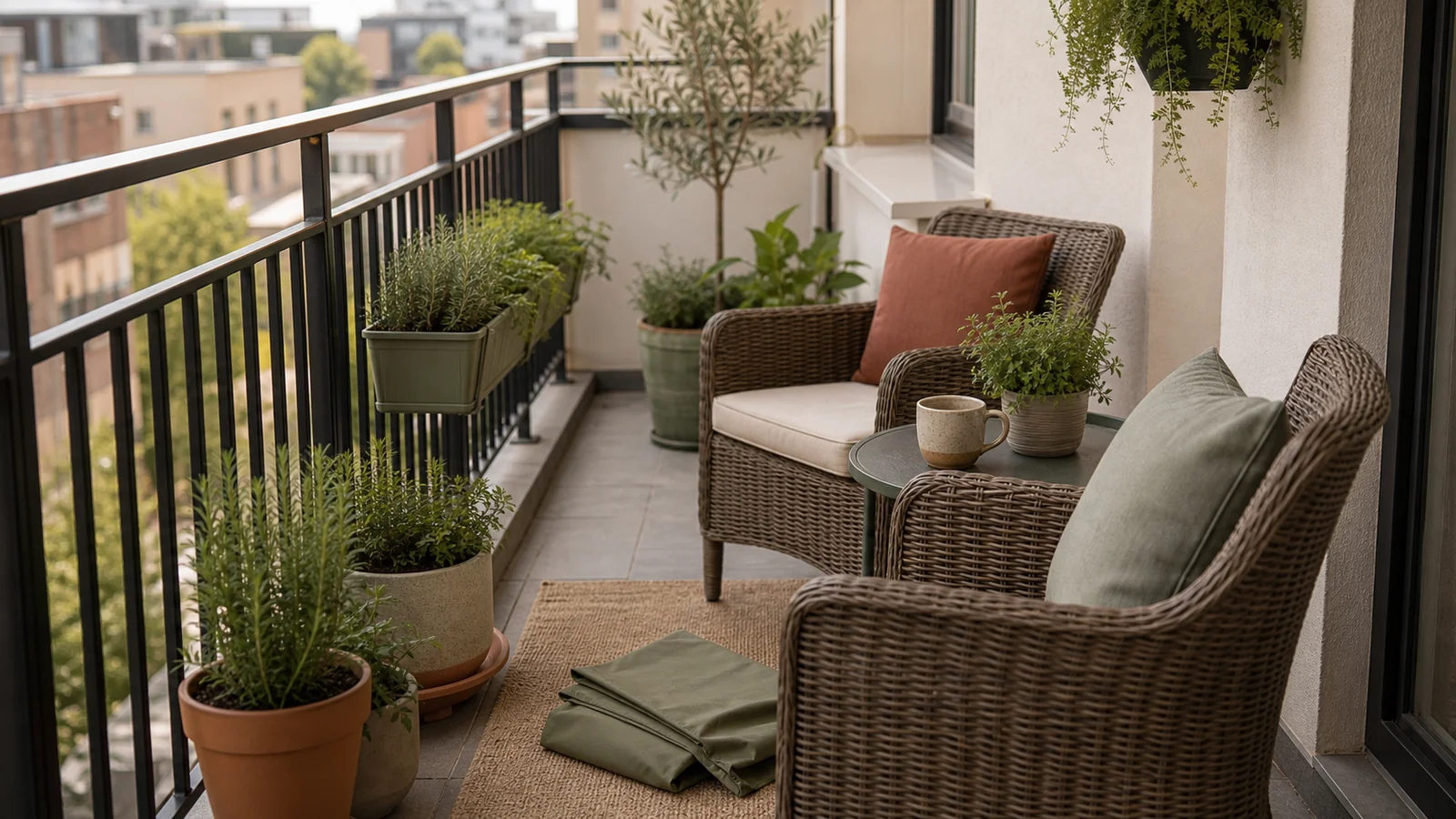
Treat wicker as texture first, then furniture
Wicker patio furniture looks soft, relaxed, and easy to live with. That is why it works so well on balconies and small patios. The woven texture breaks up hard outdoor surfaces, cushions add comfort, and the whole space can feel more like a room than a storage ledge.
The word wicker can also be confusing. Wicker is the woven construction, not one single material. Patio pieces may be made from natural rattan, willow, cane, resin wicker, PE wicker, or other synthetic fibers woven over metal frames. For an outdoor space, that difference matters more than the style name.
If you are shopping broadly, our outdoor furniture store guide covers the first pass. This guide focuses on wicker patio furniture and the small details that decide whether it lasts.
Choose the material for your exposure
Start with where the furniture will actually live. A covered porch, glassed-in balcony, sunny deck, damp courtyard, and open rooftop all ask different things from wicker.
Natural wicker and natural rattan can be beautiful, but they are better in protected spaces. Too much moisture can cause swelling, mildew, loosened joints, or cracking. Direct sun can dry fibers over time. If you want the look outside year-round, synthetic wicker is usually more practical.
For small balconies, look for:
- Resin or PE wicker listed for outdoor use.
- UV-resistant wording when the balcony gets strong sun.
- Powder-coated aluminum or rust-resistant metal frames.
- Smooth weave with no sharp plastic ends.
- Cushions with outdoor fabric and removable covers when possible.
Avoid using indoor wicker outdoors just because the balcony is small. A compact space does not protect furniture from rain, humidity, or sun.
Measure the balcony like a room with exits
Wicker patio furniture is often sold in sets, and sets can be tempting. A loveseat, two chairs, and a table look tidy online. On a real balcony, the same set may block the door, crowd the railing, and leave no place to stand with a watering can.
Measure the full balcony, then subtract the unusable space. Leave room for the door swing, sliding door track, planter access, wall-mounted fixtures, and any building rules about clearance. If the balcony is narrow, chair depth matters more than chair width. Deep lounge chairs may feel luxurious until knees hit the railing.
For a compact balcony, these layouts usually work better than a full conversation set:
| Balcony shape | Better wicker option | Why it works |
|---|---|---|
| Long and narrow | Two upright chairs plus small table | Keeps the path open |
| Square | Two low lounge chairs angled inward | Feels social without a bulky sofa |
| Very shallow | One chair and a stool | Leaves room to step outside |
| Shared with plants | Bench with open legs | Allows baskets or planters below |
Before ordering, mark the footprint with painter’s tape or cardboard. Then open the balcony door and walk the route.
Check the frame, not only the weave
The weave gives wicker patio furniture its look, but the frame gives it strength. A weak frame can make a chair wobble even when the wicker still looks fine. In a small space, where furniture is shifted often for cleaning, plants, and seasonal storage, stability matters.
If you can inspect the piece in person, lift one side gently. It should feel stable, not flimsy or twisted. Look underneath for frame material, weld quality, loose staples, cracked weaving, uneven feet, and sharp ends. Sit in the chair and shift your weight. Listen for creaks and check whether the arms flex too much.
Online, read the specifications carefully. Look for total dimensions, seat height, seat depth, weight capacity, frame material, cushion thickness, and whether assembly is required. A pretty product photo is not enough.
Plan where the cushions will go
Wicker chairs often depend on cushions for comfort. Cushions also create the biggest storage problem. If they stay outside through rain, they may hold moisture, collect pollen, fade, or develop odors. If they come inside every night, they need a real landing place.
Before buying a cushioned wicker set, decide:
- Can the cushions fit in a deck box or indoor closet?
- Are the covers removable?
- What does the care label allow?
- Will the cushions dry fully after rain?
- Is the fabric light enough to carry easily?
For renters and apartment dwellers, thinner cushions can be more practical than oversized plush ones. They may not look as resort-like, but they are easier to move, store, clean, and replace.
Match the style to the view from inside
Small outdoor spaces are often seen more from inside than outside. Your wicker patio furniture becomes part of the living room view, bedroom view, or kitchen view. Choose a color and shape that supports the interior instead of fighting it.
Natural tan wicker feels warm and relaxed. Gray wicker can look calm, but some cool grays feel flat against warm brick or beige siding. Black wicker can be crisp and modern, though it may feel visually heavy on a tiny balcony. White or pale wicker can look airy, but it shows dirt faster and may glare in bright sun.
Soft Room Edit usually prefers woven texture with restrained contrast: muted cushions, one small outdoor rug, a simple side table, and a few plants. Let the wicker add texture, then keep the styling spare.
Care for natural and synthetic wicker differently
Care instructions depend on the material. Synthetic wicker is usually easier outside. Natural wicker needs a lighter touch.
For synthetic outdoor wicker, a soft brush, mild soap, water, and thorough drying are usually enough for routine cleaning. Avoid pressure washers, harsh solvents, and abrasive scrubbers that can damage the weave or finish. Check the manufacturer’s care instructions before using a hose.
For natural wicker, avoid soaking. Use a vacuum brush or dry cloth first, then a lightly damp cloth if needed. Let it dry completely before sitting on it or storing it. Natural fibers can weaken when kept wet.
Cushions need their own care. Brush off debris, spot clean early, and dry fully before storage. If covers are removable, follow the label rather than assuming they can go through a normal hot wash and dryer cycle.
Know when wicker is not the right choice
Wicker patio furniture is not perfect for every small outdoor space. If your balcony gets harsh sun all day, cheap synthetic wicker can fade or become brittle. If the space is very windy, lightweight chairs may need to be stored or secured. If rain blows sideways onto the balcony, cushions may become a constant chore.
In those cases, compare wicker with powder-coated metal, folding wood, or mixed-material pieces. Wicker is worth choosing when you want texture, comfort, and a softer room-like feeling. It is less ideal when you need the lightest folding furniture or the lowest maintenance surface.
A calm buying checklist
Before you buy wicker patio furniture, confirm the material, frame, cushion care, measurements, and storage plan. Then look at the balcony from inside your home. If the furniture leaves a clear path, supports the view, and can handle your weather, it has a much better chance of staying useful.
For small balconies, the best wicker choice is usually not the largest set. It is the simplest arrangement you will actually maintain: one or two comfortable seats, a modest table, and enough open space to step outside without moving everything first.
You might also like
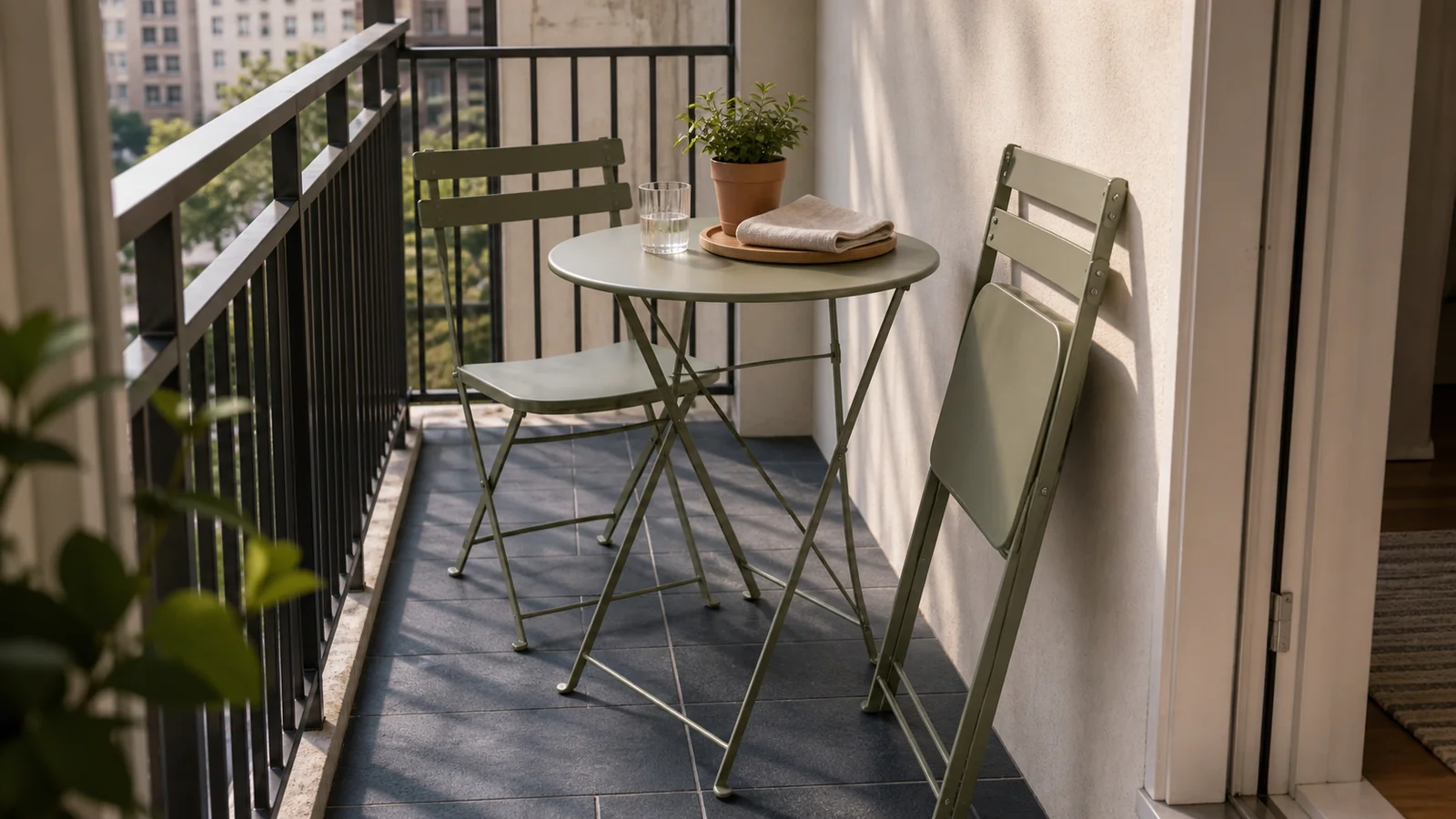
Aluminum Patio Furniture for Small Balconies
Choose aluminum patio furniture by checking coating, weight, folding options, comfort, wind exposure, and cushion care.
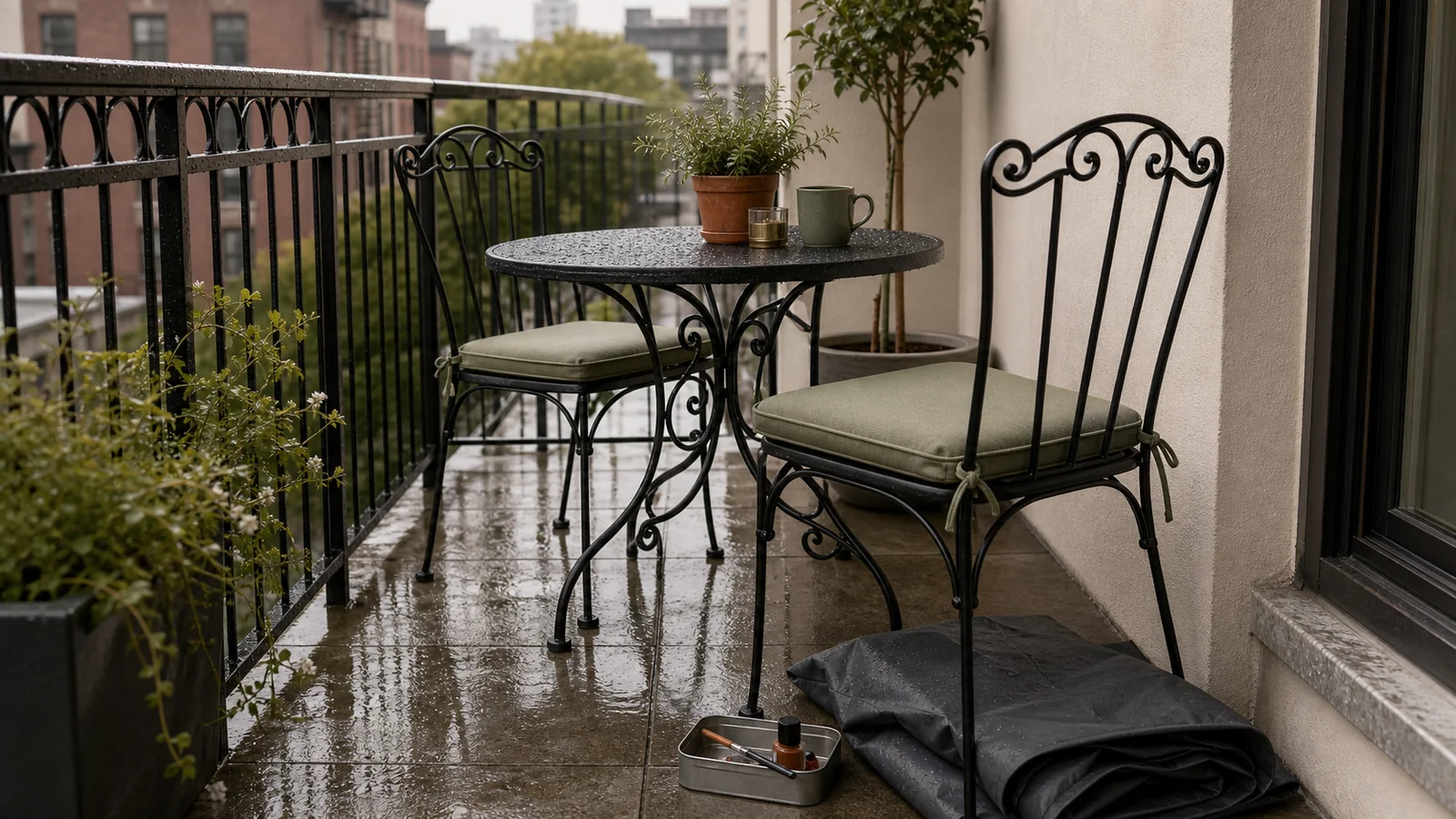
Wrought Iron Patio Furniture for Small Balconies
Choose wrought iron patio furniture by checking weight, rust protection, cushion comfort, balcony limits, and seasonal care.
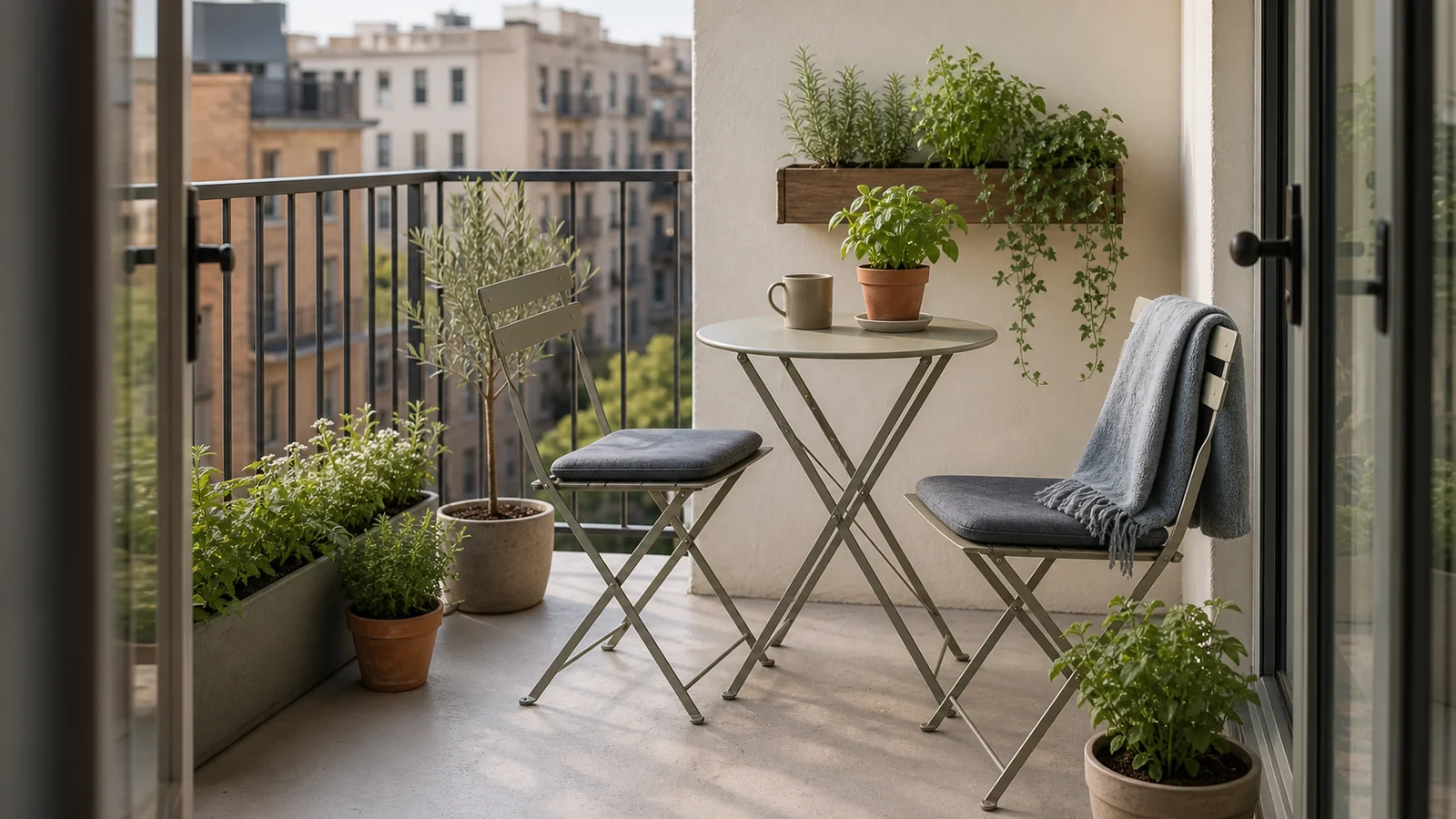
Outdoor Furniture Store Guide for Small Balconies
Shop outdoor furniture stores with a renter-friendly checklist for balcony size, weather, storage, comfort, and delivery.