Rattan Furniture: Choose Texture Without Clutter
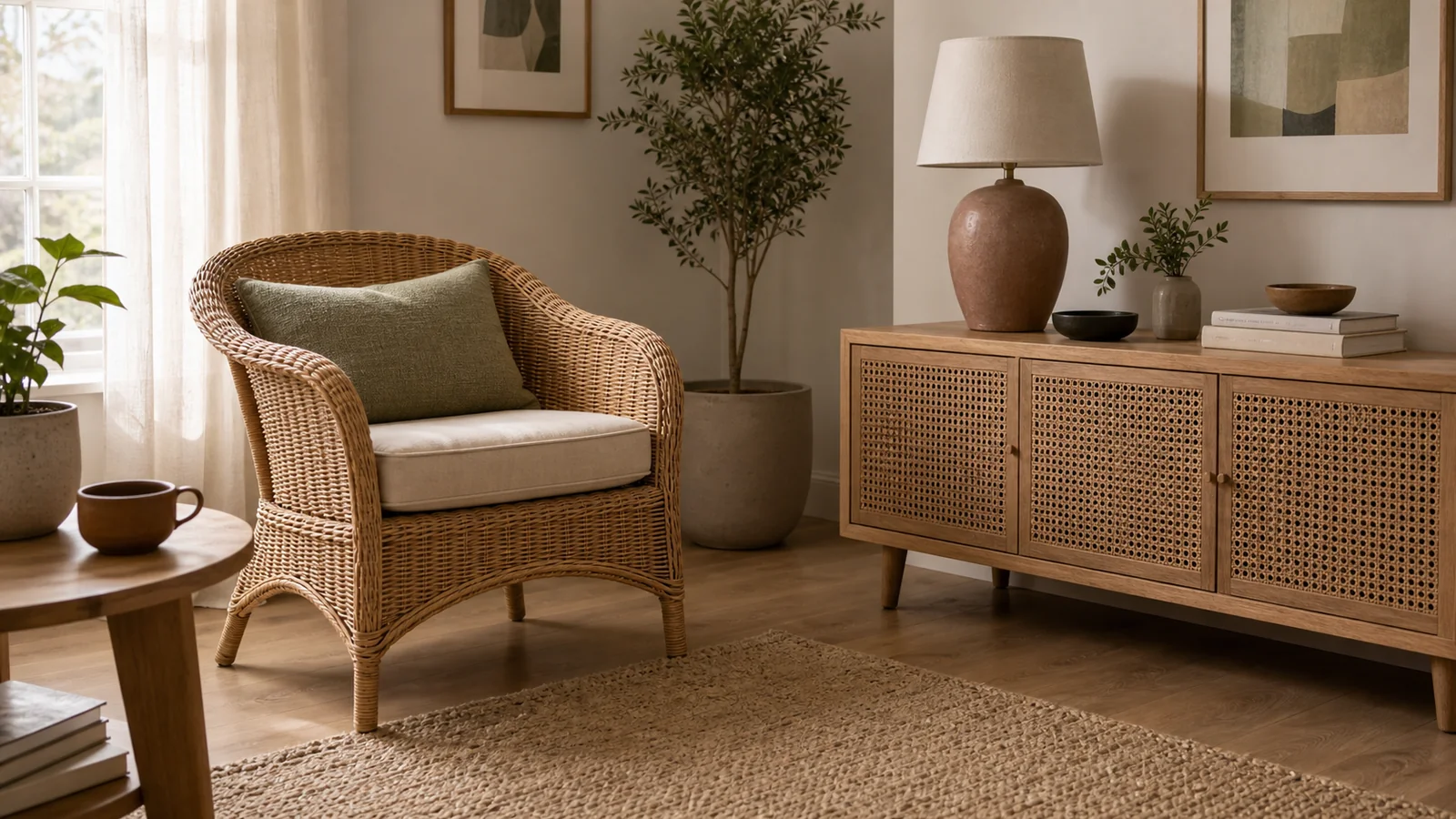
Let rattan add air, not clutter
Rattan furniture can make a small room feel warmer without making it feel heavy. The woven texture brings movement, the natural color softens plain walls, and many rattan pieces have open frames that let light pass through. That is why a rattan chair, cabinet front, side table, or headboard can work so well in apartments.
The risk is using too much of it. A room filled with woven chairs, baskets, pendant shades, and cane doors can start to feel busy, especially when the floor plan is already tight. Rattan is best in small spaces when it acts as a texture layer, not a theme.
Start by understanding what the material actually is, then choose one or two pieces that make the room lighter and more useful.
Rattan vs wicker vs cane vs bamboo
Shopping pages often use rattan, wicker, cane, and bamboo as if they mean the same thing. They do not. The differences affect strength, care, and where the piece belongs.
| Term | What it means | Why it matters |
|---|---|---|
| Rattan | A flexible vine-like palm used for furniture frames and weaving | Strong, lightweight, and natural, but not ideal for constant wet weather |
| Wicker | A weaving method, not one material | Wicker furniture may be rattan, cane, willow, reed, or synthetic fiber |
| Cane | The outer bark of rattan, often woven into chair backs and cabinet fronts | Finer, flatter texture with an airy look |
| Bamboo | A hollow grass with a different structure | Similar casual look, but different flexibility and construction |
| Synthetic rattan | Plastic or resin fiber woven to look like natural rattan | More practical outdoors when the frame is also weather-ready |
For indoor small rooms, natural rattan and cane can be beautiful. For balconies, patios, damp porches, or open outdoor spaces, synthetic wicker over a weather-resistant frame is usually easier to maintain.
If your search is specifically outdoor seating, our wicker patio furniture guide goes deeper on balcony exposure and cushion storage.
Decide whether the piece is indoor or outdoor
Natural rattan furniture is not the same as all-weather patio furniture. It can tolerate normal indoor life, but repeated rain, dampness, harsh sun, and big humidity swings can weaken the weave, dry the fibers, loosen joints, or lead to mildew.
Use natural rattan indoors or in a protected porch where it is not soaked by weather. Use synthetic wicker or synthetic rattan outside, especially when the piece will stay on a balcony through changing seasons. The frame matters too. A woven outdoor chair still needs a frame that resists rust, swelling, or warping.
For small-space shoppers, the indoor/outdoor decision affects more than durability. Outdoor pieces often have deeper seats, thicker cushions, and bulkier frames. They may be too large or casual for a compact living room. Indoor rattan pieces tend to be lighter and more decorative, but they may not survive outside.
Choose the right kind of rattan piece
Rattan works best when the piece solves a real room need. In a small home, that usually means one useful item rather than a full set.
Good small-room choices include:
- A rattan or cane side chair that adds texture without blocking light.
- A cane-front cabinet that hides clutter while keeping the room airy.
- A small rattan side table beside a reading chair.
- A rattan headboard that warms a plain bedroom wall.
- A woven bench at the end of a bed or in an entry.
- A compact rattan shelf for books, baskets, or folded textiles.
Be careful with full rattan dining sets, oversized peacock chairs, deep lounge chairs, and large woven sofas unless the room has enough open floor around them. Their frames may look light, but the shapes can still take up a lot of physical space.
Inspect the frame, weave, and joints
Rattan furniture should feel light, not fragile. When you can inspect a piece in person, look beyond the color.
Check:
- Tight, even weaving with no broken strands.
- Smooth edges where your hands, clothing, or cushions will touch.
- Wrapped joints that feel secure, not loose or cracked.
- Legs that sit evenly on the floor.
- A frame that does not twist when lifted gently.
- Seat support that feels firm enough for daily use.
For cane panels, look for sagging, holes, snapped strands, or large gaps near the frame. For secondhand rattan, sniff for mustiness and check the underside. A little patina can be charming. Damp odor, dark mildew spots, or brittle cracking can mean more work than the piece is worth.
If you are considering an older piece, our vintage furniture guide has a useful inspection checklist for structure, finish, and repairs.
Pair rattan with calmer materials
Rattan already brings pattern through the weave. Pair it with calmer surrounding materials so the room stays soft rather than busy.
Try:
| Rattan piece | Calm pairing |
|---|---|
| Cane-front cabinet | Plain wall, ceramic lamp, simple art |
| Rattan chair | Linen cushion, solid rug, quiet side table |
| Rattan headboard | Smooth bedding, shaded lamp, minimal pillows |
| Woven bench | Flat-weave rug, closed storage, soft throw |
| Rattan side table | Upholstered chair, matte tray, small plant |
Avoid scattering many small woven pieces across the room. One rattan chair plus one woven basket may feel intentional. Four baskets, a rattan lamp, a cane console, and a wicker chair can make the eye jump around.
Use contrast gently. Rattan looks especially good beside smooth upholstery, painted wood, matte ceramics, linen, wool, and quiet metals. It can feel too themed when paired only with coastal blue, shells, tropical prints, and other obvious vacation cues.
Use light finishes to open the room
Natural rattan often comes in honey, tan, blonde, warm brown, or darker stained finishes. In small rooms, lighter and medium tones usually feel more open. They reflect more light and let the weave read as texture instead of mass.
Darker rattan can still work, especially in a calm room with pale walls and good daylight. Use it as an accent rather than the dominant furniture tone. A dark cane cabinet may look beautiful against warm white walls, but a dark rattan sofa, dark rug, and dark side tables can make a compact room feel boxed in.
If your room already has oak, walnut, black metal, or painted furniture, compare undertones. Rattan does not need to match every wood tone, but it should feel related. A warm honey chair beside gray laminate and cool white walls may need a clay pillow, warm lamp, or natural rug to bridge the gap.
Care for rattan gently
Rattan furniture does not need fussy care, but it does need the right kind of care. Dust settles in the weave, direct sun can dry natural fibers, and too much water can cause swelling or loosened joints.
For routine care:
- Dust with a soft cloth, dry brush, or vacuum brush attachment.
- Wipe spills quickly with a lightly damp cloth.
- Avoid soaking natural rattan.
- Let damp areas dry fully before use.
- Keep pieces away from strong direct sun when possible.
- Rotate chairs or headboards if one side gets more light.
Do not blast natural rattan with a hose or pressure washer. That treatment is too harsh for many natural woven pieces. If a piece is musty or moldy, clean cautiously, dry it thoroughly, and consider whether it belongs in a drier place.
When synthetic rattan makes more sense
Synthetic rattan is not automatically worse. It can be the better choice when the piece lives outdoors, gets frequent spills, or needs easier cleaning. The key is to judge the whole piece, not just the woven fiber.
Look for a weather-appropriate frame, smooth weaving, comfortable cushions, realistic dimensions, and a finish that does not look too glossy indoors. Some synthetic pieces are designed clearly for patios and may feel awkward in a living room. Others work well in sunrooms, balconies, or casual dining corners.
For renters, synthetic rattan can also be useful because it is often lighter to move. Just make sure the shape is not too deep for the room and that the cushions have a place to go when not in use.
A quiet way to use rattan furniture
Rattan furniture works best in a small home when it brings texture, air, and warmth without taking over the whole room. Choose the material for the location, inspect the weave and frame, and let one strong piece do most of the work.
If the room already feels visually busy, choose cane-front storage or a single side chair. If the room feels flat, add rattan beside smooth upholstery and soft textiles. The goal is a room that feels layered and lived in, not a room that looks as if every object came from the same woven set.
You might also like
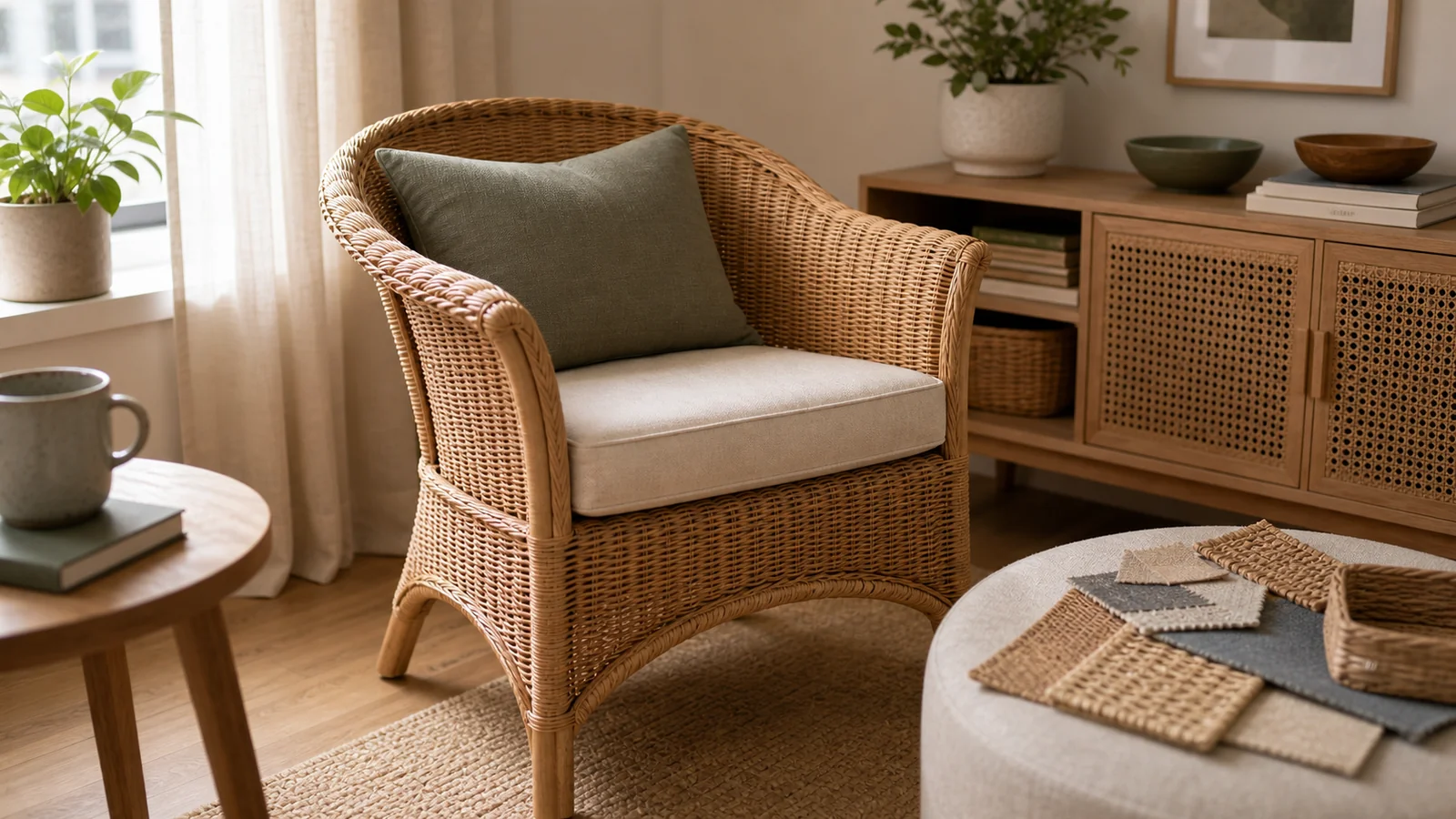
Wicker Furniture: Small-Room Material Guide
Choose wicker furniture for small rooms by comparing natural wicker, resin wicker, scale, cushions, care, and texture.
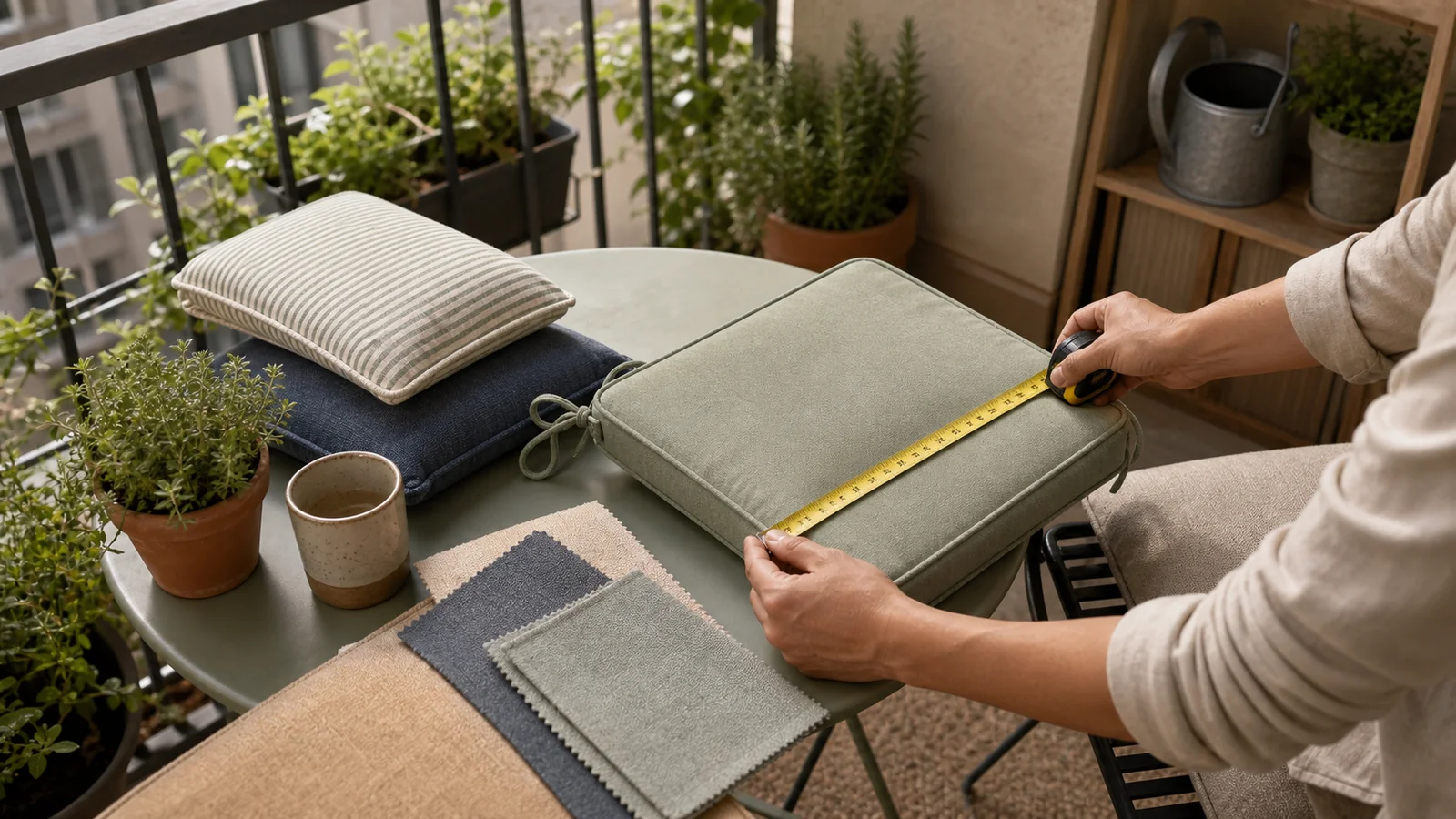
Replacement Cushions for Outdoor Furniture: Fit Guide
Measure replacement cushions for outdoor furniture by checking frame size, thickness, fabric, foam, ties, and storage.
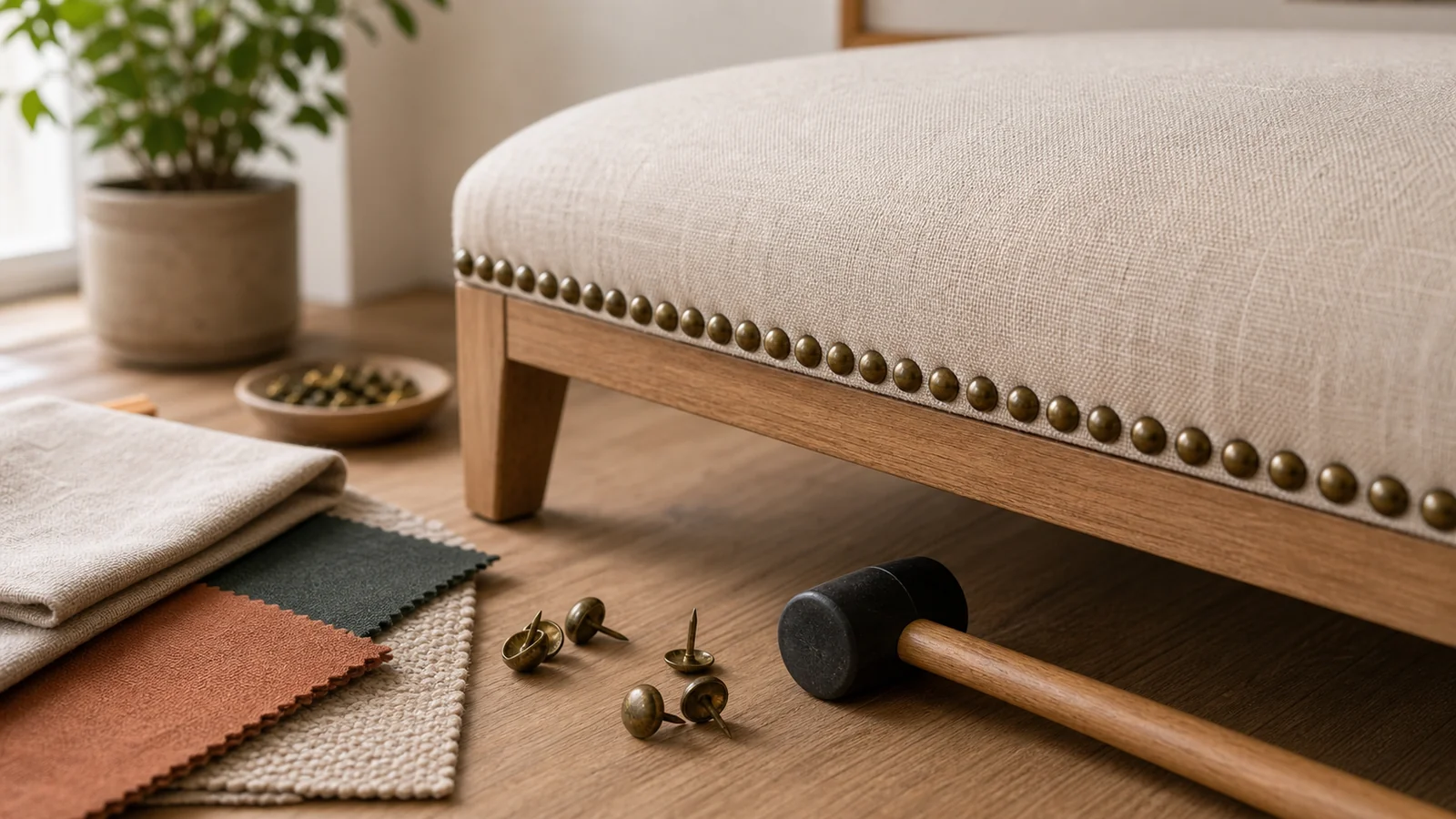
Nailhead Furniture: Use Trim Without Visual Noise
Use nailhead furniture trim carefully by checking scale, spacing, finish, upholstery, and when the detail feels too busy.