Vintage Furniture for Small Rooms: How to Choose It
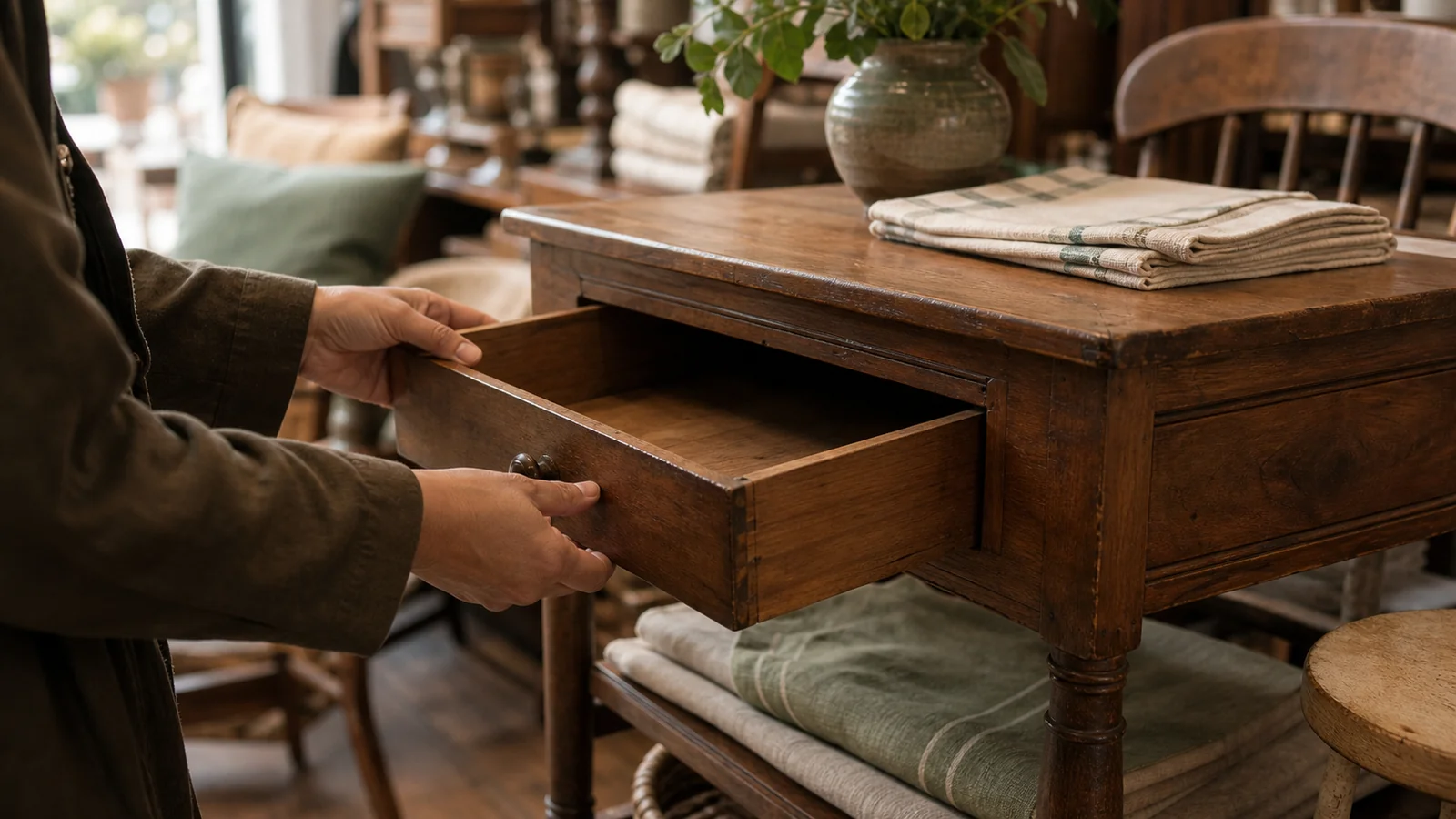
Let one vintage piece carry the character
Vintage furniture can make a small room feel more personal, less showroom-perfect, and more collected over time. The risk is that every charming piece seems like a rare opportunity. In a compact home, too many vintage finds can crowd the floor plan, darken the palette, and make daily routines harder.
Start with one piece that solves a real problem. A vintage side table can warm up a plain sofa. A slim dresser can add storage to a bedroom. A small wooden chair can make an empty corner useful. Once that piece is doing a clear job, the rest of the room can stay softer and quieter.
If you are still deciding what size your room can handle, measure first. Our furniture measuring guide will help you separate a beautiful find from a beautiful mistake.
Know what “vintage” really means
People use vintage, antique, retro, and secondhand as if they mean the same thing. They do not. Vintage usually refers to older pieces that are not yet antique. Antique is commonly used for pieces around 100 years old or older. Retro can mean a newer piece that imitates an older style. Secondhand simply means someone owned it before you.
The label matters less than the condition, size, and usefulness. A true midcentury table with slim legs may work beautifully in a studio. A heavy antique cabinet may be wonderful craft but wrong for a narrow rental bedroom. A newer retro-style chair may be less collectible but easier to clean, move, and repair.
When shopping, ask:
- Is this old, old-looking, or simply used?
- Does the seller know the maker, age, or material?
- Are there repairs, replacements, or refinished areas?
- Can the piece handle normal daily use?
You do not need museum-level certainty for every small-home piece. You do need enough information to know whether it is safe, stable, and worth the space.
Prepare before you visit a market or shop
Vintage shopping is easier when you bring constraints with you. Before leaving home, measure the maximum width, depth, and height for the spot you want to fill. Take photos of the room in daylight and at night. Save the colors of your rug, curtains, sofa, floor, and wall if you can.
Bring a tape measure, phone charger, small flashlight, and notes app list. For case goods, measure drawer depth as well as the outside. For chairs, check seat height and depth. For tables, check leg clearance. For anything with doors, make sure they can open in the real room.
It also helps to set a purpose before you shop:
| Need | Vintage piece to consider | What to avoid |
|---|---|---|
| Bedside storage | Small chest, nightstand, wall cabinet | Deep dressers that block the bed |
| Softer living room | Side table, accent chair, low cabinet | Oversized coffee tables |
| Entry function | Demi-lune table, narrow console, stool | Wide cabinets near the door swing |
| Dining flexibility | Small table, two special chairs | Full sets that crowd the room |
Vintage furniture is easiest to use when you already know the job it needs to do.
Step 1: Check scale from every angle
A small piece in a large shop can still be large in your room. Stand back, then get close. Look at width, depth, height, leg shape, and the amount of solid mass. A cabinet with a slim footprint can still feel heavy if it reaches high and has a dark, uninterrupted front. A chair with open arms may feel lighter than one with a skirted base.
For small rooms, look for:
- Exposed legs that show more floor.
- Lower backs on chairs near windows.
- Rounded corners near paths.
- Narrow profiles for entries and hallways.
- Drawers or doors that open without blocking movement.
Avoid buying by width alone. Depth is often the small-room problem. A dresser, lounge chair, or cabinet that projects too far into the room will make every other choice harder.
Step 2: Inspect structure before style
Style gets your attention. Structure decides whether the piece comes home. Open drawers fully. Look underneath. Wiggle legs gently. Check whether joints are loose, repairs are visible, or the piece rocks on a flat floor. On chairs, sit carefully and listen for creaks. On tables, press lightly near each corner to see whether the frame twists.
Solid wood can be durable, but good veneer is not automatically a problem. Many well-made vintage pieces use veneer beautifully. The issue is damage: lifting veneer, swollen substrate, deep water rings, splitting joints, missing hardware, or drawers that no longer run cleanly.
Be cautious with:
- Musty smells inside drawers or upholstery.
- Fresh paint hiding unknown repairs.
- Sticky drawers that may need more than wax.
- Flaking finish near handles or edges.
- Missing parts that will be hard to match.
Small repairs can be worth it. Structural repairs, odor problems, and unstable seating deserve more caution.
Step 3: Treat old paint and refinishing with respect
Older painted or refinished furniture can carry risks, especially if the finish is chipped, powdery, or likely to be sanded. Lead-based paint was restricted in the United States in 1978 for residential use, and public health agencies still advise caution around older painted items and vintage goods. The practical takeaway is simple: do not sand, scrape, or strip an unknown old finish in your apartment.
If you love a painted piece, keep the finish intact unless you can confirm it is safe to work on. Consider an EPA-recognized lead test kit, ask a professional refinisher, or choose a piece with a stable sealed finish. This is especially important if children, pregnant people, or pets may touch the furniture or if the piece will hold food, toys, or bedding.
You can still enjoy vintage furniture safely. Choose stable finishes, clean gently, avoid creating dust, and keep questionable pieces out of heavy-contact zones.
Step 4: Balance patina with calm
Patina is part of the charm. Scratches, mellowed wood, old brass, faded cane, and softened edges can make a room feel warmer. But patina needs contrast. If every surface is worn, dark, or busy, a small room can feel visually tired.
Pair vintage furniture with calmer pieces:
- A worn wooden table with plain linen curtains.
- A vintage chair with a clean modern floor lamp.
- A dark dresser with pale bedding and simple hardware.
- A patterned vintage rug with quiet upholstery.
- A carved cabinet against warm white walls.
For more style-specific restraint, our Art Deco furniture guide shows how one strong older-style piece can work without turning the whole room into a theme.
Step 5: Decide what you will repair, and what you will not
Vintage furniture often needs some care. That can be part of the pleasure if the repair is realistic. Tightening hardware, waxing drawer runners, replacing felt pads, cleaning wood, or changing knobs can be manageable. Rebuilding a chair frame, removing deep odor, replacing veneer, or reupholstering a complicated piece can cost more than the furniture.
Before buying, estimate the whole project:
- Purchase price.
- Delivery or transport.
- Cleaning supplies.
- Hardware or minor parts.
- Professional repair, if needed.
- Time before the piece is usable.
If you rent or move often, choose repairs that make the piece more durable, not more delicate. A beautiful table that cannot handle normal use may become another thing you have to protect.
Step 6: Give the piece breathing room at home
Once the vintage furniture arrives, resist filling the area around it immediately. Place it, live with it for a few days, then style it. Older pieces often have stronger lines than flat-pack furniture, so they may need less decoration than expected.
Leave some blank space around carved details, turned legs, unusual hardware, or warm wood grain. Use one lamp, one tray, one stack of books, or one plant instead of a crowded vignette. In a small room, restraint lets the piece feel intentional instead of rescued.
If the piece is very dark, add light nearby. If it is visually delicate, avoid placing it next to a bulky sofa arm. If it has a strong period style, repeat the material once elsewhere, not everywhere.
A softer way to shop vintage furniture
The best vintage furniture for a small room is not always the rarest piece. It is the piece that fits, works, feels stable, and adds a little history without taking over daily life.
Measure before shopping, inspect structure before falling in love, handle old finishes carefully, and let one piece carry the story. That approach keeps vintage furniture useful, safe, and gentle enough for a compact home.
You might also like
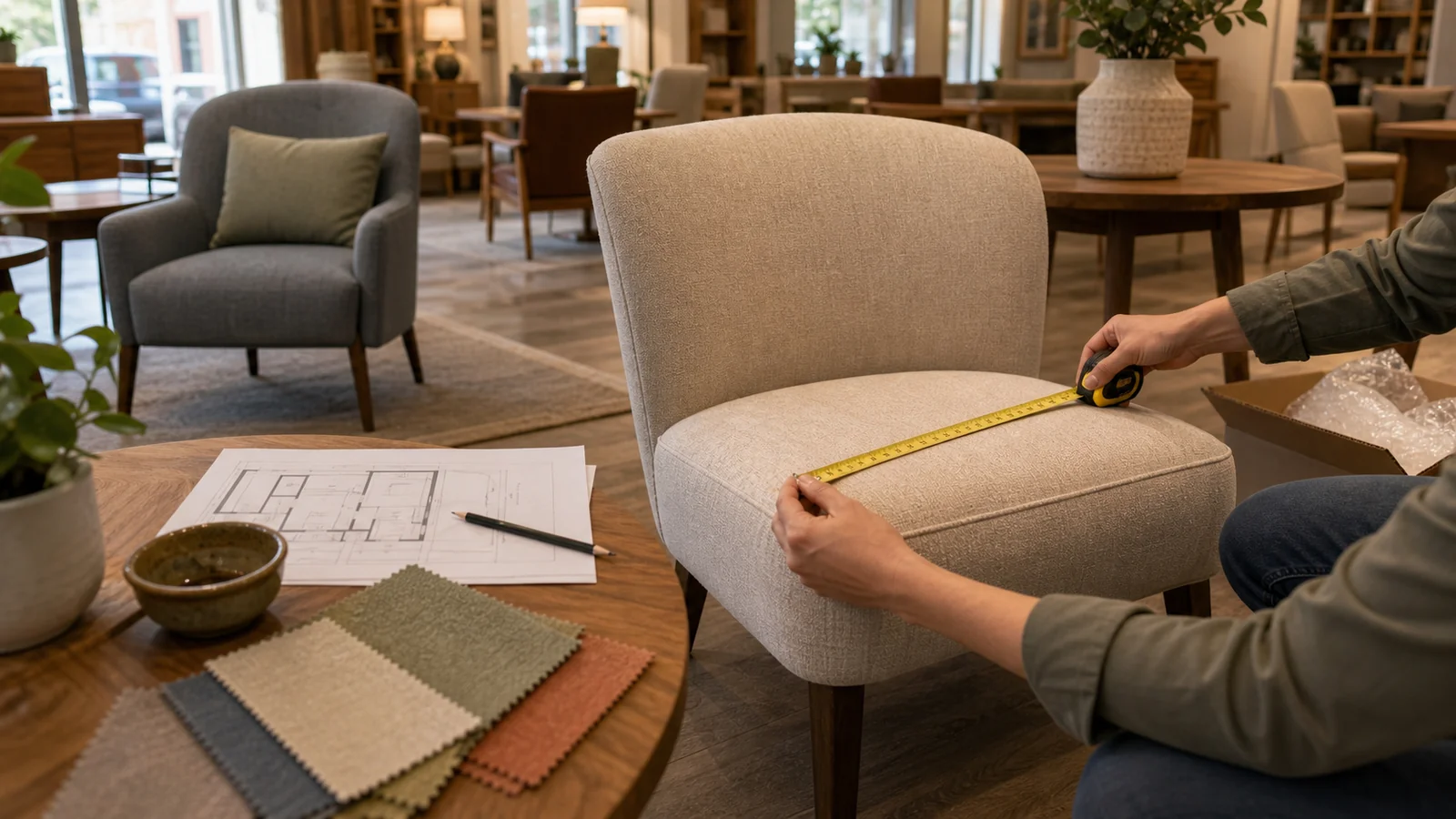
80-Year-Old Furniture Business Closing: Shop Carefully
Use a furniture business closing sale carefully by checking dimensions, final-sale terms, delivery, damage, and room fit.
Galleria Furniture: Small-Room Shopping Guide
Use a Galleria Furniture search to compare store identity, showroom scale, delivery terms, and compact furniture fit.
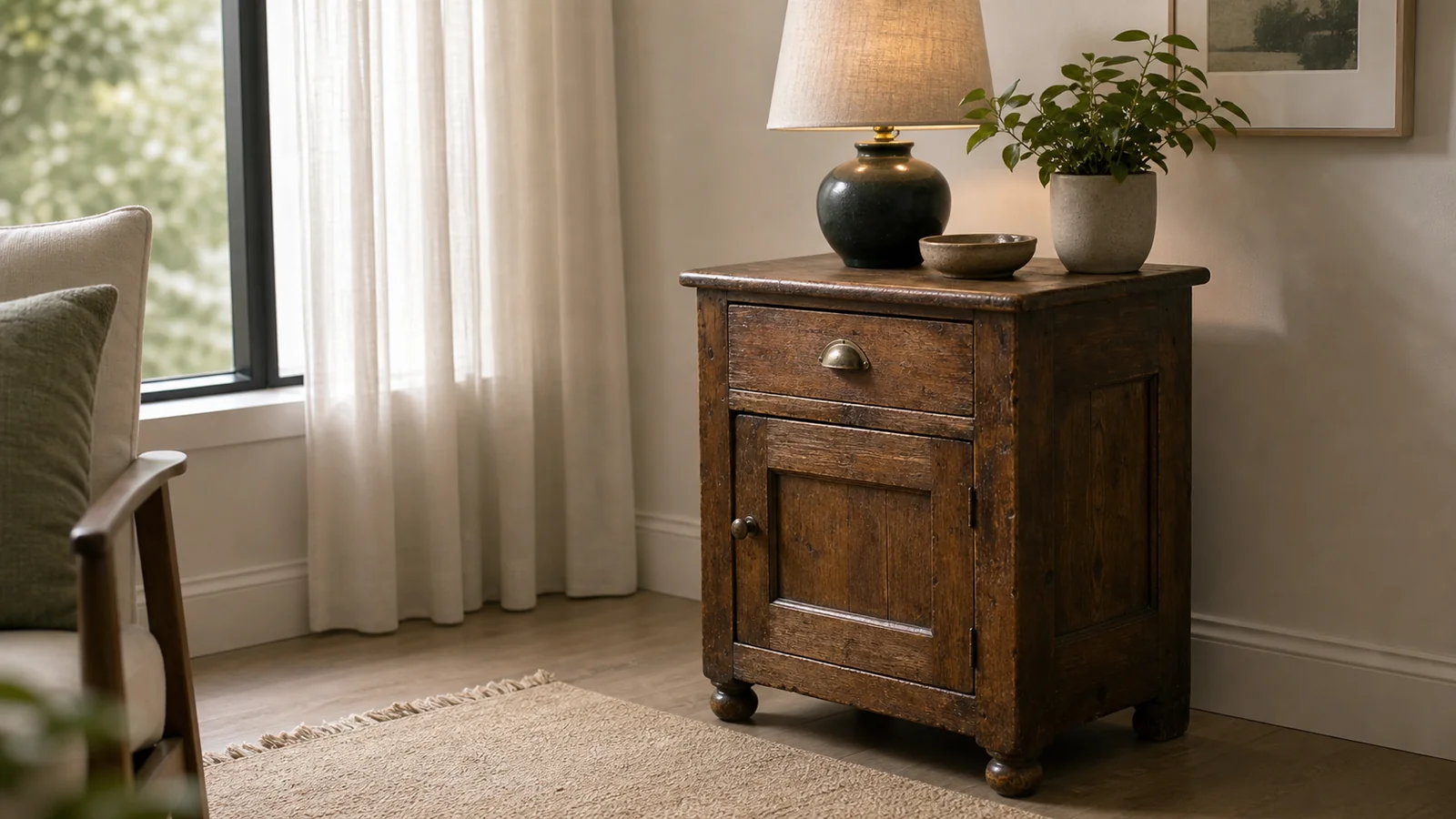
Antique Furniture for Small Rooms: Buy One Well
Choose antique furniture for a small room by checking age, scale, structure, repairs, care needs, and how it mixes with modern pieces.