Antique Furniture for Small Rooms: Buy One Well
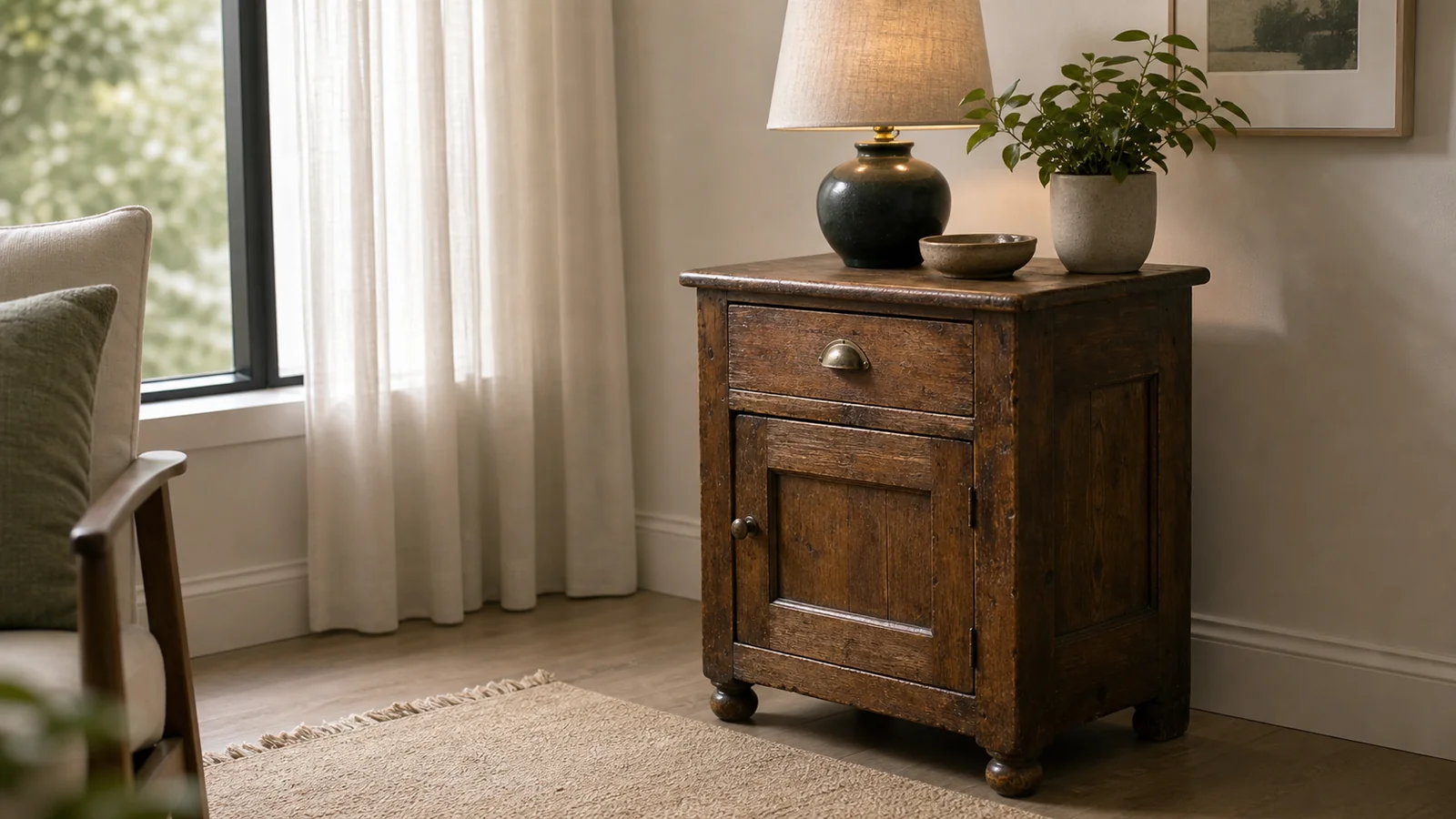
One antique can give a small room history
Antique furniture can make a small home feel layered in a way new furniture often cannot. A narrow chest, side table, desk, mirror, chair, or cabinet brings age, patina, and craft into an apartment without needing a full matching set.
The trick is restraint. In a compact room, one well-chosen antique can feel soulful. Too many dark, ornate, or fragile pieces can make the same room feel crowded and difficult to use. The best antique furniture for a small room is not necessarily the rarest. It is the piece that fits the space, works safely, and can be cared for without turning daily life into a museum routine.
Use this guide to slow the decision before you bring home a piece with more age than your floor plan can handle.
Antique vs vintage vs reproduction
Antique is often used loosely in listings, but the common standard is that an antique is at least 100 years old. Vintage usually means older than ordinary secondhand furniture but not yet antique, often somewhere between about 20 and 99 years old. Reproduction means a newer piece made to look old.
For decorating a small room, the label matters less than the truth behind it. A real antique may have better materials and craft, but it may also need careful handling. A vintage piece may be sturdier for daily use. A reproduction may give you the look with fewer preservation worries.
Compare them this way:
| Label | What to ask | Small-room angle |
|---|---|---|
| Antique | Is it truly old, stable, and worth preserving? | Use as one character piece |
| Vintage | Is the scale and condition better for daily life? | Often easier to mix and move |
| Reproduction | Is the style useful without false value claims? | Good when you want the look, not the risk |
| Distressed new | Is the aging decorative rather than historical? | Judge it like any new furniture |
If a seller claims a piece is antique, ask what supports that claim: age estimate, construction details, provenance, maker’s mark, receipt, estate history, or professional appraisal. Do not pay antique prices for a vague “old-style” description.
Step 1: Choose the role before the era
It is easy to fall for a carved table or aged cabinet before knowing what job it will do. In a small room, that order creates problems. Start with the role.
Good antique furniture roles for compact homes include:
- A narrow side table beside a sofa or bed.
- A small chest that adds closed storage.
- A writing desk that can also work as a console.
- A mirror that adds depth and age.
- A single accent chair with good structure.
- A cabinet that hides daily clutter.
Be cautious with large wardrobes, heavy dining tables, tall china cabinets, bulky armoires, and fragile chairs you cannot actually sit on. They may be beautiful, but they can take control of the room.
If you are measuring a possible piece, use the same standards you would use for new furniture. Our furniture measuring guide is useful here because age does not excuse bad clearance.
Step 2: Check scale from every angle
Antique furniture can carry visual weight even when the footprint is modest. Dark wood, heavy carving, thick legs, high backs, and polished surfaces all read larger in a small room.
Check:
- Overall width, depth, and height.
- The space needed to open drawers, doors, or drop fronts.
- Whether the piece blocks a window, outlet, radiator, or walkway.
- Whether the top can hold what you need.
- Whether the base shows floor or sits heavily to the ground.
- How the color looks beside your existing wood tones.
Small rooms often handle antique furniture best when the piece is tall and narrow, slim and leggy, or visually balanced by lighter textiles. A dark chest can work against warm white walls with pale curtains. A heavy chair can soften with a plain cushion and simple rug. The surrounding choices need to give the antique room to breathe.
Step 3: Inspect structure before patina
Patina is part of the charm, but structure decides whether the piece belongs in your home. Look at the parts that move, carry weight, and touch the floor.
Inspect:
- Wobbly legs, loose joints, or rocking frames.
- Drawers that stick, scrape, or sag.
- Doors that do not align or latch.
- Cracked veneer, lifted inlay, or missing trim.
- Signs of old repairs around feet and joints.
- Sharp splinters, unstable backs, or weak chair seats.
- Musty odor, dampness, or pest evidence.
Some problems are normal and repairable. Loose drawer pulls, small scratches, and dull finish may be manageable. Structural wobble, active pests, water damage, strong odor, or badly warped wood can become expensive and stressful.
If the piece needs work, decide before buying whether you want to live with the flaw, repair it yourself, or hire a professional. Our furniture repair checklist can help you ask better questions before booking help.
Step 4: Treat refinishing as a serious decision
Refinishing antique furniture is not the same as painting a thrifted bookshelf. Stripping, sanding, replacing veneer, or changing hardware can affect the look, integrity, and potential value of an old piece. Sometimes the right repair is gentle cleaning and stabilization. Sometimes refinishing is appropriate because the finish is already badly damaged and the piece is meant for daily use.
Pause before you:
- Sand through veneer.
- Remove original hardware.
- Paint over original finish.
- Use harsh cleaners.
- Cut into a piece for cable access.
- Replace parts without documenting them.
If the piece may be valuable, historically interesting, or inherited, ask a qualified restorer before major changes. If it is a modest antique chosen for everyday living, you still want repairs that respect the construction.
Step 5: Plan care before placement
Antique furniture does best with stable conditions. Small apartments can be hard on old wood because furniture may sit near radiators, sunny windows, exterior doors, humid bathrooms, or air vents.
Avoid placing antique wood:
- In direct harsh sunlight.
- Against damp exterior walls.
- Beside heat vents or radiators.
- In rooms with big humidity swings.
- Where plants can leak onto the surface.
- Where a chair or drawer will be forced open at an angle.
Use soft cloths for dusting, coasters under drinks, felt pads under objects, and gentle cleaning methods. Do not soak old finishes. Do not assume a modern spray cleaner is safe for shellac, wax, varnish, or old painted surfaces.
The goal is not perfection. It is preventing avoidable damage while letting the piece remain part of normal life.
Step 6: Mix it with quiet modern pieces
Antique furniture often looks best in small rooms when the rest of the space stays simple. Pair age with restraint: plain curtains, matte lamps, clean-lined upholstery, a calm rug, and fewer decorative objects.
Useful pairings include:
| Antique piece | Modern balance |
|---|---|
| Dark wood chest | Pale wall, linen lamp shade, simple mirror |
| Carved side table | Plain sofa, smooth tray, low plant |
| Antique desk | Modern chair, clear cable plan, soft task lamp |
| Old mirror | Quiet console, minimal objects below |
| Accent chair | Solid cushion, plain rug, open side table |
Avoid matching every piece to the antique. A room full of dark period-style furniture can feel staged and heavy. One antique beside practical modern furniture usually feels more natural.
For a broader comparison with newer old pieces, our vintage furniture guide explains how to choose character without overwhelming the room.
Step 7: Know when antique is not the answer
Antique furniture is not always the calmest choice. If the piece is too fragile for daily use, too heavy to move, too large for your next likely home, or too expensive to repair, it may create pressure instead of pleasure.
Choose vintage, reproduction, or new furniture instead when:
- You need predictable dimensions and parts.
- You have pets or children who will be rough on the piece.
- The room is damp or very sunny.
- You move often and cannot handle heavy items.
- You need modular storage or hidden cable management.
- The antique would need major repairs before use.
There is no failure in choosing a newer piece. The room needs to work first. Character should support daily life, not complicate it.
A calm way to bring antiques home
Antique furniture can belong beautifully in a small room when you choose one useful piece, check the structure, respect the finish, and give it visual space. Look past the label and judge the actual condition, scale, and care needs.
The best result is not a room that feels old. It is a room where one older piece adds depth, contrast, and memory while everything around it remains easy to live with.
You might also like
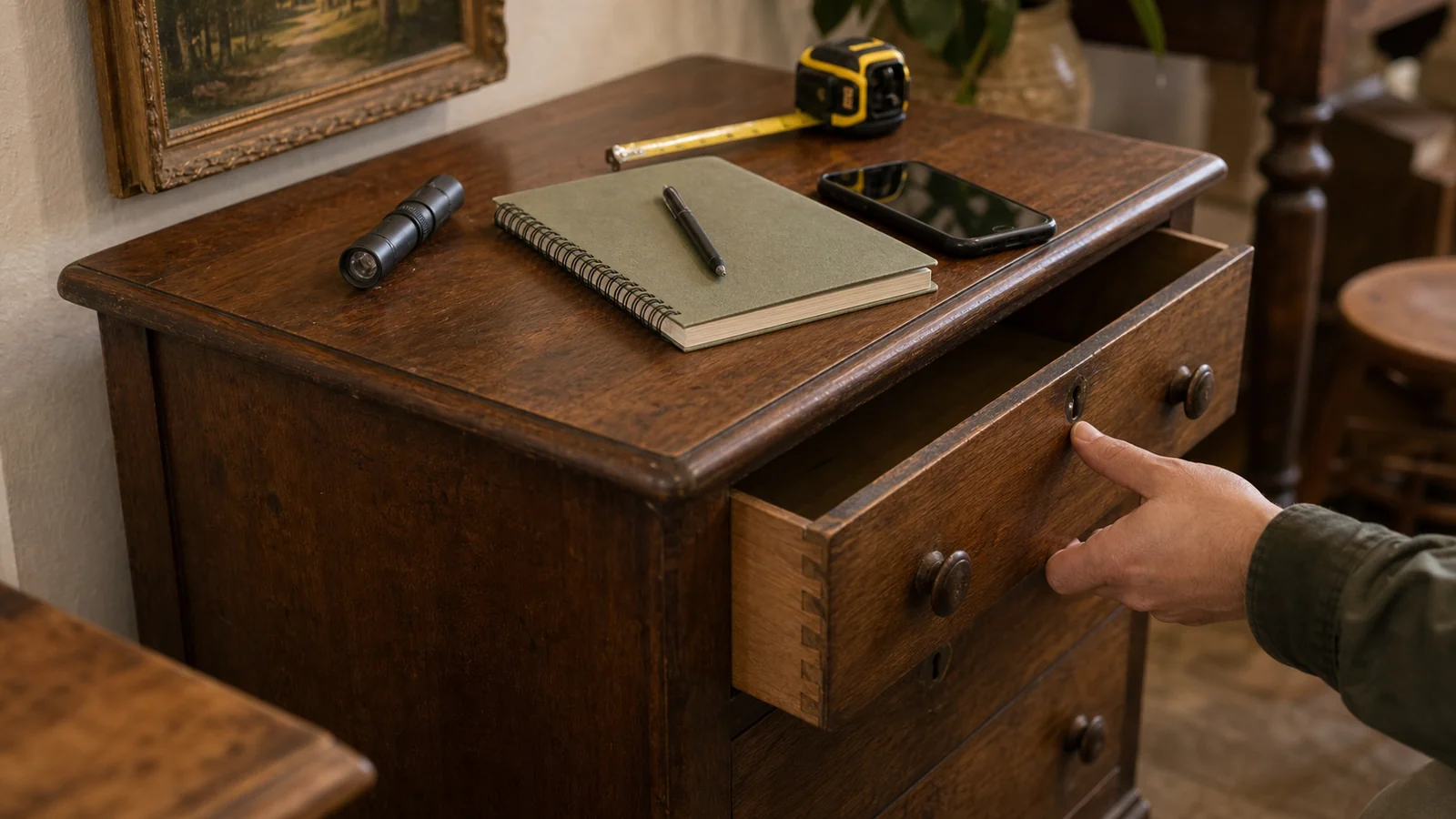
Antique Furniture Near Me: Small-Space Checklist
Use this antique furniture near me checklist to judge scale, condition, odor, repairs, delivery, and daily use before buying.
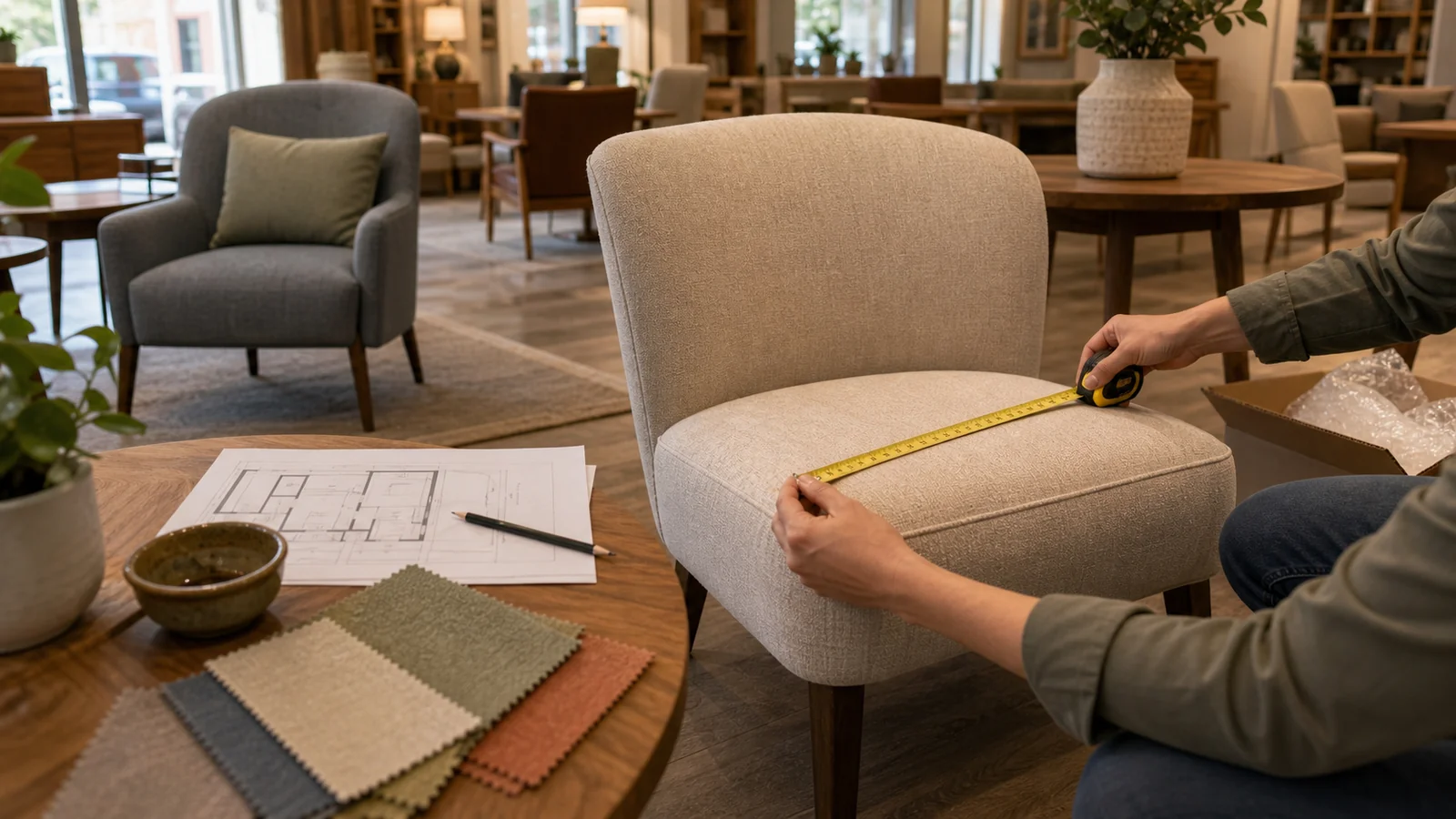
80-Year-Old Furniture Business Closing: Shop Carefully
Use a furniture business closing sale carefully by checking dimensions, final-sale terms, delivery, damage, and room fit.
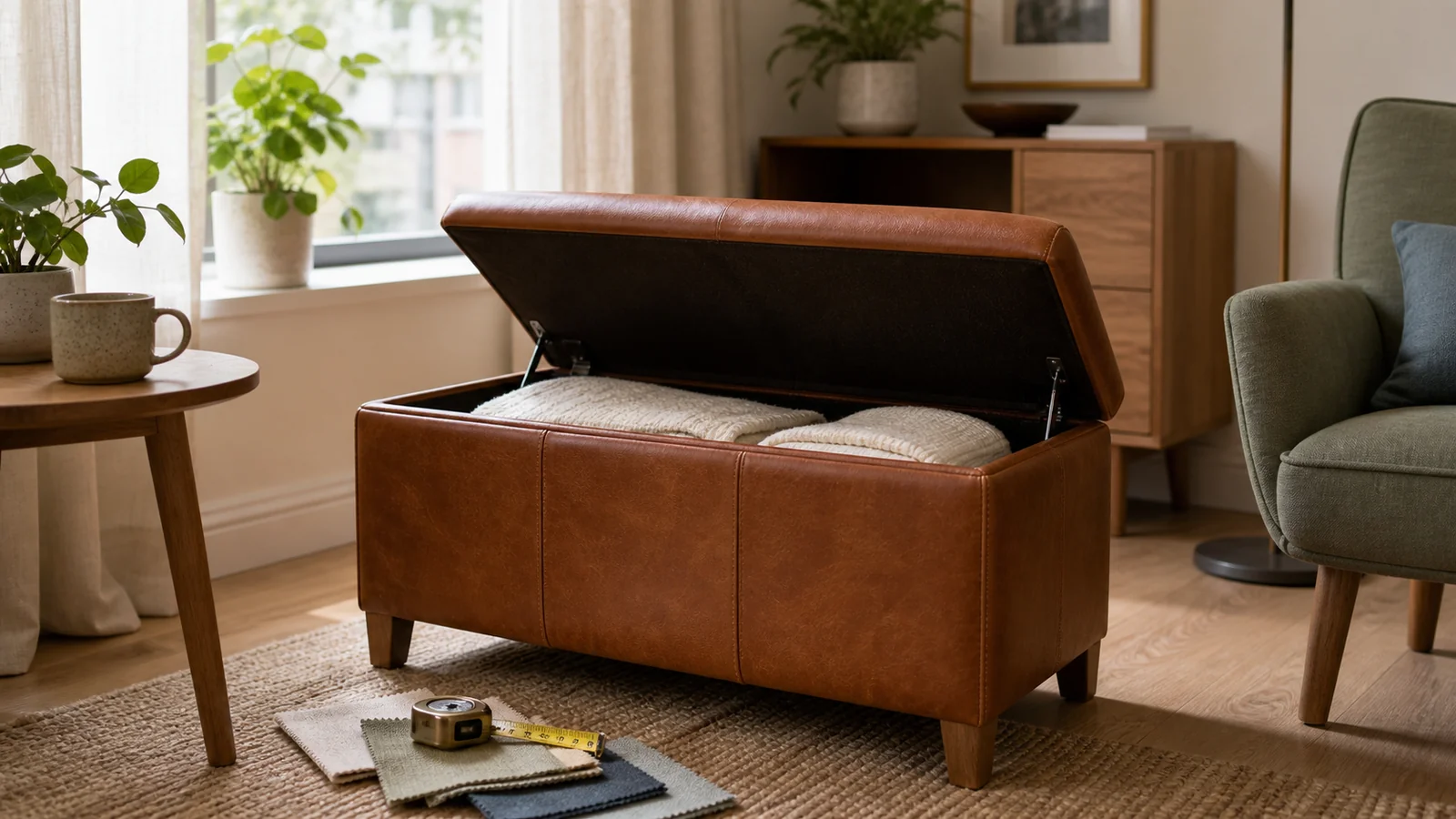
Leather Ottoman Furniture: Small-Space Buying Guide
Choose leather ottoman furniture by checking scale, storage, leather type, cushion firmness, care, and room flow.