Furniture Consignment Shops Near Me: Shop Smart
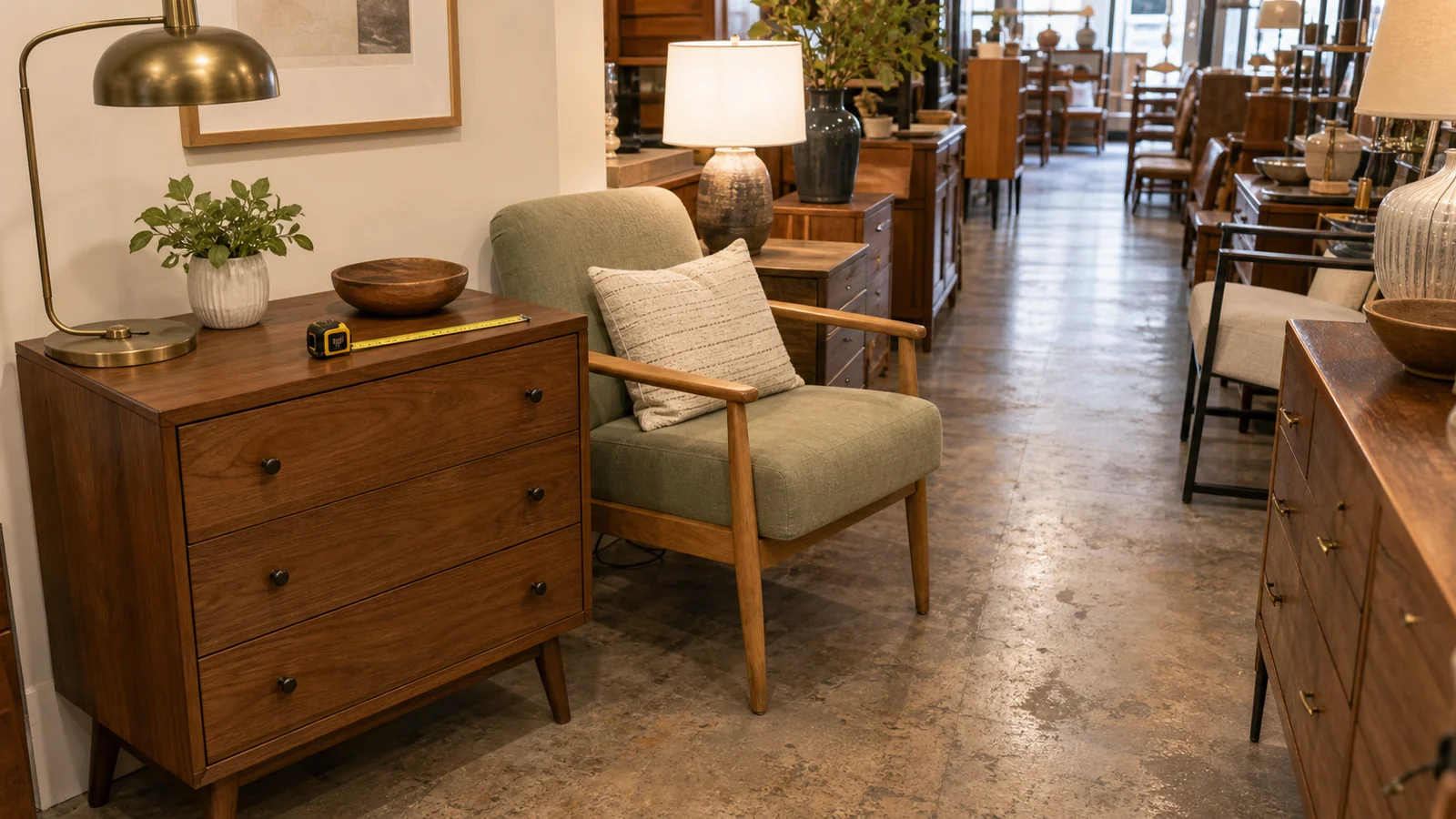
Use “near me” as a filter, not the decision
Searching for “furniture consignment shops near me” can be a very good move for a small home. Consignment stores often carry better-made used furniture than random listings, and you can inspect pieces in person before arranging delivery. You may find solid wood tables, vintage sideboards, accent chairs, lamps, rugs, and decor with more character than a new flat-pack piece.
But nearby does not automatically mean useful. A consignment shop can be full of beautiful furniture that is too deep, too heavy, too worn, too scented, or too difficult to return. For a compact apartment or small house, the goal is not to find the most interesting piece in the store. It is to find the piece that improves the room without creating a new problem.
This guide helps you compare local consignment shops calmly, whether you are buying one piece or deciding whether to consign furniture of your own.
Know what a consignment shop actually does
A furniture consignment shop usually sells items on behalf of the owner. The shop provides floor space, marketing, pricing guidance, and customer access. When the item sells, the shop keeps a commission and the owner receives the rest.
That model shapes the shopping experience:
- Inventory changes often.
- Better items may sell quickly.
- Prices may drop after a set period.
- Return rules may be stricter than new retail.
- Some items are one-of-one and cannot be reordered.
- The shop may not know every detail about the furniture’s history.
Consignment is different from a thrift store, estate sale, antique mall, or peer-to-peer marketplace. It can feel more curated, but it still requires careful inspection.
Compare shops by editing, not quantity
The best consignment shop for a small home is not always the largest one. It is the one that edits well, gives accurate information, and lets you inspect pieces without pressure.
Look for signs of a well-run shop:
| Store signal | Why it matters |
|---|---|
| Clear dimensions on tags | Saves you from guessing in the aisle |
| Staff can explain terms | Reduces return, pickup, and hold surprises |
| Pieces are clean and stable | Suggests better intake standards |
| Inventory is organized | Makes it easier to compare scale |
| Hold policy is clear | Lets you measure before committing |
| Delivery partners are known | Helps with heavy or delicate pieces |
| Price reductions are transparent | Lets you decide whether to wait |
If a shop feels exciting but chaotic, slow down. Take photos, write down measurements, and step outside before paying.
Bring your room limits with you
Consignment furniture can be charming enough to override common sense. Bring the room’s limits so the store does not make the decision for you.
Before you leave home, save:
- Maximum width, depth, and height for the spot.
- Door, hallway, stair, and elevator measurements.
- Photos of the room from several angles.
- A quick floor-plan sketch.
- Fabric, rug, wood, and wall-color references.
- The job the furniture must do.
- A firm budget including delivery and cleaning.
If you are still learning how to measure, use our room measuring guide before visiting stores. It is easier to pass on a beautiful dresser in the shop than to live with one that blocks a closet door.
Inspect condition like you are already living with it
A consignment piece has had a life before you. That is part of the appeal, but it also means you need to inspect it as furniture, not as a mood.
For wood furniture, check:
- Wobble at legs and joints.
- Drawer glide and drawer smell.
- Veneer lifting, water rings, cracks, or swollen edges.
- Loose hardware.
- Repairs that change the structure.
- Evidence of pests in cracks, holes, or undersides.
For upholstered furniture, check:
- Seams, welting, cushion gaps, and underside fabric.
- Odor from smoke, pets, damp storage, or heavy fragrance.
- Sagging seat support.
- Stains under cushions.
- Zipper condition and removable covers.
- Labels with fabric or maker details.
Use a phone flashlight. Remove loose cushions. Look underneath if the shop allows it. A quick glance from standing height is not enough.
Be extra careful with soft furniture
Sofas, lounge chairs, headboards, and upholstered benches deserve more caution than wood or metal pieces. Public extension guidance on secondhand furniture often emphasizes checking upholstered seams, cushion edges, frames, and undersides for bed bug evidence before buying.
That does not mean every used sofa is a danger. It means the inspection should be serious. In a small apartment, you may not have a garage, spare room, or outdoor space for quarantine and deep cleaning after purchase.
Consider skipping upholstered pieces when:
- The shop is dim and inspection is difficult.
- The sofa has a strong odor.
- Cushions feel damp or musty.
- You see dark specks, live insects, shed skins, or suspicious residue.
- The piece came from unknown storage conditions.
- You cannot arrange cleaning before bringing it inside.
If you love secondhand upholstery, choose shops with strong intake standards, clear cleaning practices, and good lighting.
Ask about holds, returns, and pickup before you pay
Consignment shops often have different rules from ordinary furniture stores. Some sales are final. Some pieces can be held for a few hours or a day. Some shops reduce prices over time. Some require pickup by a deadline.
Ask:
- Is this item consigned, new, closeout, or store-owned?
- Is the sale final?
- Can I place a hold while I measure?
- Are there scheduled markdowns?
- Is delivery available?
- Who is responsible for damage during delivery?
- How soon must the item be picked up?
- Can I inspect it again before final pickup?
Write the answers down. A calm policy conversation protects the pleasure of finding something good.
Use consignment for the right pieces
Consignment is especially useful for pieces where age, quality, and character add value. It is less useful for items where hygiene, exact sizing, or matching sets matter most.
Better consignment targets for small homes include:
- Side tables.
- Small dressers.
- Narrow consoles.
- Accent chairs with open frames.
- Solid wood dining tables.
- Lamps.
- Mirrors.
- Storage benches.
- Art and decor.
- Vintage nightstands.
Be more cautious with mattresses, sleeper sofas, large sectionals, heavily scented upholstery, damaged recliners, and particleboard pieces with swollen edges. The repair or cleaning cost may erase the savings.
For older one-of-a-kind pieces, our vintage furniture guide and antique furniture guide can help you decide when character is worth the extra care.
Decide whether you are buying or consigning
The same search can mean two different things. You may want to buy furniture, or you may want a shop to sell your furniture for you.
If you are buying, focus on fit, condition, delivery, and return rules. If you are consigning, ask about intake standards, commission, pricing, markdown schedule, pickup, unsold items, payment timing, and what happens if the item is damaged while on the floor.
For consigning, prepare photos before calling:
- Front, side, and back views.
- Close-ups of labels or maker marks.
- Any damage.
- Measurements.
- Original price or receipt, if available.
- A short description of age, material, and condition.
Clean the piece first, but do not hide damage. Shops usually prefer honest, ready-to-sell pieces with clear photos.
Build a local route
Instead of visiting one shop and deciding under pressure, build a small route. Choose two or three shops within a reasonable distance. Check hours, social media, pickup rules, and whether they specialize in furniture rather than mostly clothing or decor.
At each shop, take the same notes:
| Question | Note |
|---|---|
| What pieces fit my list? | Keep it practical |
| Are dimensions available? | Photograph tags |
| Is the shop clean and well lit? | Helps with inspection |
| Are terms clear? | Avoid surprise final sales |
| Can delivery be arranged? | Include the total cost |
| Would I return here? | Good shops are repeat resources |
Inventory changes quickly, so a first visit may be research rather than a purchase. That is still useful. The more you know your local shops, the easier it becomes to recognize a good piece when it appears.
A calmer way to shop consignment
Furniture consignment shops near you can be a thoughtful source for compact homes. They can offer better materials, softer character, and less waste than buying everything new. They can also tempt you into oversized pieces, hidden odors, vague policies, and awkward delivery problems.
Bring your measurements, inspect with your senses, ask about terms before paying, and buy only for a real room need. The right consignment piece should make your small home feel more considered, not more complicated.
You might also like
Furniture Outlet Stores in Tampa, FL: Shop Carefully
Shop furniture outlet stores in Tampa, FL with a clear plan for scale, stock checks, delivery, final-sale terms, and small-room fit.
80-Year-Old Furniture Business Closing: Shop Carefully
Use a furniture business closing sale carefully by checking dimensions, final-sale terms, delivery, damage, and room fit.
Leather Ottoman Furniture: Small-Space Buying Guide
Choose leather ottoman furniture by checking scale, storage, leather type, cushion firmness, care, and room flow.