Davenport Furniture: Sofa Meaning and Small-Room Fit
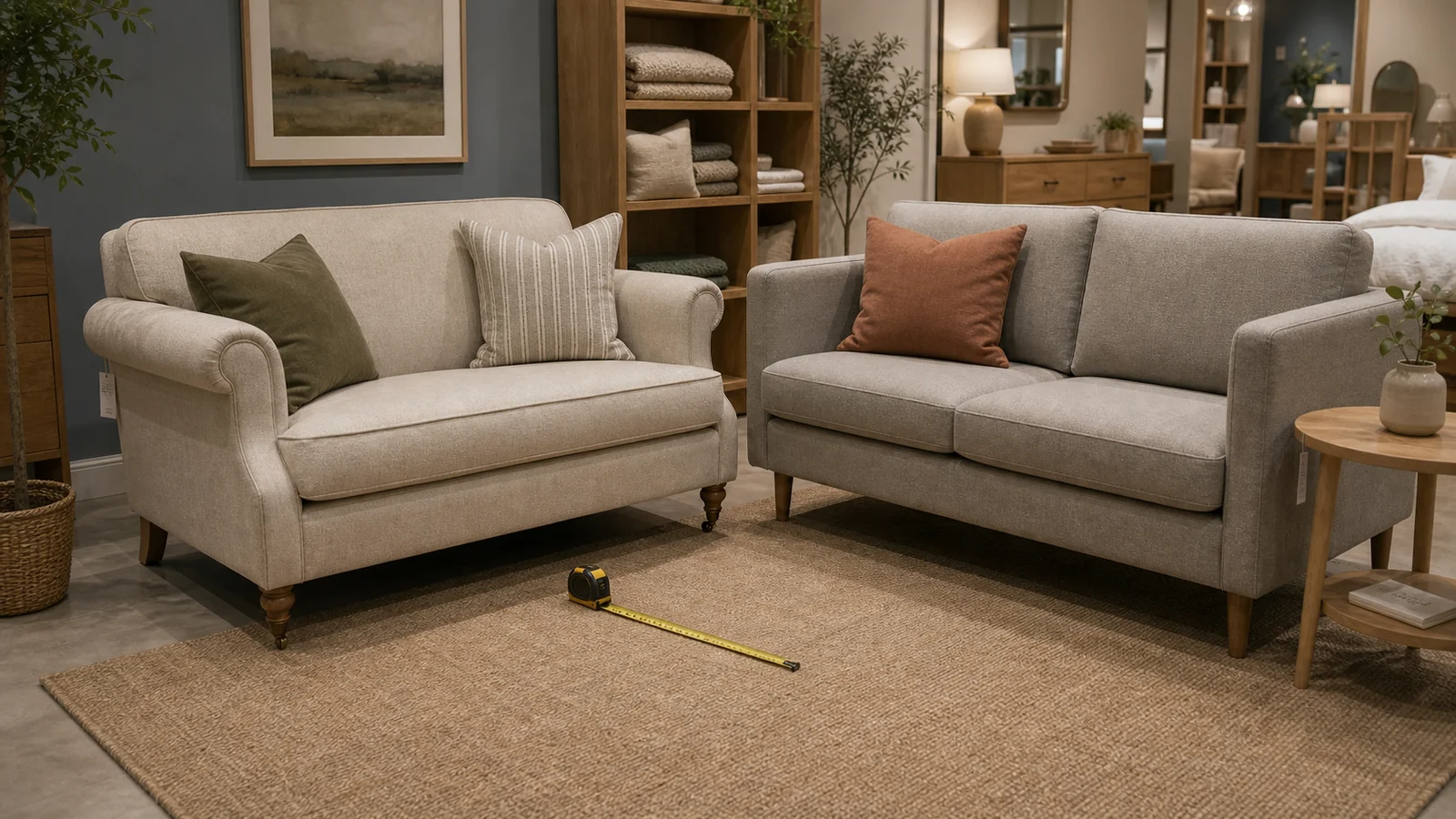
Start by decoding the word
Davenport furniture can be a confusing search because the word davenport has meant different things in different places. In many American homes, especially in older or regional usage, a davenport means a sofa or couch. In other furniture contexts, a davenport can also mean a small writing desk with a sloped top. And in local search, Davenport may simply be a place name attached to stores.
For a small home, the useful question is not whether the word sounds old-fashioned. It is what the listing is actually selling. If the item is a seat, judge it like a sofa. If it is a desk, judge it like a compact workstation. If it is a store search, check the retailer carefully.
This guide focuses on the most common home-shopping issue: davenport as sofa-style seating, and how it compares with nearby furniture terms.
Davenport vs sofa vs couch
The words overlap more than most product pages admit. Sofa often sounds a little more formal. Couch often sounds more casual. Davenport can sound traditional, regional, or vintage. In everyday shopping, all three may point to a long upholstered seat for two or more people.
The better comparison is practical:
| Term on listing | What to check first | Small-room risk |
|---|---|---|
| Davenport | Actual dimensions and style | Rolled arms, high back, heavy skirt |
| Sofa | Seat depth, arm width, frame style | Too long or too deep |
| Couch | Comfort and durability details | Casual shape with weak support |
| Loveseat | Width and seat count | Too small for daily lounging |
| Sleeper sofa | Open footprint and mattress mechanism | Blocks the room when unfolded |
Do not buy based on the label. Buy based on the measured footprint, seat comfort, frame quality, and how the piece changes the room.
Davenport vs settee
A settee is usually smaller, more upright, and more decorative than a full sofa. It can work well in an entry, bedroom, dining nook, or quiet reading corner. A davenport, when used to mean sofa, is usually expected to be a primary lounging piece.
Choose a settee when:
- The space is shallow.
- You need a perch, not a nap spot.
- The seat will be used occasionally.
- The room already has another comfortable chair or sofa.
Choose a davenport or sofa when:
- It is the main living room seat.
- You want to stretch out.
- Two people will use it often.
- You need deeper cushions or stronger support.
In a studio apartment, a settee can look elegant but feel too stiff for everyday lounging. In a small bedroom, a full davenport can feel generous but may block drawers, closets, or walking paths.
Davenport vs loveseat
A loveseat is usually a compact two-seat sofa. That makes it tempting for small spaces, but it is not automatically better than a longer sofa. Some loveseats have thick arms, deep seats, and bulky backs that use space poorly. A narrow three-seat sofa with slim arms may actually feel more useful.
Compare usable seating width, not only outside width. A 62-inch loveseat with wide rolled arms may offer less real seating than a 72-inch sofa with slim arms. Seat depth matters too. A very deep loveseat can make a small living room feel cramped even if it is short.
For small rooms, measure:
- Total width.
- Inside seat width.
- Seat depth.
- Back height.
- Arm width.
- Leg clearance.
- Door and delivery path.
If you are still setting the room plan, start with our furniture measuring guide before comparing product pages.
Davenport vs sleeper sofa
A sleeper sofa solves a real problem when guests stay over, but it needs more planning than a regular davenport. You need space for the sofa when closed and space for the bed when open. You also need room to walk around it, move a coffee table, and store bedding.
In a compact home, a sleeper can work when the room has a flexible center. It becomes frustrating when the sofa faces a fixed media cabinet, radiator, bookcase, or dining table. Before buying, tape the open mattress size on the floor. Then try to move through the room as if someone were sleeping there.
If overnight guests are rare, a comfortable sofa plus a separate folding guest mattress may be easier to live with. If guests are frequent, choose a sleeper with clear mechanism details, realistic reviews, and a mattress size your room can truly handle.
Check the old-fashioned details
Because davenport often appears with vintage or traditional furniture, look closely at the design details. Rolled arms, skirted bases, deep tufting, carved feet, and tall backs can all add charm. They can also add visual weight.
That does not mean traditional seating is wrong for a small room. It means the surrounding choices need to stay calm. A rolled-arm sofa may need a lighter side table. A dark davenport may need pale curtains and a plain rug. A tufted piece may need fewer patterned pillows.
Use these softer pairings:
| Davenport detail | Small-room balance |
|---|---|
| Rolled arms | Slim side table, fewer pillows |
| Skirted base | Lighter rug and visible-leg accent chair |
| Dark upholstery | Warm white wall and pale throw |
| High back | Low coffee table and open window treatment |
| Tufting | Smooth curtains and simple lamp |
The goal is to keep the davenport from becoming a heavy block in the room.
Test comfort by how you sit
Furniture terms do not tell you whether a seat fits your body. If you can test the piece, sit the way you actually live. Sit upright with a drink. Lean into the corner. Cross your legs. Put your feet on the floor. If you share the sofa, imagine two people using it at once.
Pay attention to seat depth. A shallow seat is good for upright conversation and small rooms, but it may not feel lounge-friendly. A deep seat is comfortable for curling up, but it may push the whole sofa too far into the room. Cushion firmness also matters. Very soft cushions can look inviting but lose shape faster in daily use.
If you are comparing recliner-like comfort, our Lazy Boy furniture guide has a useful reminder: always measure the open footprint, not just the closed one.
Plan the coffee table around the seat
A davenport or sofa changes every nearby piece. Once the seat depth is set, the coffee table, rug, lamps, and walkway need to adjust. Leave enough room between the seat and table for knees, cleaning, and daily movement. If the room is narrow, a side table or small nesting table may work better than a central coffee table.
Good small-room pairings include:
- Davenport plus oval table.
- Loveseat plus two small side tables.
- Settee plus wall shelf.
- Sleeper sofa plus lightweight table that moves easily.
- Traditional sofa plus modern open-leg side chair.
For surface sizing, our cocktail table guide gives a more detailed clearance check.
A simple way to decide
If a listing says davenport furniture, pause and identify the actual piece. Is it a sofa, a writing desk, a vintage settee, a store result, or a local search? Once you know that, use normal small-room rules: measure the footprint, check visual weight, test comfort, and plan the surrounding pieces.
Choose a davenport-style sofa when you want character and daily seating. Choose a loveseat when width is the main limit. Choose a settee when the seat is occasional. Choose a sleeper only when the open bed footprint still leaves the room usable.
The name may be old-fashioned. The decision can still be clear.
You might also like
Contemporary Furniture for Small Rooms: Soften It
Use contemporary furniture in a small room with better scale, open bases, warmer textures, practical storage, and enough negative space.
80-Year-Old Furniture Business Closing: Shop Carefully
Use a furniture business closing sale carefully by checking dimensions, final-sale terms, delivery, damage, and room fit.
Leather Ottoman Furniture: Small-Space Buying Guide
Choose leather ottoman furniture by checking scale, storage, leather type, cushion firmness, care, and room flow.