Cocktail Tables Furniture: Choose the Right Size
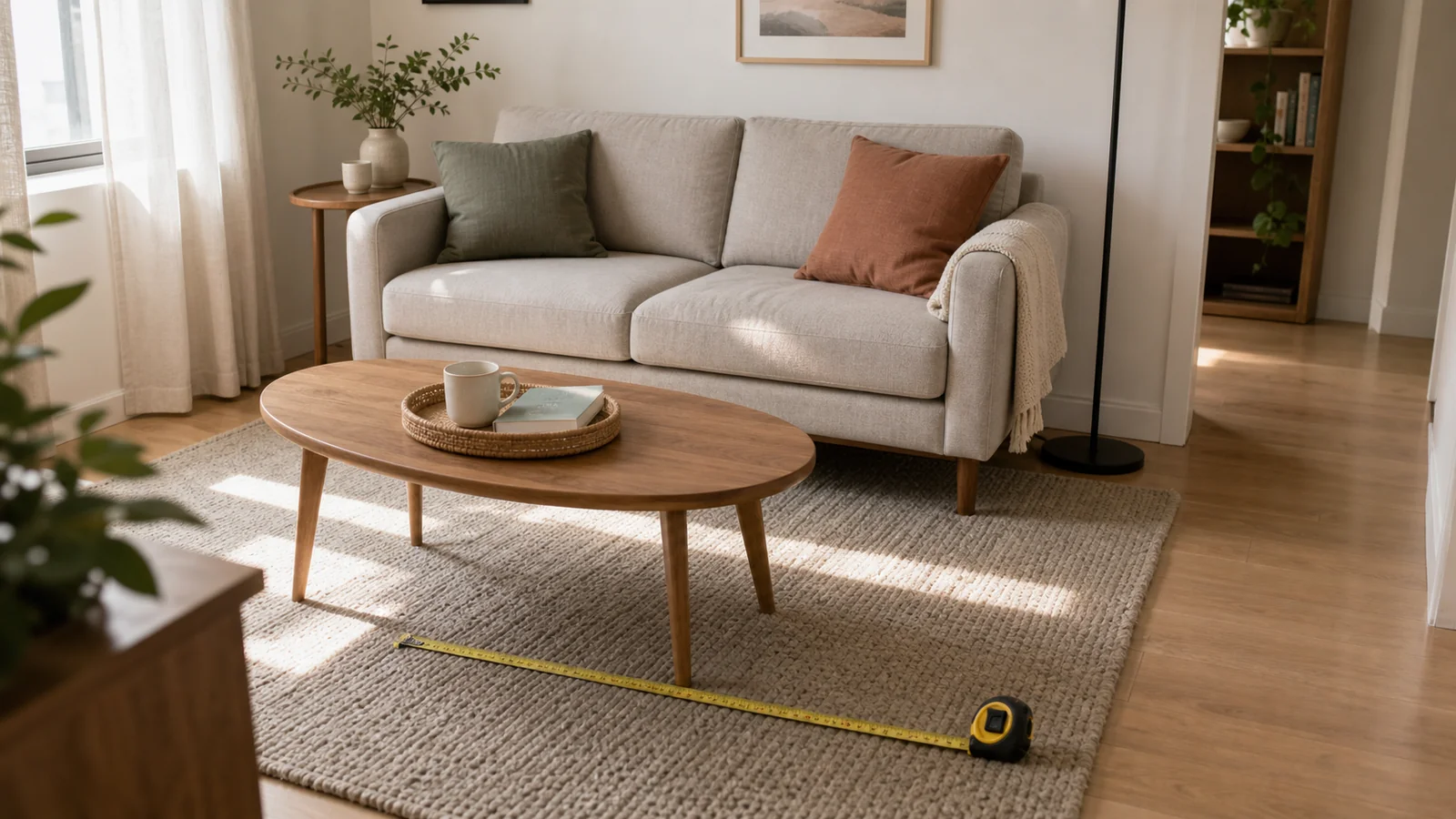
Treat the cocktail table as a traffic decision
Cocktail tables furniture is often another way of saying coffee tables: the low table that sits near a sofa or lounge chair for drinks, books, remotes, candles, trays, and the small objects of daily life. The name can sound formal, but the decision is practical. In a small living room, the table decides how easily people move, sit, stretch, clean, and gather.
A beautiful table that blocks knees or catches shins will make the room feel tighter every day. A table that is too tiny may look delicate but fail to hold what you actually use. The right cocktail table supports the seating without becoming the center of every problem.
This guide starts with the room, not the style. Once the clearance and proportion are right, material, shape, color, and storage become much easier to choose.
Prepare the seating area first
Before shopping, clear the area in front of the sofa or chairs. Remove extra baskets, stools, floor cushions, and small tables so you can see the real path through the room.
Then note:
- Sofa length and seat depth.
- Chair positions.
- TV, fireplace, window, or doorway location.
- Main walking path.
- Rug size.
- Whether people often eat, work, play games, or stretch their legs here.
- Whether children, pets, or older guests use the room.
Use painter’s tape, cardboard, or a folded blanket to test a few table footprints. Live with the outline for a day if you can. Walk through the room with a laundry basket, plate, or laptop. If the outline annoys you before the table exists, the real table will not improve things.
If your whole layout still feels uncertain, start with our guide to measuring a room for furniture. Cocktail tables ask for both dimensions and movement space.
Step 1: Match the table to sofa length
A common starting point is to choose a cocktail table that feels shorter than the sofa but long enough to serve the main seats. In small rooms, that usually means avoiding both extremes: a tiny accent table floating alone or a long slab that fills the whole seating zone.
A practical range:
| Sofa situation | Table direction |
|---|---|
| Apartment sofa | Compact rectangle, oval, or nesting tables |
| Loveseat | Small round, oval, or square table |
| Chaise sofa | Narrow rectangle or two small movable tables |
| Sectional | Square, round, or ottoman table inside the seating shape |
| Two chairs | Round table or small square centered between them |
Do not size the table from the showroom photo. Size it from the seats that will actually reach it. If one end of the sofa is rarely used, the table does not need to stretch that far.
Step 2: Keep the height easy to use
Cocktail tables usually work best when the top is close to the sofa seat height or slightly lower. If the table is much higher, it can feel like a dining table in the wrong place. If it is much lower, reaching for a drink or remote becomes awkward.
Check the height while sitting on your own sofa. Put a box, stack of books, or stool in front of you and test the reach. Notice whether you have to bend, twist, or lift your shoulder.
Height matters more when the table has storage. A lift-top table may be useful for working or eating, but it also adds mechanism weight and visual bulk. A storage ottoman can soften the room, but a tray may be needed for drinks. A table with a low shelf can hold books, but it can also collect clutter.
Choose the height that fits your real habits, not the one that looks most dramatic in a product image.
Step 3: Choose the shape for the room’s pressure points
Shape changes how a cocktail table behaves. In compact rooms, corners and movement paths are often more important than style labels.
| Shape | Works well when | Watch for |
|---|---|---|
| Round | Tight corners, children, traffic around all sides | May not serve a long sofa evenly |
| Oval | Narrow rooms, soft flow, apartment sofas | Can be harder to find in storage versions |
| Rectangle | Standard sofas, clear front-facing seating | Corners can catch knees in tight paths |
| Square | Sectionals or balanced seating groups | Can feel bulky in narrow rooms |
| Nesting | Flexible small spaces | Tops may be too small for daily use |
| Ottoman | Soft rooms, feet-up comfort, extra seating | Needs tray for stable drinks |
If you keep bumping into furniture, choose round or oval before adding more padding and accessories. A softer corner can change the whole mood of the room.
Step 4: Decide whether storage helps or hurts
Small homes often tempt us toward storage furniture. Sometimes that is exactly right. A cocktail table with a drawer, shelf, lift top, or hidden compartment can hold remotes, chargers, games, coasters, blankets, and magazines.
But storage can also make the table heavier and more cluttered. Ask what needs to live there every day. If the answer is “everything,” the table may become a pile instead of a solution.
Good storage uses:
- One drawer for remotes and chargers
- A shelf for two or three books
- A lift top for occasional laptop use
- A lidded ottoman for blankets
- Nesting tables for guests and snacks
Less helpful storage:
- Deep open shelves that collect random items
- Heavy trunks in rooms with narrow paths
- Glass shelves that show every cord and crumb
- Lift tops that block the sofa when opened
- Oversized tables chosen only for hidden space
For very narrow rooms, a slim side table or console may do part of the job better. Our console table furniture guide can help if the front-of-sofa zone is too tight for a traditional table.
Step 5: Pick materials that calm the room
The cocktail table sits in the middle of the seating area, so its material is highly visible. It can lighten the room, ground it, or make it feel busy.
Wood brings warmth and hides small marks better than many glossy surfaces. Pale oak or walnut can be calm if the shape is simple. Glass can make a room feel more open, but it shows fingerprints and can feel sharp in a family room. Stone looks substantial, yet it can be heavy and visually cold in a compact apartment. Metal frames can feel light, but check wobble and noise. Upholstered ottomans soften edges, though they need fabric care.
Use material contrast carefully:
- Soft sofa plus wood table
- Patterned rug plus plain table
- Dark table plus light curtains
- Chunky sofa plus leggy table
- Pale room plus one deeper accent
If the room already has many finishes, choose the quietest table. The center of the room does not need another argument.
Step 6: Style the top without losing function
A cocktail table should not become a still life you are afraid to touch. Keep the top useful first.
Try a simple arrangement:
- One tray for remotes, coasters, and a small object.
- One low bowl, candle, or vase.
- One book stack only if books are actually used there.
- Clear space for a drink or snack plate.
- No tall arrangement that blocks conversation or TV sightlines.
Round and oval tables often look better with an off-center tray. Rectangular tables can handle two zones: one decorative, one practical. Ottomans need a stable tray if drinks are part of daily use.
Edit the top once a week. If the table is always covered, the room may need better hidden storage elsewhere.
Solve common small-room table problems
Most cocktail table mistakes are easy to diagnose.
| Problem | Try this |
|---|---|
| People bump corners | Switch to oval, round, or smaller rectangle |
| Room feels heavy | Choose exposed legs, lighter wood, or glass with caution |
| Table is too far away | Use nesting tables or add one side table |
| Table collects clutter | Add one drawer or tray, remove open shelf piles |
| Rug catches table legs | Use smoother feet or adjust rug placement |
| Sofa feels boxed in | Reduce table depth or move to an ottoman |
| Guests have nowhere to set drinks | Add small movable tables instead of one large table |
The fix is not always a new table. Sometimes the rug is too small, the sofa is too deep, or the side tables are missing. Look at the seating group as a system.
Finish with the walking path
Before buying cocktail tables furniture, stand at the room entrance and trace the path you use most: doorway to sofa, sofa to kitchen, chair to window, desk to hallway. The table should not turn those movements into tiny negotiations.
Use this final checklist:
- The table serves the main seats.
- The height feels natural from the sofa.
- The shape avoids the room’s tightest corners.
- Storage solves a real habit.
- The material works with the rug, sofa, and light.
- There is still space to walk, clean, and stretch.
- The top can hold daily objects without feeling crowded.
A good cocktail table does not demand attention every time you cross the room. It quietly supports the sofa, softens the seating area, and gives your small living room a useful center.
You might also like
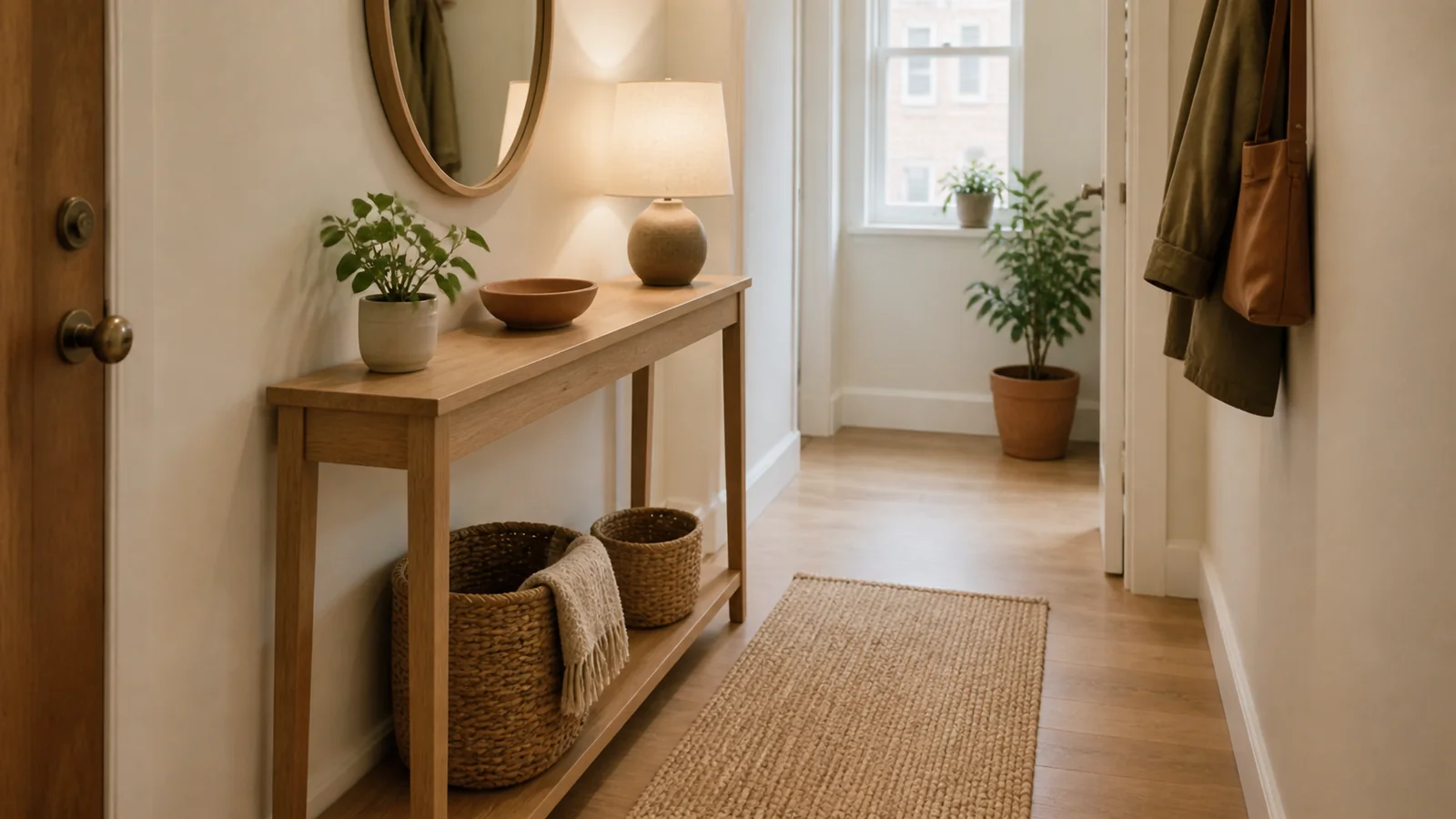
Console Table Furniture: A Small-Room Fit Guide
Choose a console table with the right depth, height, storage, and placement so narrow rooms stay useful and calm.
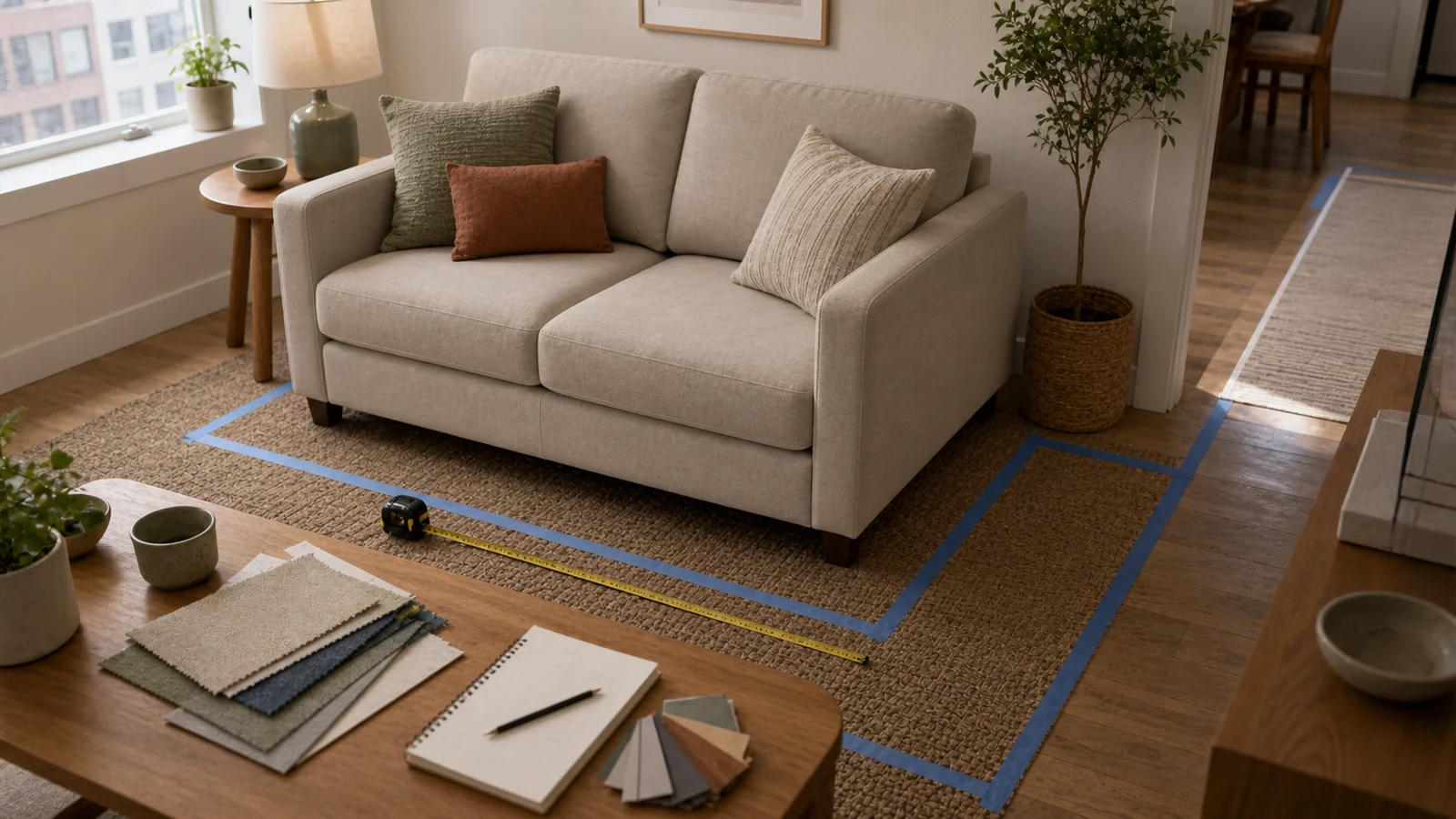
Ashley Furniture Couch: Small-Room Buying Guide
Choose an Ashley Furniture couch by checking width, depth, arms, upholstery, delivery terms, and how it fits your room.
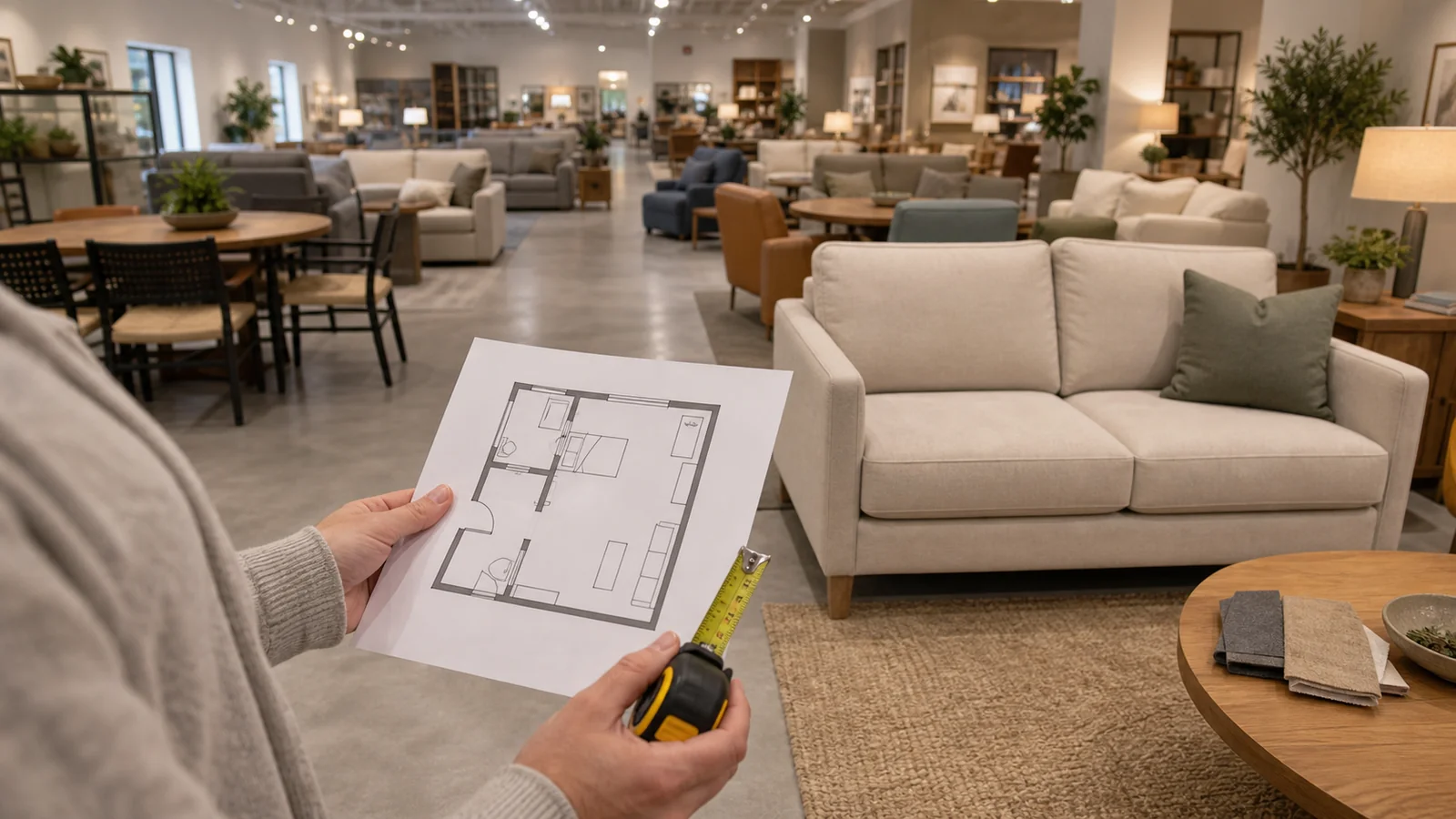
Becker Furniture: Small-Room Shopping Guide
Use a Becker Furniture search wisely by checking store identity, scale, delivery, floor samples, and compact-room fit.