Contemporary Furniture for Small Rooms: Soften It
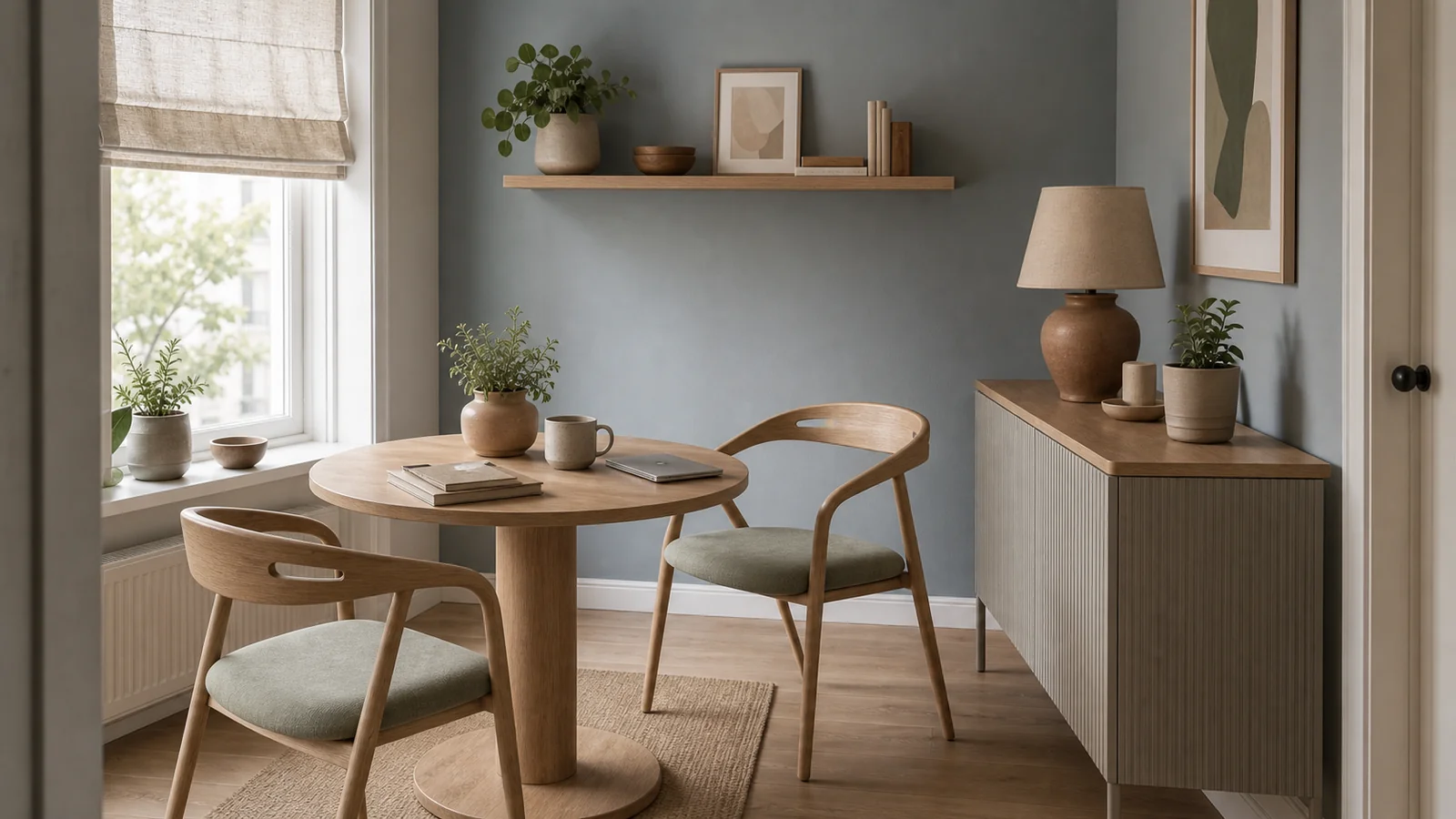
Contemporary should feel current, not cold
Contemporary furniture is often described with clean lines, simple forms, neutral colors, and uncluttered rooms. That can be useful in a small home. Less visual noise, raised bases, slimmer profiles, and flexible pieces can all help a compact room breathe.
The problem is that contemporary can turn cold if the room becomes all sharp edges, pale gray upholstery, shiny surfaces, and empty corners. A small room needs clarity, but it also needs warmth. The goal is not a showroom. It is a room that feels current, calm, and usable every day.
Use contemporary furniture as structure. Then soften it with texture, warm light, curved shapes, and enough storage to keep the clean lines believable.
Separate contemporary from modern before shopping
Modern and contemporary furniture are often mixed together in product names. Modern usually points to a more defined design period and tradition, especially early-to-mid twentieth-century ideas such as simple function, warm woods, and strong silhouettes. Contemporary is more fluid. It reflects what feels current now, so it can borrow from modern, minimal, organic, industrial, or sculptural styles.
For a small room, the label matters less than the actual piece. A “contemporary” sofa may be low and deep, which can overwhelm a studio. A “modern” chair may be compact and practical. Judge the shape, footprint, materials, and comfort before you trust the style category.
Ask:
- Is the piece visually light or heavy?
- Does it have open space under it?
- Are the edges sharp near tight walkways?
- Does the material add warmth or glare?
- Will the room still have enough softness once it arrives?
That filter keeps the style useful instead of theoretical.
Step 1: Start with the largest piece
In most small rooms, the largest piece is the sofa, bed, dining table, or storage unit. Contemporary furniture often looks best when the largest piece is simple and well-proportioned, then smaller pieces add texture or curve.
If the sofa is the anchor, choose one that fits the room before it fits the trend. Check total width, arm height, seat depth, back height, leg style, and whether it blocks windows or radiators. A low sofa can make a ceiling feel higher, but a very deep sofa can swallow a narrow living room. A slim arm can save several inches without making the seat feel small.
If the bed is the anchor, avoid oversized platform frames unless the room has generous walking paths. A simple upholstered headboard, wall-mounted lights, and lighter nightstands can keep the contemporary look soft.
Measure the full room before you browse. If you need a refresher, our furniture measuring guide walks through the clearances that matter.
Step 2: Choose open bases and lifted shapes
Contemporary furniture can help a small room when it shows more floor. Sofas and chairs on slim legs, open coffee tables, wall-mounted storage, and pedestal tables reduce the sense of blockage. The room still contains furniture, but the eye can travel around and beneath it.
Look for:
- Sofas with visible legs instead of block bases.
- Chairs with open arms or lighter frames.
- Coffee tables with glass, open shelves, or rounded edges.
- Consoles that float or stand on slim supports.
- Dining chairs that tuck in fully.
Open bases are not only visual. They make cleaning easier, reduce dust traps, and help a compact room feel less permanent. That matters when you rent or rearrange often.
For a more focused surface decision, our cocktail table guide shows how table shape and clearance change a room’s flow.
Step 3: Warm up the material mix
A contemporary room can handle metal, glass, lacquer, stone, and polished surfaces, but small homes usually need a warmer balance. Too many cool surfaces make the room echo visually. Too many reflective finishes can feel busy in daylight and harsh at night.
Soften contemporary furniture with materials that have touch:
| Cool element | Softer balance |
|---|---|
| Glass table | Wool rug, wood tray, ceramic lamp |
| Metal chair frame | Boucle, linen, or textured cushion |
| Black cabinet | Pale wall, warm wood bowl, woven basket |
| White sofa | Clay pillow, oatmeal throw, oak side table |
| Stone top | Fabric shade, soft curtains, low plant |
You do not need rustic furniture to make contemporary feel warm. One oak tone, one soft textile, and one matte surface can change the room.
Step 4: Use curves where the room feels tight
Contemporary furniture often includes strong straight lines. In a small room, those lines can help create order. They can also make every corner feel more exposed. Curves are a useful counterweight.
Try a round side table, oval coffee table, curved-back chair, arched mirror, rounded pouf, or lamp with a soft shade. Curves are especially helpful near walkways, in tiny dining corners, and beside beds where sharp edges are easy to bump.
Do not force curves everywhere. One or two rounded pieces are enough to soften the grid. Keep the rest simple so the room still feels contemporary.
Step 5: Make storage disappear into the design
The clean contemporary look only works if clutter has somewhere to go. In a small home, that means storage must be planned early, not added later with random bins.
Choose storage that matches the room pressure. A media cabinet with closed doors can hide cords and games. A lift-top table can help if the living room doubles as a workspace. A tall dresser can use vertical space in a bedroom. A slim console can catch entry items without blocking the path.
Be honest about open shelving. It can look airy, but it demands editing. If you have daily clutter, closed storage may create a calmer contemporary room than a wall of exposed objects.
Step 6: Keep the palette quiet but not flat
Contemporary furniture often appears in white, gray, black, cream, taupe, and muted wood tones. That palette can be calm, but it needs depth. A room built from one flat neutral can feel unfinished, especially in a small apartment with limited architecture.
Use three kinds of contrast:
- Light and dark contrast, such as pale walls with an inky side table.
- Texture contrast, such as smooth upholstery with woven curtains.
- Shape contrast, such as a straight sofa with a rounded lamp.
Color can stay gentle. Sage, blue-gray, clay, muted ochre, and deep green-black all work well with contemporary furniture when used sparingly. Let one accent repeat two or three times instead of scattering many colors across the room.
Step 7: Edit the room after delivery
Contemporary furniture often looks best with breathing room around it. After the main piece arrives, remove a few smaller items before styling. Give the room a day or two. Notice where bags land, where coffee cups go, where lighting feels weak, and where the walkway pinches.
Then add only what solves a problem:
- A lamp if the room feels cold at night.
- A small table if there is nowhere to set a book.
- A basket if throws or pet items drift across the floor.
- A pillow or throw if the sofa feels too plain.
- A plant if the room needs life and height.
The clean look should come from fewer better decisions, not from having nowhere to live normally.
A softer contemporary room
Contemporary furniture works beautifully in small rooms when it is scaled, warm, and practical. Choose the largest piece carefully, favor open bases, add curves where the room feels tight, and build in closed storage before clutter wins.
The best result is not a perfect minimalist photograph. It is a compact room where the furniture feels current, the textures feel human, and every clear line makes daily life a little easier.
You might also like
Davenport Furniture: Sofa Meaning and Small-Room Fit
Understand what davenport furniture usually means, how it compares with sofas and couches, and how to choose the right seat for a small room.
80-Year-Old Furniture Business Closing: Shop Carefully
Use a furniture business closing sale carefully by checking dimensions, final-sale terms, delivery, damage, and room fit.
Leather Ottoman Furniture: Small-Space Buying Guide
Choose leather ottoman furniture by checking scale, storage, leather type, cushion firmness, care, and room flow.