Art Deco Furniture for Small Rooms: How to Use It
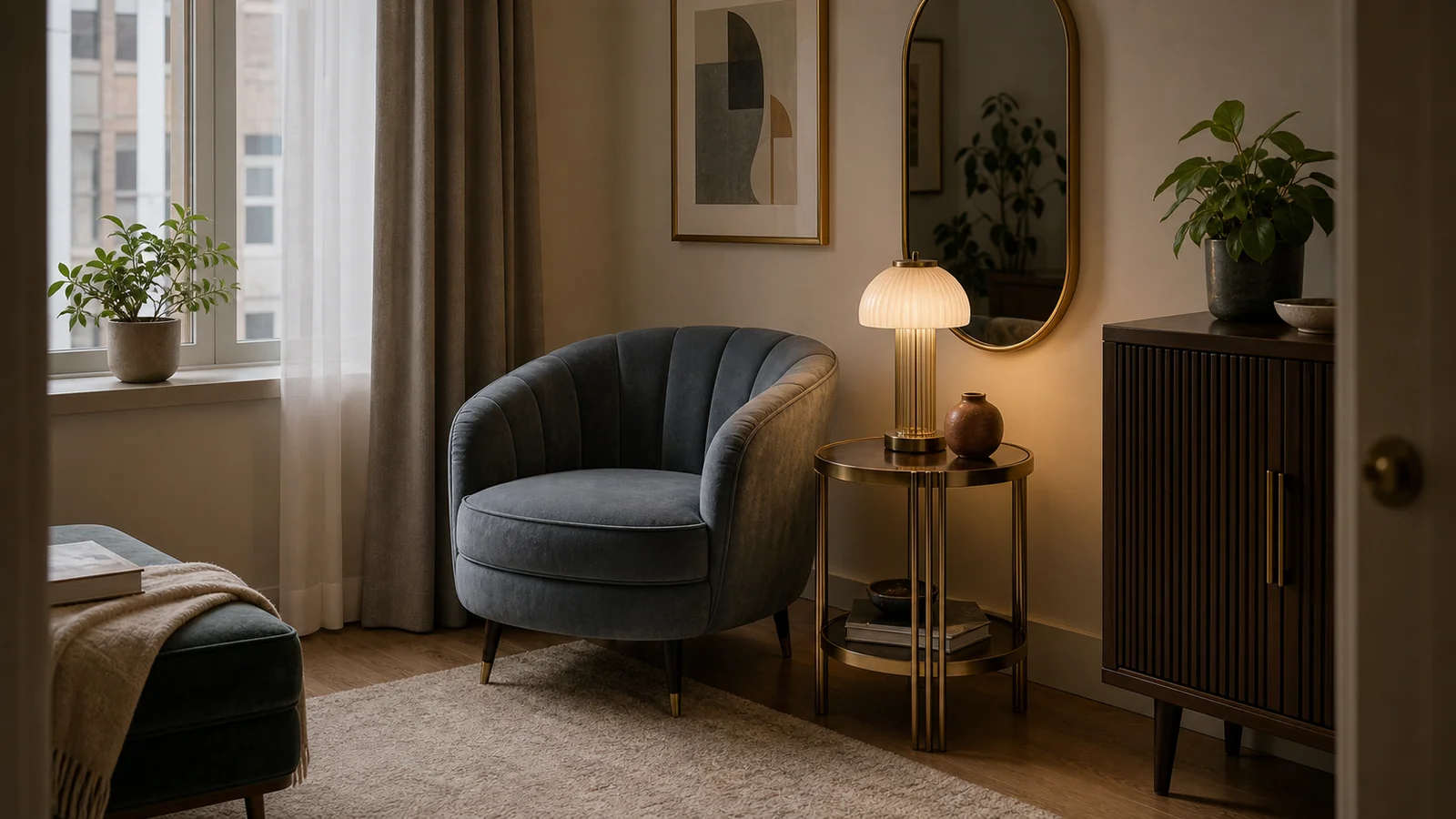
Use Art Deco as an accent, not a costume
Art Deco furniture can bring curve, shine, geometry, and glamour into a room. It is known for strong silhouettes, symmetry, polished surfaces, metallic accents, rich color, and luxurious materials. In a compact home, those traits need careful editing.
The goal is not to turn a small apartment into a 1920s hotel lobby. The goal is to borrow one or two Art Deco ideas and let them sharpen a soft room: a rounded cabinet, a channel-tufted chair, a brass-framed mirror, a lacquered side table, a fluted lamp, or a geometric rug.
This how-to guide starts with the room you have. It helps you choose one Art Deco furniture piece, control the shine around it, and keep the final room calm enough for daily life.
Prepare the room before choosing a piece
Before shopping, measure the room and identify what the space actually lacks. Art Deco furniture can be visually strong, so it should solve a real problem rather than become a decorative impulse.
Use this preparation list:
- Measure the wall, corner, or seating zone where the piece could go.
- Mark the footprint with painter’s tape.
- Note nearby door swings, drawers, curtains, radiators, and outlets.
- Photograph the room in daylight and evening light.
- Choose the room’s existing quiet materials: curtains, rug, sofa, bedding, or wall color.
- Decide what job the Art Deco piece must do.
If your layout is still uncertain, start with our guide to measuring a room for furniture. Art Deco forms often have curves, wide arms, or dramatic backs, so the taped outline matters more than a product photo.
Step 1: Choose one strong furniture moment
Small rooms usually handle Art Deco best when one piece carries the style. That piece can be functional and expressive at the same time.
Good starting points include:
- A curved accent chair
- A small round or waterfall-edge side table
- A fluted nightstand
- A brass or chrome floor lamp
- A low cabinet with rounded corners
- A compact vanity or writing desk
- A headboard with channel tufting
- A geometric rug under simple furniture
Avoid adding the sofa, coffee table, mirror, rug, lamp, and cabinet all in the same strong style. Too many Deco signals can make a small room feel staged instead of lived in.
Choose the piece that improves the daily flow. A beautiful cabinet that adds storage is more useful than a dramatic table with nowhere for books, remotes, or a lamp. A curved chair that fits a reading corner is better than a wide lounge chair that blocks the only path through the room.
Step 2: Control shine and reflection
Art Deco often uses reflective materials: mirror, lacquer, chrome, brass, glass, polished wood, and glossy stone. These surfaces can lift a room, but they also multiply visual noise.
Use shine in small doses. If the furniture has a glossy finish, pair it with matte walls, linen curtains, wool rugs, or soft upholstery. If the chair has velvet, let nearby tables stay simpler. If the mirror is bold, keep the console underneath quiet.
Try this balance:
| Strong Deco element | Softening partner |
|---|---|
| Brass frame | Linen shade or matte ceramic |
| Lacquered table | Textured rug or woven tray |
| Mirrored surface | Plain wall and minimal objects |
| Velvet chair | Simple wood side table |
| Geometric rug | Solid sofa and quiet curtains |
| Dark wood cabinet | Pale wall and warm lamp |
The room should have one shimmer point, not a shimmer argument.
Step 3: Build a calmer palette around it
Traditional Art Deco can lean into black, gold, emerald, burgundy, ivory, chrome, walnut, and jewel tones. Those colors can be beautiful, but a small room may need a softer translation.
Start with one deeper note, then add lighter support. For example:
- Inky green chair, warm white walls, pale oak table
- Walnut cabinet, cream curtains, blue-gray rug
- Brass lamp, clay cushion, sage bedding
- Black mirror frame, linen sofa, muted gold side table
- Deep teal headboard, oatmeal bedding, matte ceramic lamps
Repeating a color once or twice helps the room feel deliberate. If you bring in a brass lamp, repeat brass through a small frame, drawer pull, or tray. If you use a dark green chair, echo the green with a pillow or plant.
Step 4: Use geometry as structure
Art Deco loves geometry: arches, fans, sunbursts, stepped forms, chevrons, fluting, vertical lines, and repeated symmetry. In a compact room, use geometry to organize the space rather than scatter patterns everywhere.
One geometric rug can anchor simple seating. One fluted cabinet can add rhythm to a plain wall. One arched mirror can soften a boxy entry. Repeating small Deco motifs on every pillow, lamp, frame, and tray usually feels busy.
If you already have a patterned rug, keep the furniture calmer. If the furniture has strong fluting or inlay, choose plain curtains. If the wall art is geometric, let the table stay simple.
Step 5: Mix old and new carefully
Vintage Art Deco furniture can be wonderful, but it needs inspection. Check veneer, wobble, drawer movement, missing hardware, finish damage, and odors. Some vintage pieces are delicate, heavy, or harder to repair than they look.
New Deco-inspired furniture can be easier to size and deliver, but it can also become too theatrical. Look for pieces that borrow the line or material without turning every detail into a theme.
If sustainability is part of your decision, our US sustainable furniture guide can help you compare new, used, and repairable options. A vintage Deco-style cabinet that fits well may be a better long-term choice than a new accent piece that only follows a trend.
Solve common small-room problems
Art Deco furniture often fails in small homes for predictable reasons. Most are fixable with restraint.
| Problem | What to do |
|---|---|
| The room feels too dark | Add pale textiles, warmer bulbs, and less dark furniture nearby |
| The piece feels too formal | Pair it with relaxed linen, books, plants, or handmade ceramics |
| There is too much shine | Remove mirrored trays, glossy frames, or extra metallic decor |
| The pattern feels loud | Keep the largest surface plain and move pattern to one smaller zone |
| The chair is too wide | Use a Deco lamp, side table, or mirror instead |
| The room feels themed | Remove one obvious Deco detail and keep the strongest piece |
When in doubt, take one thing away. Art Deco has enough presence to survive editing.
Advanced tips for a softer Deco room
Once the main piece is working, use smaller decisions to make the room feel more personal.
Try lighting from more than one height. A floor lamp, low table lamp, or wall sconce can make glossy surfaces glow gently instead of glaring. Use warm bulbs so brass, wood, and velvet feel soft at night.
Keep negative space around curved furniture. Curves need room to be seen. If a rounded chair, cabinet, or table is jammed against other pieces, the shape loses its grace.
Use texture to make glamour feel livable. Linen, boucle, wool, cane, matte ceramics, and woven baskets can sit beside Deco furniture without fighting it. This is how the room stays edited rather than precious.
Finally, let the strongest piece be slightly imperfect. A vintage side table with a small mark, a brass lamp with patina, or a gently worn velvet chair can make the style feel human.
Finish with restraint
Before you call the room done, look at it from the doorway. The Art Deco furniture should be easy to notice, but it should not be the only thing the room says.
Use this final check:
- One main Deco piece is carrying the style.
- Shine appears in one or two places only.
- The palette has light tones as well as deep ones.
- Geometry organizes the room instead of crowding it.
- The piece fits the walking path and daily routine.
- Soft layers keep the room comfortable.
Art Deco can work beautifully in small rooms when it is treated as punctuation. One curved line, one polished surface, or one confident silhouette can make a quiet room feel more intentional without stealing its calm.
You might also like
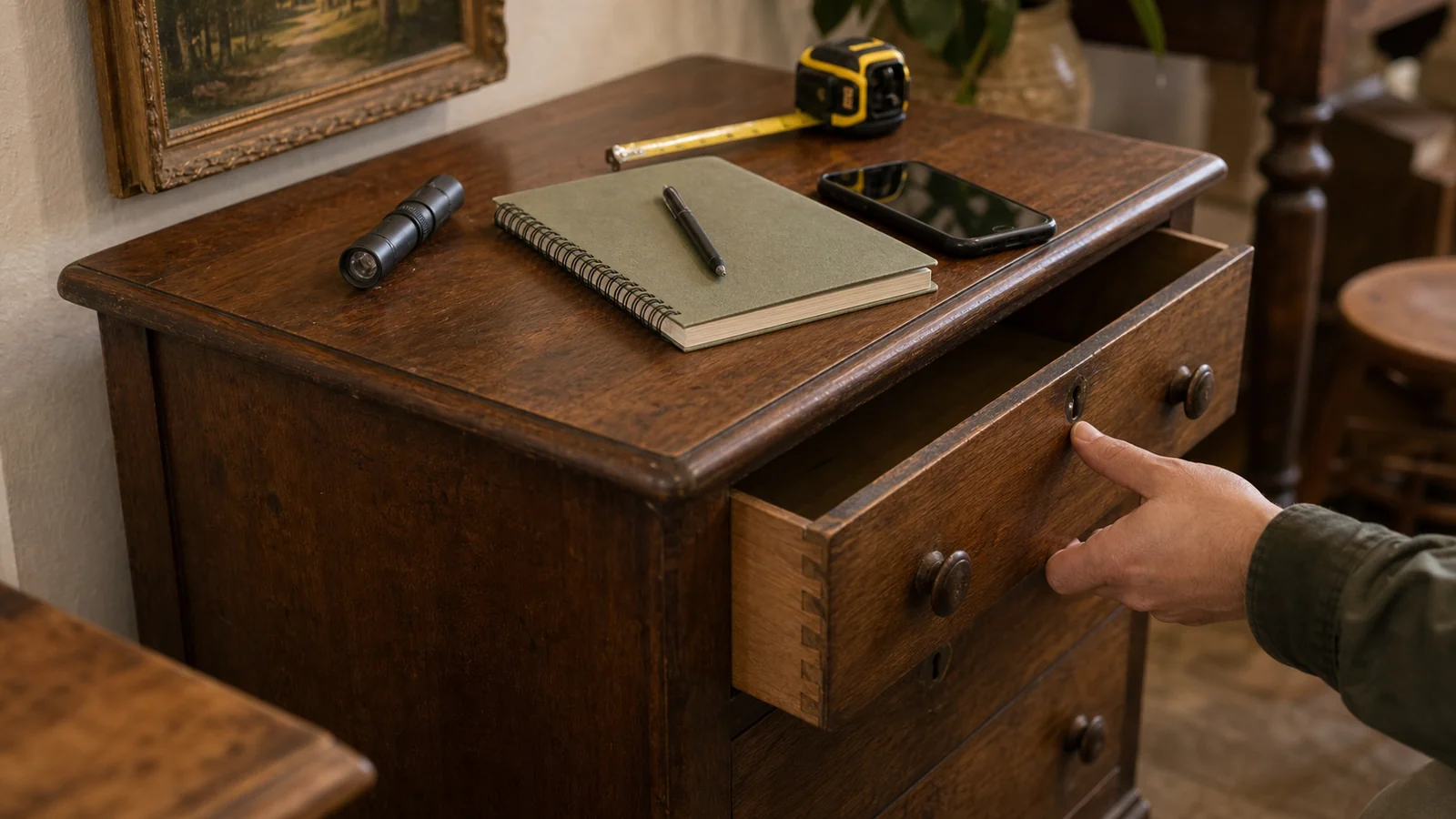
Antique Furniture Near Me: Small-Space Checklist
Use this antique furniture near me checklist to judge scale, condition, odor, repairs, delivery, and daily use before buying.
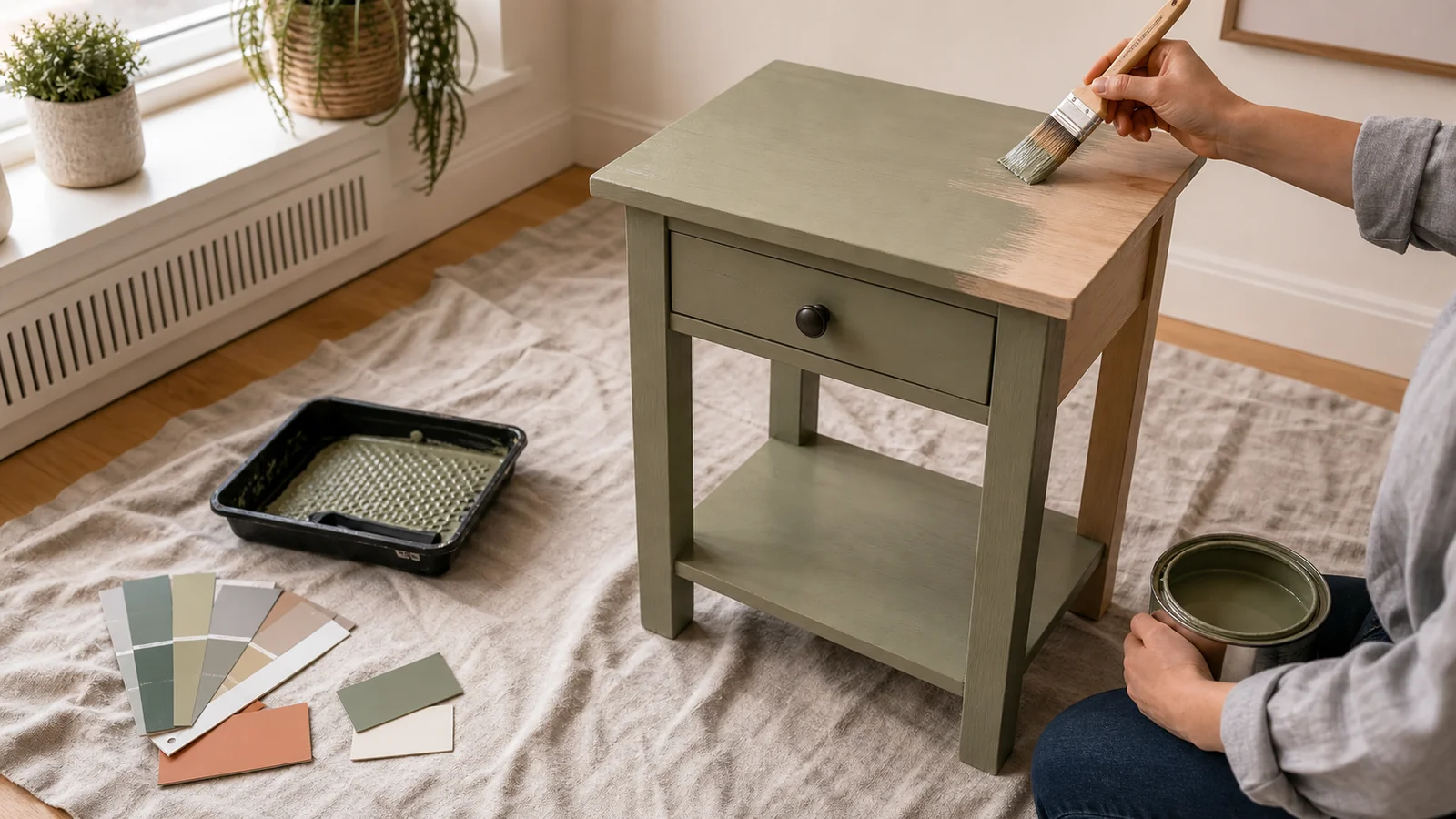
Furniture Paint: A Small-Room Refresh Guide
Choose furniture paint by matching the piece, prep level, finish, safety needs, color, and curing time to your real room.

Ashley Furniture Mattress: Small-Bedroom Guide
Choose an Ashley Furniture mattress by checking size, height, support, delivery terms, and how the bed fits your room.