Furniture Repair: Small-Home Fix or Replace Guide
Repair starts with a calm diagnosis
Furniture repair can feel intimidating when you live in a small home. There may be no garage, no spare room, no workshop bench, and no easy place to leave a half-fixed chair for a week. That does not mean every damaged piece needs to be replaced.
The practical question is simple: can this piece be repaired safely, neatly, and affordably enough to keep serving the room?
This guide walks through furniture repair from a small-home perspective. It covers how to inspect damage, prepare a compact work area, handle simple repairs, decide when to call a professional, and know when replacement is the calmer answer.
Step 1: Identify what is actually wrong
Before buying supplies or calling a repair service, name the problem clearly. Vague damage leads to vague decisions.
Common furniture repair issues include:
| Problem | What it may mean |
|---|---|
| Loose chair joint | Glue failure, worn dowel, loose screw, or cracked frame |
| Scratched wood top | Surface mark, finish damage, veneer damage, or deep gouge |
| Sticking drawer | Swollen wood, misaligned glide, broken runner, or overloaded drawer |
| Sagging cushion | Compressed foam, tired springs, stretched fabric, or frame issue |
| Torn fabric | Seam failure, worn upholstery, pet damage, or abrasion |
| Wobbly table | Loose fasteners, uneven floor, weak joint, or warped base |
| Recliner not moving | Cable, motor, power, frame, or mechanism problem |
| Musty smell | Damp storage, old padding, smoke, or mold risk |
Take a few minutes to inspect the piece from every side. Open drawers. Turn chairs over carefully. Look at legs, joints, screws, seams, fabric edges, and labels. The goal is not to become a furniture technician. It is to understand whether the repair looks cosmetic, structural, mechanical, or hygiene-related.
Step 2: Decide whether the piece is worth saving
Repair value is not the same as resale value. A modest table can be worth repairing if it is the only size that fits your breakfast nook. A dresser can be worth saving if it holds exactly what your closet cannot. A chair can be worth tightening if it keeps a rental dining corner useful.
Ask:
- Does the piece fit the room unusually well?
- Is the frame basically sound?
- Is the damage limited to one area?
- Would a replacement be harder to find, deliver, or afford?
- Does the repair improve safety, not only appearance?
- Can the work happen without disrupting the whole room?
- Will the piece still suit your home after repair?
Do not repair only because you feel guilty. If the furniture is too large, uncomfortable, unsafe, moldy, or poor quality, repair may delay the better decision. If the piece is well scaled and the damage is fixable, repair can be the softer and more sustainable path.
Our US sustainable furniture guide can help you compare repair, secondhand buying, and replacement when the decision is not obvious.
Step 3: Photograph and measure before moving anything
Photos help whether you plan to fix the piece yourself or ask for help. They also protect you from dragging heavy furniture around a small apartment before you understand the scope.
Take:
- A full-room photo showing where the furniture sits.
- A full-piece photo from the front.
- Close photos of the damage.
- Side, back, and underside photos.
- A photo of any tag, label, or model number.
- A photo with a ruler or tape measure for scale.
- A short video if the problem moves, wobbles, squeaks, or sticks.
If the furniture has a brand label, save it. Labels can help identify parts, upholstery, mechanisms, and original dimensions. Our Ashley furniture model number guide is brand-specific, but the same habit of checking tags and paperwork helps with many furniture repairs.
Step 4: Prepare a small repair zone
Even a simple repair can feel messy in a compact home. Create a temporary work zone before tools come out.
You may need:
- A washable drop cloth or old sheet.
- Painter’s tape.
- Good lighting.
- A small tray for screws and hardware.
- A phone for photos as you disassemble.
- Nitrile gloves for glue, stain, or cleaning products.
- A fan or open window when safe and appropriate.
- A clear path around the furniture.
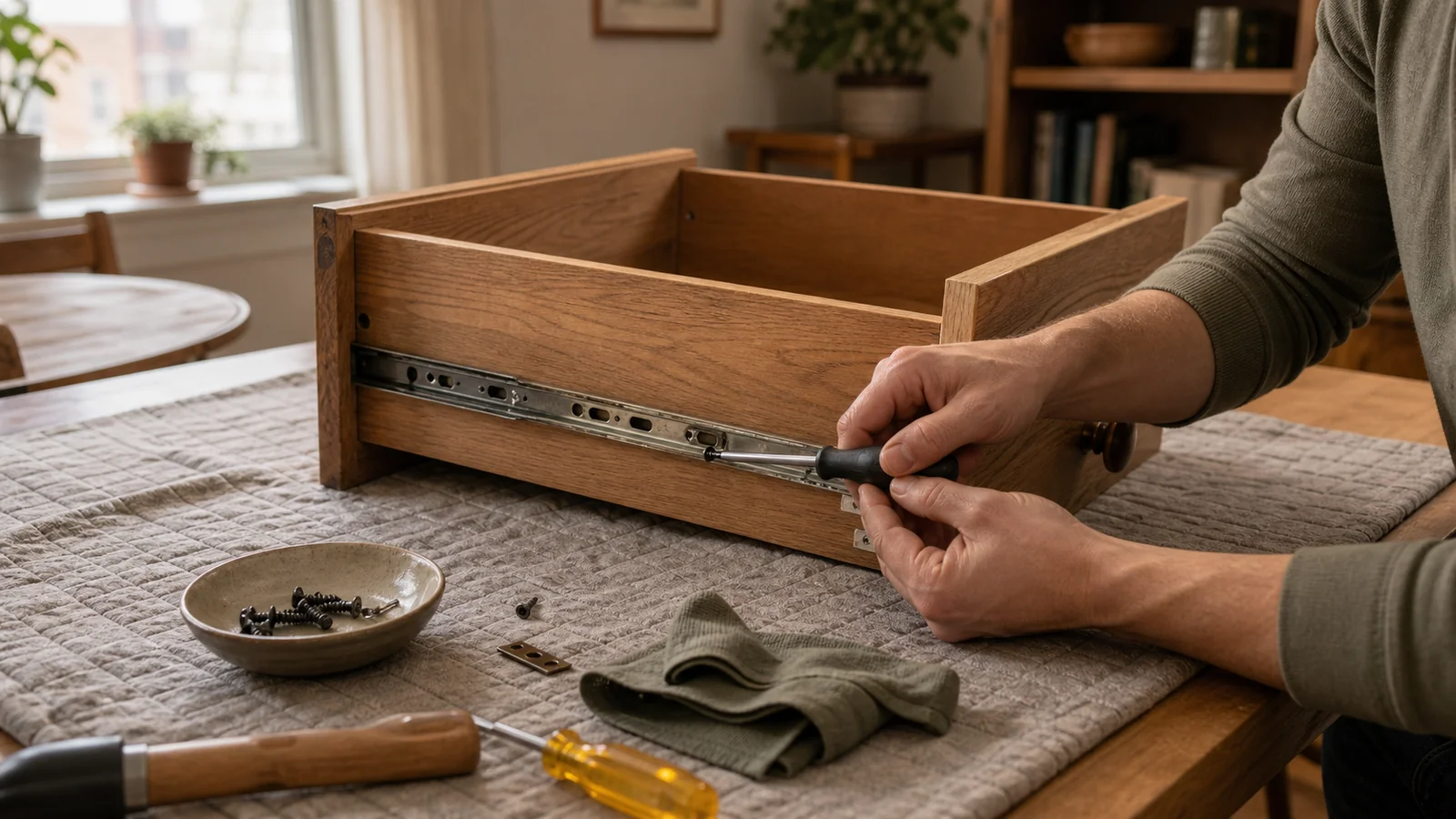
Choose the least disruptive spot. For a chair, that may be a protected kitchen floor. For a drawer, it may be a dining table covered with a towel. For a large sofa, it may be only enough space to access the damaged area and take photos for a professional.
Avoid sanding, staining, spraying, or using strong solvents in a small room unless the product directions, ventilation, and building rules make that safe. Many repairs are better handled in a workshop.
Step 5: Handle simple fixes only when they are truly simple
Small repairs can be satisfying, but guessing can make damage worse. Stay within low-risk tasks unless you have the right tools and experience.
Reasonable small-home repairs may include:
- Tightening visible screws or bolts.
- Replacing missing felt pads or floor glides.
- Cleaning drawer tracks.
- Re-seating a loose drawer on its runner.
- Using a wood touch-up marker on minor surface color loss.
- Trimming a loose thread without pulling fabric.
- Adding a non-slip rug pad under a sliding ottoman.
- Replacing a simple screw-in leg with a matching part.
Pause before:
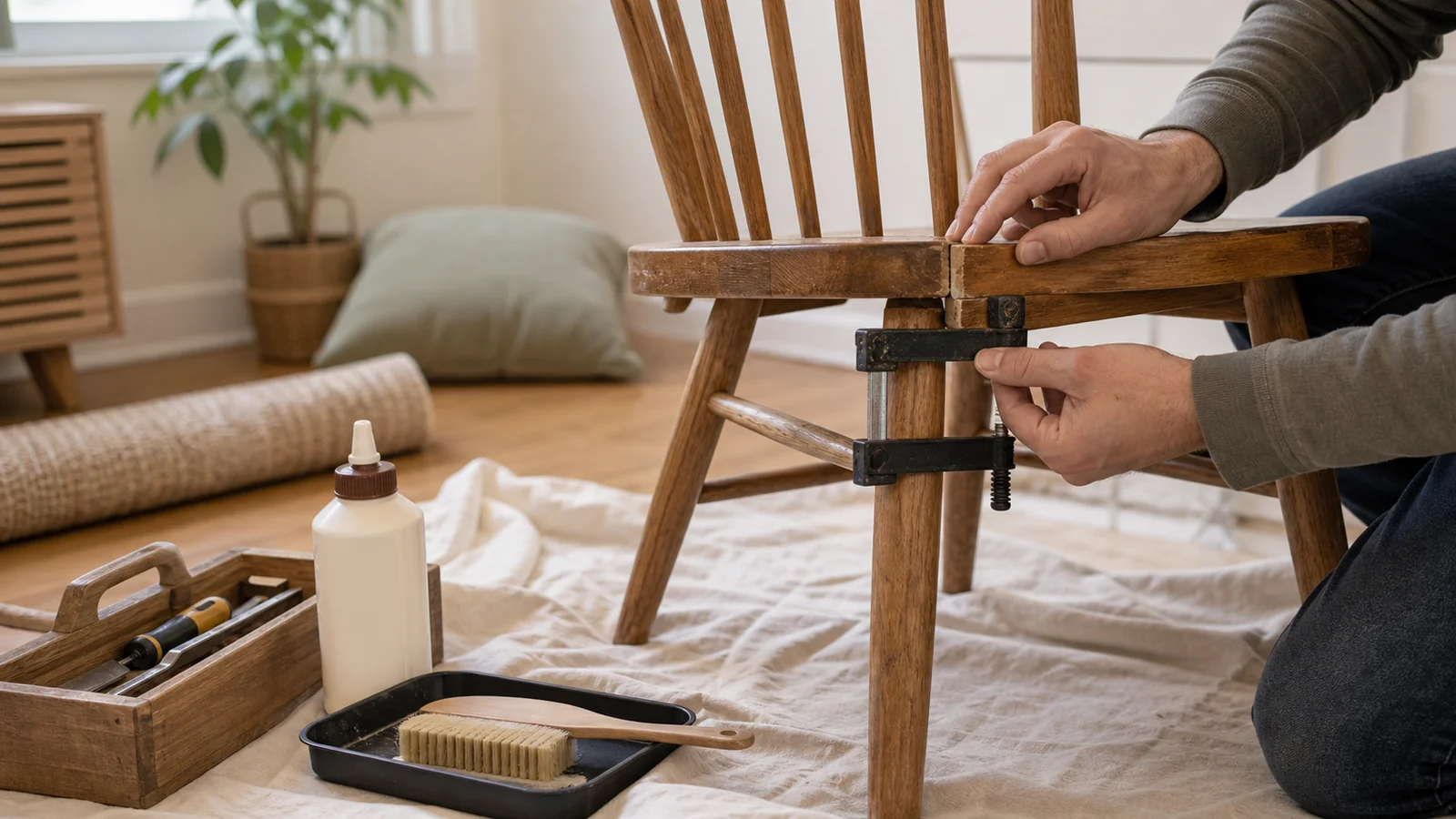
- Gluing structural chair joints without clamps.
- Repairing a recliner mechanism.
- Reupholstering a full seat.
- Sanding through veneer.
- Using wood filler on a visible antique.
- Treating odor or mold yourself.
- Rewiring anything with power.
If the repair affects safety, movement, electricity, structure, or expensive upholstery, get advice before experimenting.
Step 6: Match the repair to the material
Furniture repair depends on material. A solution for solid wood may damage veneer. A cleaning product that helps leather may ruin faux leather. A fabric patch that works on a hidden seam may look rough on a front cushion.
For wood, decide whether the issue is finish, veneer, joint, hardware, or structure. Surface scratches may need gentle touch-up. Loose joints may need disassembly, proper glue, and clamping. Veneer chips need a more careful approach.
For upholstery, decide whether the problem is fabric, foam, seam, spring, or frame. A small seam repair is different from worn-out cushion support. If the fabric is sun-faded or brittle, patching one area may not last.
For leather or faux leather, check the material before using any product. Real leather, bonded leather, polyurethane, and vinyl behave differently. Peeling faux leather usually does not repair like scratched real leather.
For recliners and motion furniture, identify whether the issue is power, cable, handle, motor, frame, or obstruction. Do not force a stuck mechanism. A forced recliner can turn a serviceable repair into broken parts.
Step 7: Know when to call a professional
Professional furniture repair is worth considering when the piece fits your room, has a solid frame, or would be hard to replace well.
Call a professional for:
- Loose structural chair joints.
- Broken sofa frames.
- Recliner mechanisms.
- Leather color repair.
- Full cushion rebuilding.
- Antique restoration.
- Veneer repair in visible areas.
- Water damage.
- Major scratches on a valuable tabletop.
- Reupholstery decisions.
When contacting a repair service, send your photos and ask specific questions. Our furniture repair near me checklist covers how to compare local repair options, pickup, estimates, and red flags.
For small homes, ask whether the repair can happen in your home or must go to a workshop. Also ask how long the piece will be gone, how pickup works, and whether there are fumes, dust, noise, or drying time involved.
Step 8: Estimate the hidden cost of repair
Repair cost is not only the quoted labor. A compact home may also need temporary storage, delivery, time off work, elevator reservations, or a cleared path.
Include:
- Repair labor.
- Parts or materials.
- Pickup and delivery.
- Fabric, foam, finish, or hardware.
- Time without the piece.
- Cleaning before or after repair.
- Risk if the repair does not solve the full problem.
Then compare that total with a realistic replacement. A cheap replacement may still have delivery fees, assembly time, uncertain fit, and lower quality. A repair may be better when the current piece already fits perfectly.
Step 9: Decide when not to repair
Some furniture should not be repaired. Letting go can be the safer, calmer choice.
Avoid repair when:
- The piece smells strongly of mold, damp, smoke, or pests.
- The frame is cracked in multiple places.
- The furniture is unsafe even after a likely repair.
- The repair would cost more than a better-fitting replacement.
- The piece never worked well in the room.
- The material is peeling, flaking, or failing everywhere.
- You are repairing only because moving it feels hard.
If disposal is needed, check local rules. If the piece still has usable parts, ask whether donation, resale, or parts salvage is realistic. Do not pass along unsafe furniture without disclosing the issue.
Step 10: Make the repaired piece easier to keep
After repair, protect the work so the problem does not return quickly.
Try:
- Felt pads under chair and table legs.
- Furniture glides suited to your floor.
- Coasters and trays on wood surfaces.
- Cushion rotation when possible.
- Keeping recliner cords clear.
- Not overloading drawers.
- Lifting furniture instead of dragging it.
- Checking screws and glides seasonally.
Small homes work hard. Furniture may be touched, moved, opened, leaned on, and cleaned more often than in larger rooms. Gentle maintenance helps one good repair last.
A small-home furniture repair checklist
Before you repair, confirm:
- You know what type of damage you are dealing with.
- The piece is worth saving for fit, safety, comfort, or quality.
- You have photos, measurements, and label information.
- The work area is protected and ventilated if needed.
- You are not attempting a structural, electrical, or high-risk repair without help.
- You have compared repair cost with realistic replacement cost.
- The repaired piece still belongs in the room.
Furniture repair is not about saving every object. It is about keeping the right pieces in use when they still support your home. In a small space, one well-repaired chair, drawer, table, sofa, or recliner can be more valuable than starting the whole shopping process again.
You might also like
Furniture Repair Near Me: A Small-Home Checklist
Use this furniture repair near me checklist to compare local repair pros, prepare photos, ask better questions, and avoid replacing good pieces.

Aluminum Outdoor Furniture: Material Comparison
Compare aluminum outdoor furniture with steel, wood, resin wicker, and plastic before choosing pieces for a compact balcony.

Wicker Outdoor Furniture: Small-Balcony Guide
Choose wicker outdoor furniture by checking resin weave, frame material, cushion storage, weather exposure, and balcony fit.