Furniture Deals Furniture: Buy Smart for Small Rooms
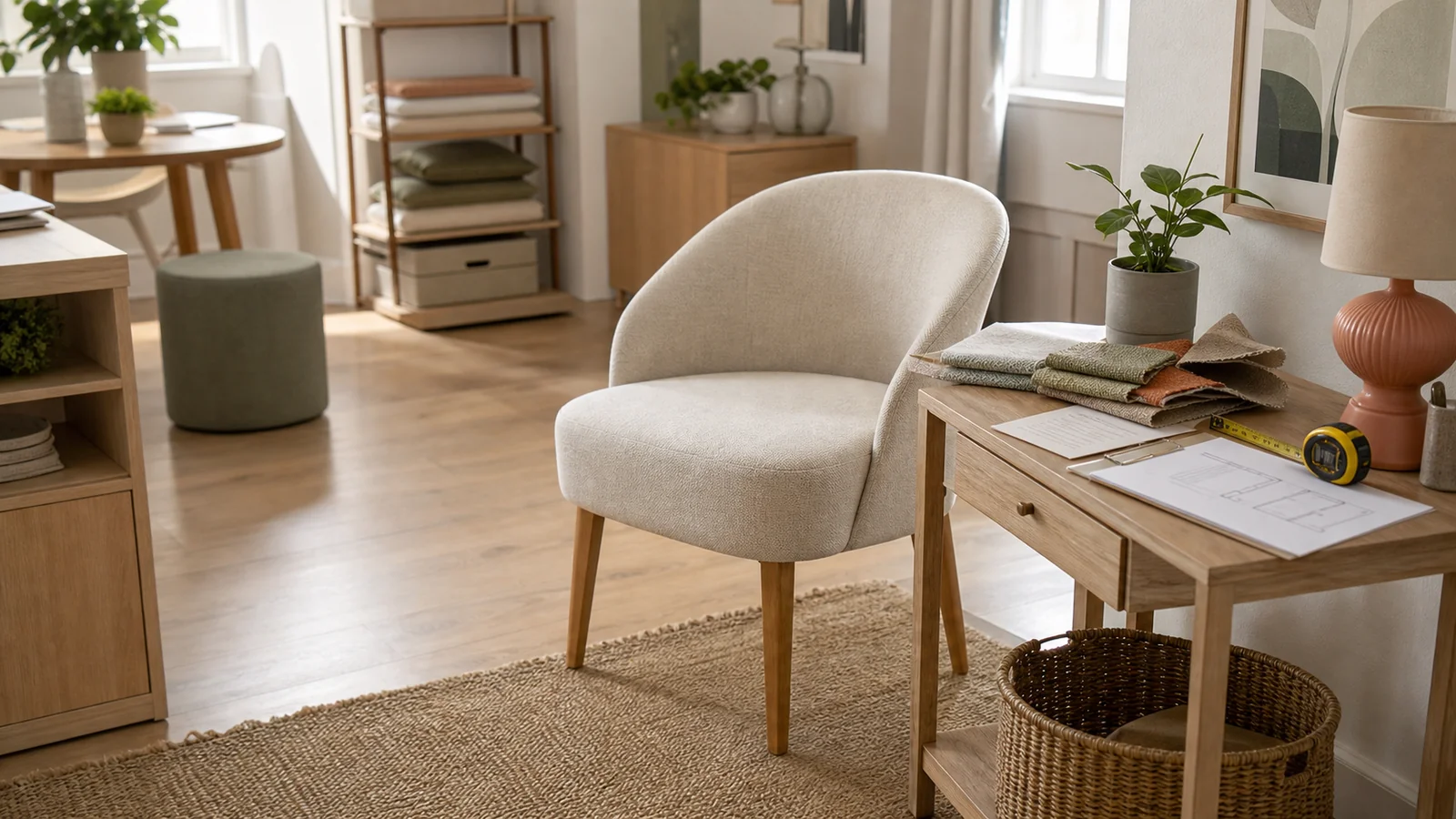
A good deal still has to fit the room
Furniture deals can be useful when you need a sofa, table, bed frame, or storage piece and the full price would stretch the budget. They can also lead to rushed decisions. A large discount feels harmless until the piece blocks a walkway, cannot be returned, or costs more to deliver than you expected.
For a small home, the best furniture deal is not the lowest marked price. It is the piece that solves a real room problem, fits the delivery path, feels sturdy enough for daily use, and leaves you with enough money for the small things that make it work.
Use the discount as a prompt to look more carefully, not as permission to skip the normal checks.
Step 1: Decide what the room actually needs
Before you open a sale page or visit a clearance section, name the job the furniture must do. This keeps you from buying the best deal for the wrong room.
Ask what is missing:
- A place to sit every day.
- A surface for coffee, books, or a laptop.
- Closed storage for clutter.
- A guest sleep option.
- A flexible piece that can move between rooms.
Then ask what the room cannot handle. A small living room may need a narrow sofa more than a discounted sectional. A studio may need a lift-top table more than a decorative accent chair. A bedroom may need a quiet dresser with good drawer movement more than a dramatic headboard.
If you are still guessing at size, start with our furniture measuring guide before you compare any sale prices.
Step 2: Check the discount, not only the percentage
A crossed-out price does not automatically prove value. Some discounts are genuine end-of-season markdowns. Some reflect discontinued colors, overstock, damaged packaging, showroom samples, or special promotional pricing. Others may simply compare one price with another price that was never realistic for your budget.
Instead of asking, “How much is it marked down?” ask:
- What would a similar new piece cost elsewhere?
- Is the lower price tied to a final-sale policy?
- Is this a floor model, open-box item, outlet item, or normal stock?
- Are all parts, legs, shelves, cushions, and hardware included?
- Is the finish or fabric the reason for the discount?
For small homes, compare the actual useful value. A $900 sofa reduced to $500 is not a better buy than a $450 apartment sofa if the larger one eats the whole room. A discounted storage cabinet is not useful if the doors cannot open beside the bed.
Step 3: Know the type of deal
Different furniture deals come with different risks. The wording matters because it often hints at return rules, condition, timing, and replacement options.
| Deal type | What it often means | What to check |
|---|---|---|
| Clearance | Discontinued or slow-moving stock | Return policy and remaining inventory |
| Floor sample | Display piece from a store | Wear, fabric fading, scratches, missing tags |
| Outlet | Overstock, returns, or special buy | Condition grade and warranty terms |
| Open-box | Returned or unpacked item | Hardware, assembly marks, damage |
| Seasonal sale | Temporary promotion | Delivery dates and true final price |
| Bundle deal | Multiple pieces priced together | Whether you actually need every piece |
Read the language before you fall in love with the photo. Clearance and floor sample pieces are often sold with stricter rules than regular stock. Some stores allow returns on discounted items. Others make as-is, closeout, or floor model purchases final sale. That difference can matter more than the discount.
Step 4: Measure the furniture and the delivery path
Small-space furniture mistakes usually start with a missing measurement. The product width is only one part of the decision. You also need depth, height, seat depth, arm width, drawer swing, door swing, and the route from truck to room.
Measure:
- The wall or floor area where the piece will live.
- The walkway around it after it is placed.
- Doorways, stair turns, elevator doors, and hallways.
- Ceiling height if the piece must tilt or rotate.
- Radiators, outlets, vents, windows, and closet doors.
Then mark the footprint with painter’s tape, cardboard, or folded sheets. Live with the outline for a day if the piece is large. Walk around it with a laundry basket, open nearby drawers, and sit where you normally sit. If the taped shape already feels annoying, the discount will not fix it.
For tables, the surrounding clearance matters as much as the table itself. Our cocktail table guide shows how a few inches can change daily movement.
Step 5: Add the quiet costs
A furniture deal can stop being a deal once delivery, assembly, return shipping, protection plans, disposal, and restocking fees are added. This is especially true for apartment dwellers, where delivery access can be complicated.
Before checkout, write down the full cost:
| Cost | Why it matters |
|---|---|
| Delivery | Large items may need scheduled freight or white-glove service |
| Assembly | Flat-pack savings disappear if assembly is expensive |
| Return shipping | Heavy furniture can be costly to send back |
| Restocking fee | Some retailers deduct a percentage from refunds |
| Old furniture removal | You may need to pay or arrange pickup separately |
| Replacement parts | Missing hardware can delay use |
Also check what happens if the item arrives damaged or cannot fit through the door. Take photos during delivery, keep packaging until you inspect the piece, and do not sign off casually if the damage is obvious.
Step 6: Inspect quality before you commit
Discount furniture still needs to survive daily life. A small home often asks more from each piece because rooms overlap: the dining table becomes a desk, the sofa becomes a guest bed, and the ottoman becomes storage, seating, and a footrest.
If you can inspect the piece in person, look for:
- Stable legs and even contact with the floor.
- Drawers that glide without scraping.
- Doors that align and close cleanly.
- Cushions that recover after pressure.
- Tight seams, smooth zippers, and secure buttons.
- No strong odor, dampness, broken corners, or hidden cracks.
For upholstered furniture, sit the way you actually live. Sit upright, lean into the corner, put your feet down, and check whether the seat height works with your table or coffee table. For case goods, open every drawer and door. For metal or wood frames, check wobble before style.
Step 7: Use deals for flexible pieces first
Some discounted pieces are easier to make work in a small home than others. Flexible furniture gives you more room for error.
Good deal candidates include:
- Slim side tables.
- Small dressers used as nightstands.
- Storage ottomans.
- Dining chairs that can work as desk chairs.
- Open shelving with adjustable shelves.
- Benches for entryways or bed ends.
Riskier deal candidates include oversized sectionals, very deep sofas, bulky recliners, tall wardrobes, heavy dining sets, and anything custom-sized for a room you may leave soon. If you rent, be especially careful with large pieces that are hard to move, hard to return, and hard to place in the next apartment.
When to walk away
The calmest deal is sometimes the one you leave behind. Walk away when the retailer will not explain the condition, the measurements are incomplete, the return policy is vague, the delivery date is uncertain, or the piece needs repairs you do not know how to handle.
Also pause when you hear yourself saying, “I will make it work.” That can be true for a small lamp or pillow. It is rarely true for a sofa that is too deep, a table that blocks chairs, or a cabinet that cannot turn into the hallway.
If you need a local store option, our Value City Furniture guide has a useful checklist for separating a nearby deal from an order problem.
A calmer way to buy discounted furniture
Furniture deals are most useful when they support a plan you already have. Decide the room’s need, measure the space, understand the type of discount, and calculate the full cost before you commit. Then inspect quality with the same care you would use for a full-price piece.
The goal is not to win the biggest markdown. It is to bring home furniture that keeps the room softer, clearer, and easier to live in after the sale excitement is gone.
You might also like

80-Year-Old Furniture Business Closing: Shop Carefully
Use a furniture business closing sale carefully by checking dimensions, final-sale terms, delivery, damage, and room fit.

Galleria Furniture: Small-Room Shopping Guide
Use a Galleria Furniture search to compare store identity, showroom scale, delivery terms, and compact furniture fit.
Acme Furniture: Small-Space Buying Guide
Use Acme Furniture listings carefully by checking scale, materials, assembly, retailer terms, and room fit before you buy.