Acme Furniture: Small-Space Buying Guide
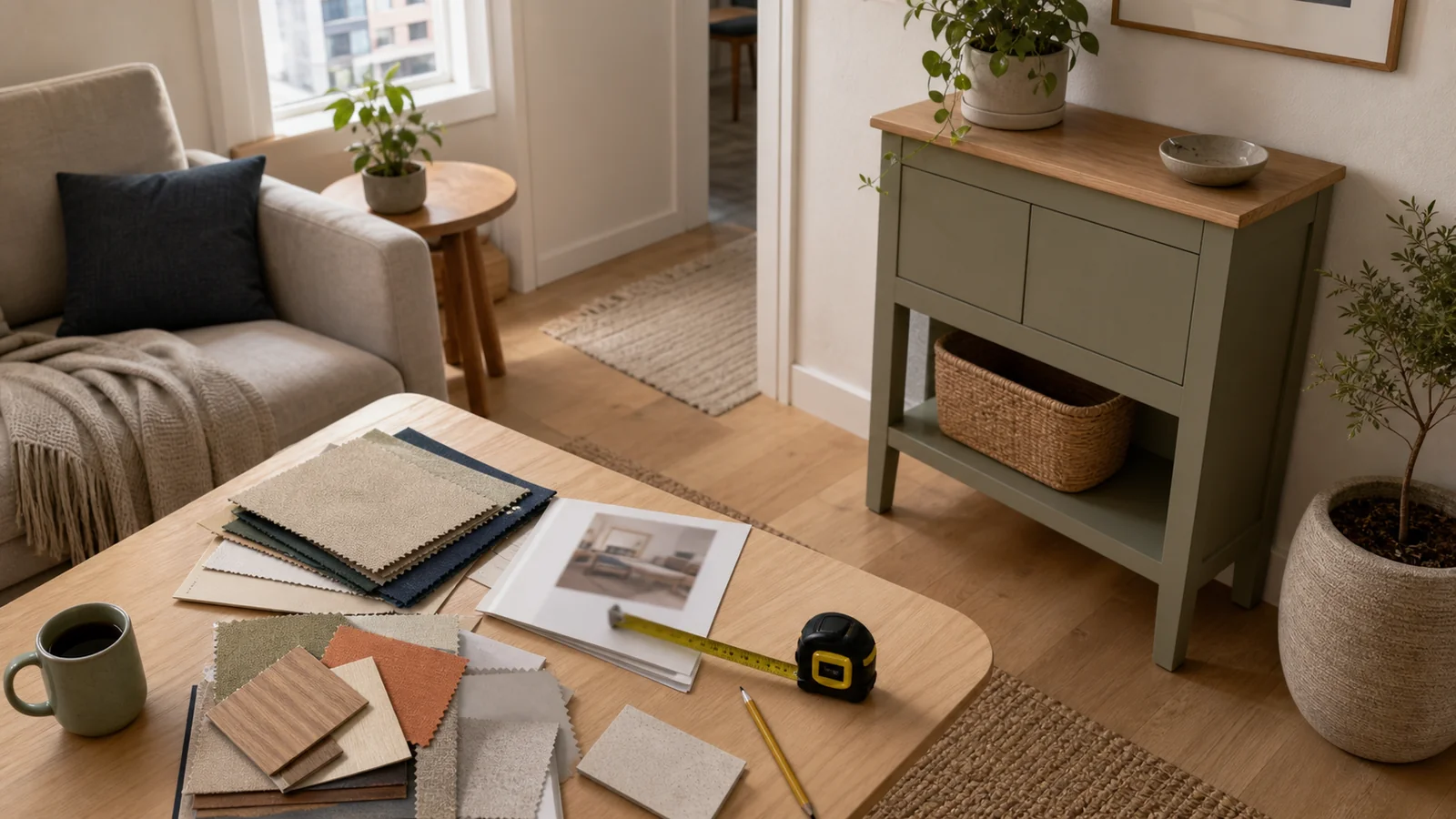
Acme Furniture needs a room-first filter
Acme Furniture is often searched as a broad brand name, not as one single piece. You may see bedroom sets, dining tables, sofas, accent cabinets, youth furniture, office pieces, lighting, and occasional tables listed through different retailers. That wide catalog can be useful, but it also means the small-space shopper has to filter hard.
The question is not whether Acme Furniture has enough choice. The question is whether a specific Acme piece fits your room, your delivery path, your maintenance habits, and the retailer terms attached to that listing.
This is a review-style buying guide, not a hands-on test of Acme Furniture. Use it to compare listings, showroom tags, and retailer pages before bringing a piece into a compact home.
Start with the exact seller, not only the brand
Acme Furniture is commonly sold through furniture retailers, online stores, local showrooms, and dealer listings. That matters because the buying experience can vary by seller even when the product brand is the same.
Before you compare style, confirm:
- The retailer name and location.
- Whether the item is in stock, special order, or direct ship.
- Delivery options for your address.
- Return and cancellation terms.
- Who handles damage claims.
- Whether assembly is included or separate.
- Whether the listing shows full dimensions.
- Whether the photos match the exact finish and configuration.
A brand name can point you toward a product family, but the retailer controls many practical details. If two stores list the same Acme dining table or sofa, compare the final cost, delivery window, return policy, and service support before choosing.
If you are comparing local stores as well as national retailers, our Becker Furniture guide has a useful checklist for separating the store decision from the furniture decision.
Read the dimensions before the collection name
Acme listings often use collection names, style names, or room categories. Those names can help you find matching pieces, but they do not tell you whether the furniture will behave well in a small room.
Check the numbers first:
| Furniture type | Small-room measurement to check |
|---|---|
| Sofa or loveseat | Overall width, seat depth, arm height, back height |
| Dining table | Length, width, clearance with chairs pulled out |
| Bed | Full frame footprint, headboard height, footboard depth |
| Dresser | Depth, drawer pull-out clearance, mirror height |
| Accent cabinet | Door swing, shelf depth, visual weight |
| Desk | Knee clearance, cable access, chair space |
Do not rely on the word “apartment” unless the dimensions prove it. Some compact-looking pieces still have deep arms, thick bases, tall backs, or wide decorative details that consume more space than expected.
For a small living room, a narrow arm can matter as much as total width. For a bedroom, a tall headboard may be fine, but a deep footboard can make the walkway feel tight. For a dining area, the table size is only half the story; chair clearance decides whether the room works.
Sort Acme styles by visual weight
Acme Furniture appears across many style directions, from traditional and glam to modern, rustic, industrial, and transitional. A piece can be the right physical size and still feel too heavy for a calm compact room.
Look for visual weight in:
- Thick arms.
- Deep bases.
- High backs.
- Dark glossy finishes.
- Heavy carving.
- Mirrored panels.
- Large metal trim.
- Oversized hardware.
- Matching sets with many pieces.
That does not mean every small room needs plain furniture. A shaped cabinet, tufted headboard, or dramatic dining chair can work beautifully when it has enough breathing room. The key is restraint. Let one piece carry character, then keep nearby shapes quieter.
If you like the more polished or glam side of the Acme catalog, compare it with our Meridian Furniture small-room guide. The same scale questions apply: shine, velvet, metal details, and high-contrast finishes need edited surroundings.
Check materials as practical clues
Retailer pages may describe Acme pieces with terms such as solid wood, veneers, engineered wood, metal, upholstery, faux leather, glass, marble-look tops, or mirrored panels. Treat those words as starting points. Then look for care needs and daily use.
Ask:
- Is the top surface easy to wipe?
- Will a dark finish show dust in your light?
- Does the table need coasters, pads, or gentler cleaning?
- Are drawers smooth enough for daily use?
- Is upholstery likely to snag, stain, or attract lint?
- Will glass or mirrored panels make the room feel lighter or busier?
- Can replacement parts or hardware be sourced if needed?
Small homes make wear more visible because furniture is used often and viewed up close. A coffee table may also be a desk, dinner spot, puzzle table, and landing place. A dresser may sit beside a walkway. A dining chair may be moved every day. Material decisions need to match that routine.
Be careful with full matching sets
One benefit of a broad furniture catalog is that you can often find coordinated beds, dressers, mirrors, nightstands, dining pieces, and occasional tables. Coordination can make shopping easier. In a compact room, it can also become too much.
A full matching bedroom set may include a bed, two nightstands, dresser, mirror, and chest. That may work in a larger room, but a smaller bedroom may only need the bed and one storage piece. A dining collection may include a table, side chairs, armchairs, bench, server, and display cabinet. A small apartment may need only the table and the chairs that actually clear the wall.
Before buying a set, decide:
- Which pieces solve real storage or seating problems.
- Which pieces duplicate a function you already have.
- Whether the room can hold matching finishes without feeling flat.
- Whether one lighter secondhand or existing piece would soften the set.
- Whether delivery and assembly get harder with every added item.
Buying fewer pieces from the same collection can make the room feel more personal. It also leaves space for softer layers: a rug, curtains, lamp, textile storage, or art.
Inspect assembly and moving needs
Some Acme Furniture pieces may arrive assembled, partially assembled, or ready to assemble depending on the item and retailer. Assembly is not only a convenience issue. It affects building delivery, long-term sturdiness, and whether the piece can move with you.
Check the listing or ask the seller:
- Does the item ship in one box or several?
- What are the box dimensions and weights?
- Does it require two people?
- Are tools included?
- Can it be disassembled later?
- Are parts labeled clearly?
- Are replacement screws, glides, or hardware available?
- Does assembly affect return eligibility?
Renters should be especially careful with oversized bed frames, wall units, curio cabinets, hutches, and heavy dressers. A piece that barely enters the apartment may be difficult to move out. If you expect another move in the next few years, favor simpler silhouettes and pieces that can be taken apart without damage.
Use Acme sofas and sectionals with extra measurement
Acme sofas, loveseats, recliners, sleepers, and sectionals can be tempting when you want a coordinated living room. The risk is depth. A sofa can look tidy in a product photo and still push too far into a narrow room.
Measure:
- Overall width.
- Overall depth.
- Seat depth.
- Arm width.
- Back height.
- Leg or base height.
- Recline or sleeper clearance if relevant.
- Delivery path from curb to room.
Then tape the footprint on the floor. Walk around it for a day if you can. Check whether the coffee table still fits, whether the door opens, and whether the sofa leaves a natural path through the room.
For small rooms, a loveseat plus an accent chair may work better than a full sofa. A sofa with slimmer arms may seat almost as many people as a wider style because less width is lost to the frame. A raised base can also make the room feel lighter because floor remains visible below the piece.
Evaluate bedroom pieces around storage rhythm
Bedroom furniture is where collection shopping can become very practical. A bed, dresser, nightstand, and chest can solve real storage problems. Still, the best small bedroom layout usually comes from choosing the right storage rhythm, not the biggest matching group.
Think through your habits:
- Do you fold clothes or hang most things?
- Do you need deep drawers or shallow daily drawers?
- Can a tall chest replace a wide dresser?
- Does a storage bed make sense, or would drawers hit a rug or wall?
- Is one nightstand enough?
- Will a mirror over the dresser reflect light or clutter?
- Does the headboard need to be calm because the room is already busy?
Many small bedrooms benefit from vertical storage, softer finishes, and clear walking space beside the bed. If a dresser blocks the closet door or makes the bed hard to make, it is too large no matter how well it matches the set.
Compare final price with service and risk
Acme Furniture can appear at different price points across retailers. A lower item price is not always the lower total cost. Delivery, assembly, return shipping, restocking fees, damage handling, and schedule flexibility can change the value quickly.
Before ordering, compare:
| Cost or risk | Why it matters |
|---|---|
| Delivery fee | Large furniture may not qualify for ordinary parcel handling |
| Room-of-choice service | Curbside delivery may not work for apartments |
| Assembly fee | Complex pieces can take time and space |
| Return shipping | Furniture returns can be expensive |
| Restocking fee | A wrong size can become a costly mistake |
| Damage process | You need clear photos, timelines, and contacts |
| Lead time | Special orders may not fit a tight move-in schedule |
If a retailer is vague about damage claims or returns, pause. Small-space furniture mistakes are not easy to absorb. A sofa that is six inches too deep or a dresser that blocks a walkway changes the whole room.
When Acme Furniture makes sense for a small home
Acme Furniture can be worth considering when you find a specific piece with honest dimensions, a seller you trust, and a style that supports the room instead of crowding it.
It may be a good fit when:
- The dimensions are clear and restrained.
- The retailer terms are easy to understand.
- The piece solves one real problem.
- The style adds warmth without visual heaviness.
- Delivery and assembly fit your building.
- You are buying selected pieces, not an automatic full set.
- The material suits daily use.
It may be the wrong fit when the listing lacks measurements, the piece is oversized for the room, the finish feels too formal for your home, or the seller cannot explain return and delivery support.
A small-space checklist for Acme Furniture
Before buying Acme Furniture for a compact room, confirm:
- You know the exact seller and service terms.
- The dimensions fit the room and delivery path.
- The style has the right visual weight.
- Materials match your cleaning habits.
- You are not buying a full set by default.
- Assembly and future moving needs are realistic.
- Sofas, beds, dressers, and tables have been checked in their open-use position.
- The final price still makes sense after delivery and risk.
Acme Furniture can offer a wide field of choices, which is useful when you need a specific size, style, or coordinated piece. Let the room edit that field down. A calm small home usually comes from the piece that fits cleanly, works daily, and leaves enough space for life around it.
You might also like
80-Year-Old Furniture Business Closing: Shop Carefully
Use a furniture business closing sale carefully by checking dimensions, final-sale terms, delivery, damage, and room fit.

Galleria Furniture: Small-Room Shopping Guide
Use a Galleria Furniture search to compare store identity, showroom scale, delivery terms, and compact furniture fit.
Becker Furniture: Small-Room Shopping Guide
Use a Becker Furniture search wisely by checking store identity, scale, delivery, floor samples, and compact-room fit.