Console Table Furniture: A Small-Room Fit Guide
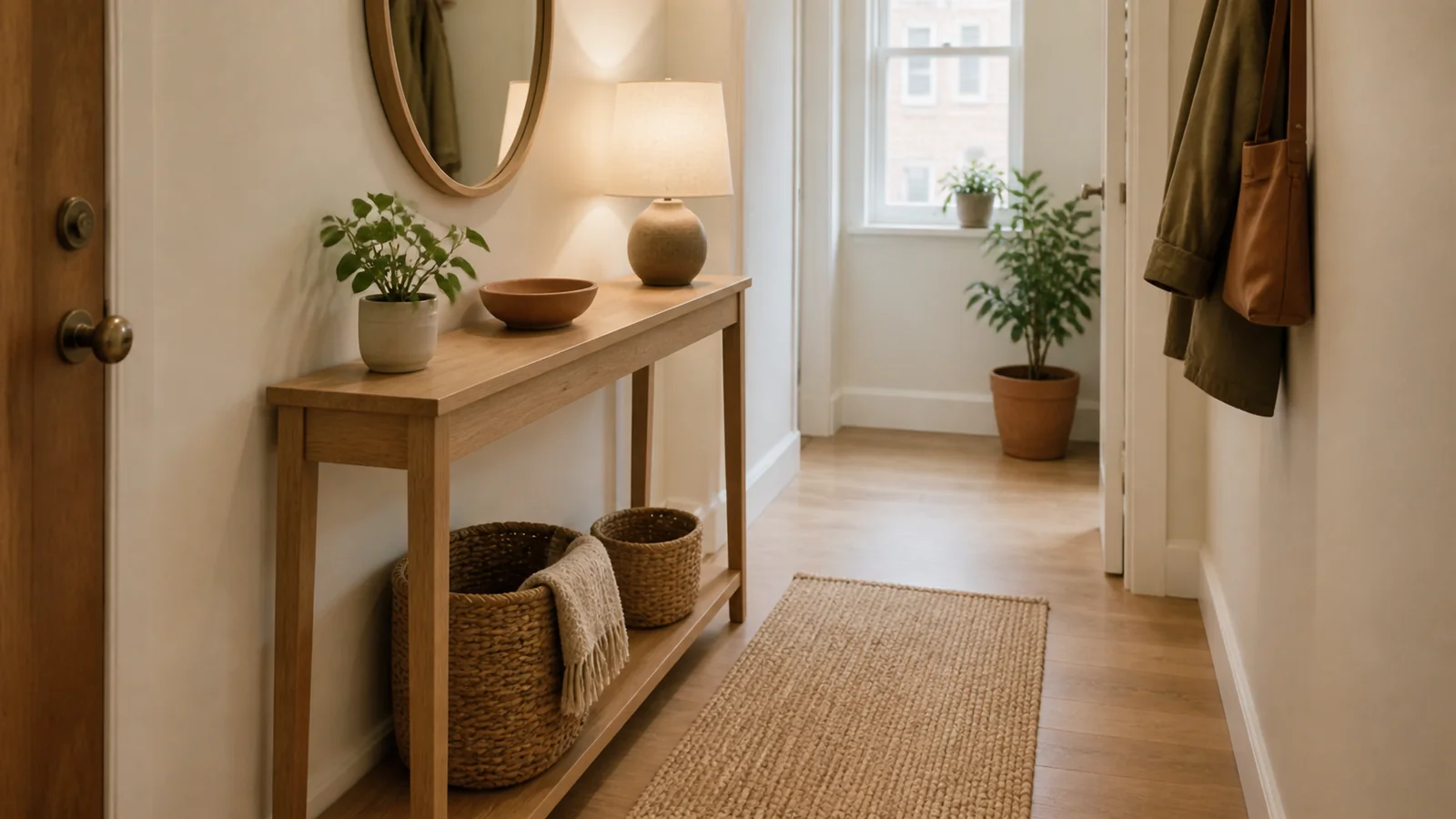
Treat a console table as a working surface
The phrase “furniture table console” usually points to a console table: a narrow table used behind a sofa, along an entry wall, under a mirror, beside a hallway, or sometimes as a slim media surface. In small homes, it can be one of the most useful pieces in the room if the size is right.
A console table is not just decorative. It catches keys, holds a lamp, gives a narrow wall a purpose, and can add closed or open storage without the bulk of a cabinet. The mistake is choosing one that looks elegant online but projects too far into a walkway.
Before you shop, measure the wall and the path in front of it. If you are still mapping the room, start with our guide to measuring a room for furniture so you know the exact space you can afford to give up.
Choose the right depth first
Depth is the most important console table measurement for apartments and narrow rooms. Width gets attention, but depth decides whether the piece feels graceful or annoying.
For a tight entry, hallway, or wall beside a door, look for a shallow console. A depth around 10 to 14 inches can often hold a tray, lamp, small bowl, or vase without blocking daily movement. In a larger living room or behind a floating sofa, a depth closer to 14 to 18 inches may work better.
Use the walkway test:
- Mark the console depth on the floor with painter’s tape.
- Walk past it while carrying a laundry basket, bag, or tray.
- Open nearby doors and closet doors.
- Check whether two people can pass if that area is a main route.
- Look at the taped shape from the next room, not only from straight on.
If the taped outline feels like a bruise waiting to happen, the table is too deep for that spot.
Match height to the nearby furniture
Console tables are often around sofa-back height, but the best height depends on placement.
Behind a sofa, the console should usually sit close to the sofa back height or slightly lower. If it is much taller, it can look awkward and make lamps or decor feel unstable. If it is much lower, it may disappear visually and become less useful.
Along an entry wall, height is more flexible. A table around counter height can feel easy for keys and mail, while a lower table can suit a mirror, artwork, or calm layered styling.
For a hallway or under-window placement, check the nearby trim, outlet height, radiator location, and window sill. The table should not block heat, airflow, outlets, or curtains.
Decide what the table needs to hold
A console table works best when it has a clear job. If the job is vague, it can become clutter storage within a week.
Use the room to define the function:
| Location | Best console table function |
|---|---|
| Entryway | Keys, wallet, lamp, small tray, baskets for accessories |
| Behind sofa | Lamp, books, drink landing spot, subtle room divider |
| Hallway | Slim storage, art wall anchor, night lighting |
| Bedroom | Small vanity surface, linen storage, mirror wall |
| Dining area | Serving surface, table linens, extra dishes |
| Living room wall | Media support, record storage, sculptural styling |
If you need storage, choose between drawers, lower shelves, baskets, or closed doors. Drawers are best for tiny loose items. Lower shelves look lighter but need tidy baskets. Closed doors hide more, but the piece may feel heavier and usually needs more depth.
Pick a base that suits the room’s visual weight
Small rooms often need furniture that gives the eye a little space to breathe. A console with open legs can feel lighter than a solid cabinet-style table. A table with a lower shelf offers storage but still shows the floor. A full cabinet gives more hidden storage but can make a narrow wall feel dense.
Think about the room’s existing furniture:
- If your sofa is heavy and blocky, choose a slimmer table with visible legs.
- If your room has many thin-legged pieces, a slightly weightier console can ground the wall.
- If your walls are pale, a medium wood or muted painted finish can add warmth.
- If the room is already dark, avoid a deep finish unless the table is very slim.
- If you rent, avoid pieces that require wall mounting unless you can patch easily.
Material matters too. Light oak, walnut, painted wood, metal, glass, and woven shelves all create different feelings. Glass can visually disappear, but it shows dust and fingerprints. Metal can feel clean and narrow, but it may read cold unless paired with textiles or wood. Wood is easiest to soften with a lamp, tray, or linen basket.
Style the surface without crowding it
Console tables are magnets for small objects. A calm surface needs a boundary.
Start with one lamp or one vertical object. Add one tray for daily items. Add one softer element, such as a bowl, small woven basket, folded textile, or plant. Then stop before every inch becomes useful.
For entryways, leave open landing space. If you cover the whole top with decor, keys and mail will end up somewhere messier. For behind-sofa consoles, keep tall pieces away from the center of the view unless you want the table to act as a divider.
Use wall space to reduce surface clutter. A mirror, small artwork, peg rail, or sconce can make the console feel intentional without loading the tabletop.
Check stability and safety
Because console tables are narrow, stability matters. A long, shallow table can tip more easily than a deep cabinet if it is bumped or loaded unevenly.
Check the product details for anti-tip hardware, weight limits, and assembly notes. If the table has drawers or doors, make sure opening them will not pull the table forward. If children visit your home, or if the piece sits in a busy entry, anchoring may be worth it even when the table looks light.
Also look at leg placement. Very narrow legs at the corners can catch on rugs or uneven floors. A table with a stretcher, shelf, or more balanced base may feel steadier.
A simple buying checklist
Before choosing console table furniture, run through this short list:
- The depth leaves a clear walking path.
- The height suits the sofa, window, mirror, or wall.
- The storage type matches what you actually need to hide.
- The base style balances the room’s visual weight.
- Doors, drawers, and baskets can open fully.
- The finish works with nearby wood tones and textiles.
- The table can be delivered through your hallway and door.
- The piece is stable enough for the location.
A good console table does not need to shout. In a small room, its best quality is quiet usefulness: a narrow place to land, store, soften, and organize without stealing the space you need to move.
You might also like
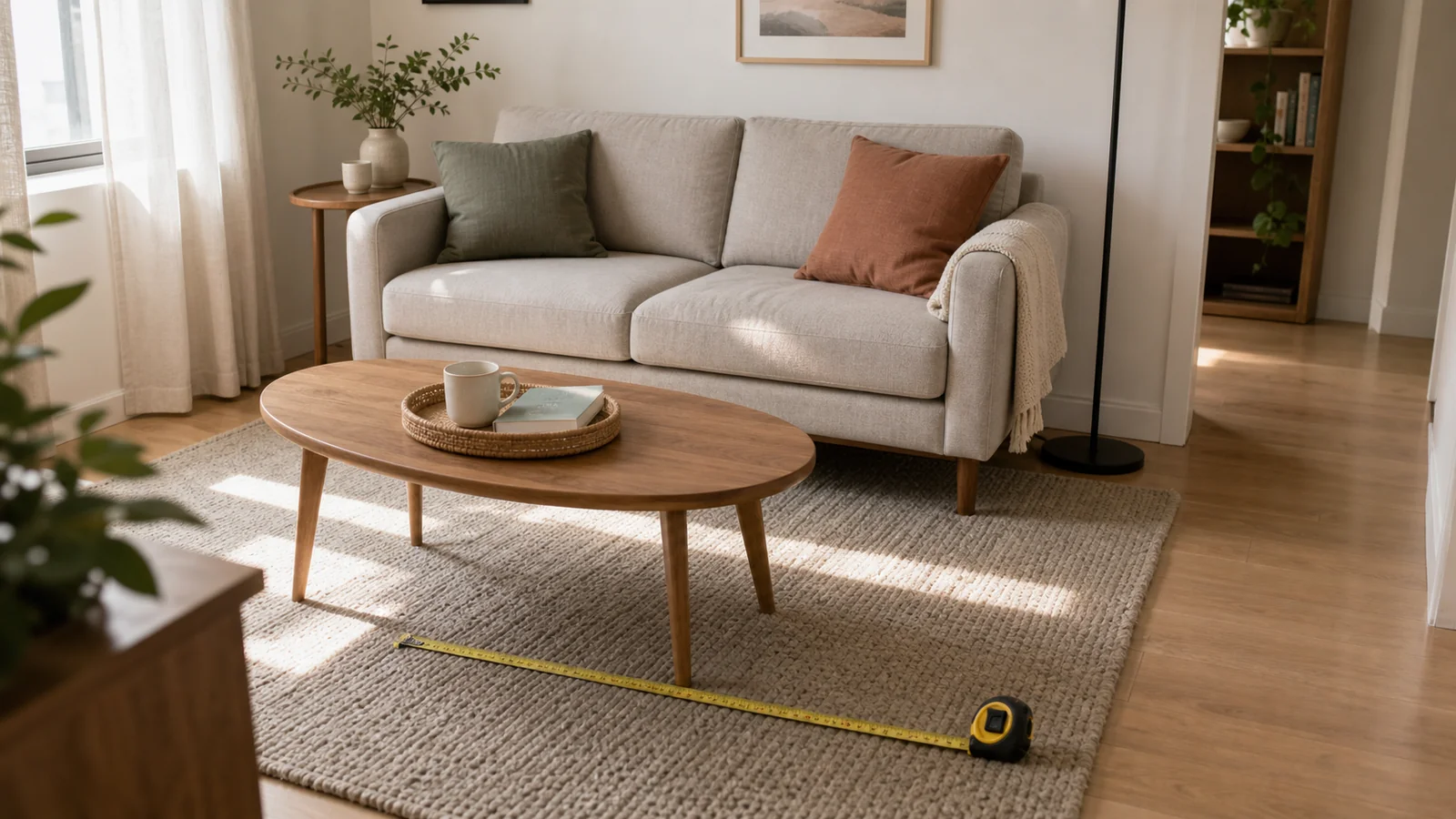
Cocktail Tables Furniture: Choose the Right Size
Choose cocktail tables furniture by sofa scale, walkway clearance, shape, storage, corners, and everyday use in small rooms.
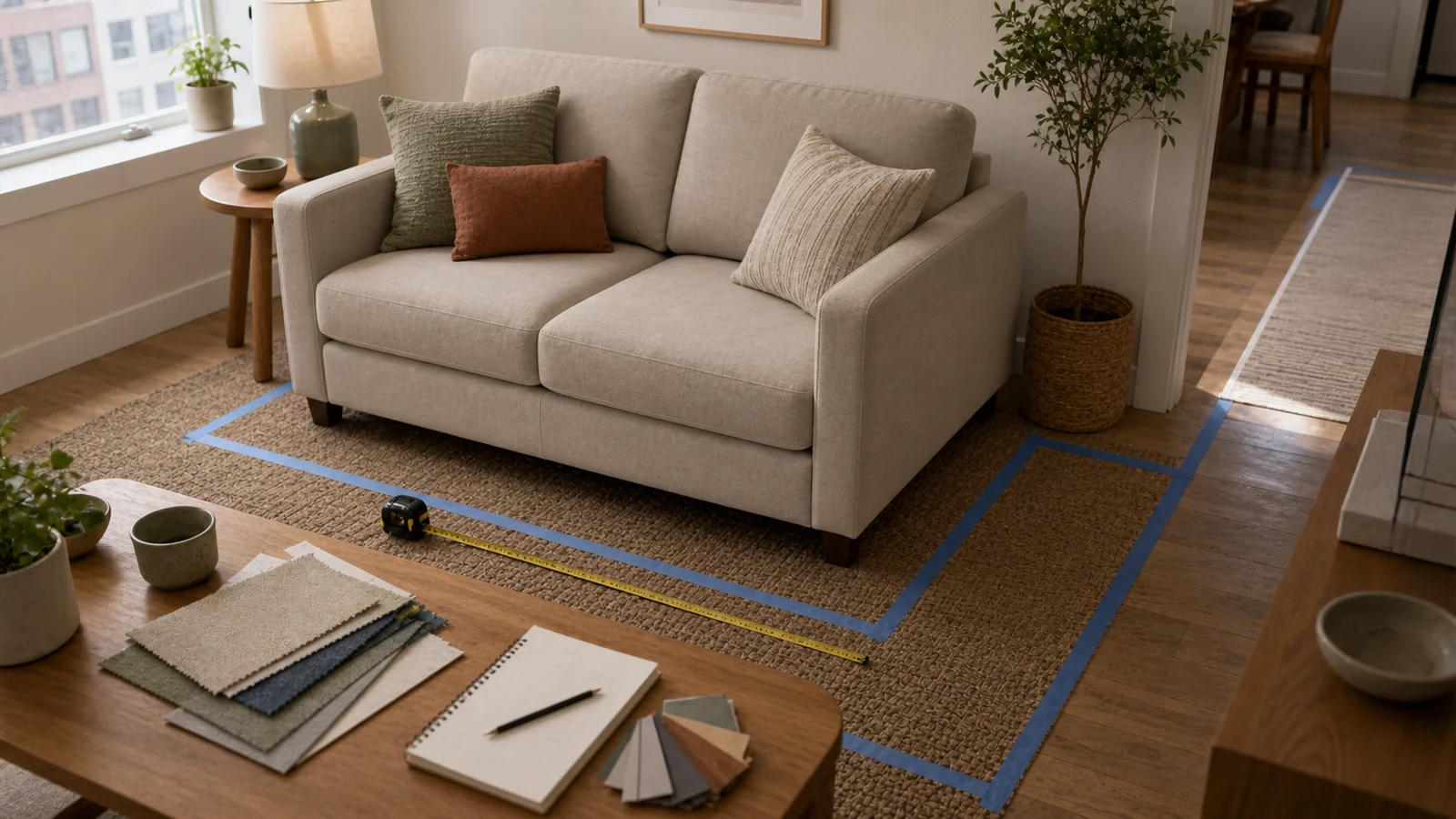
Ashley Furniture Couch: Small-Room Buying Guide
Choose an Ashley Furniture couch by checking width, depth, arms, upholstery, delivery terms, and how it fits your room.
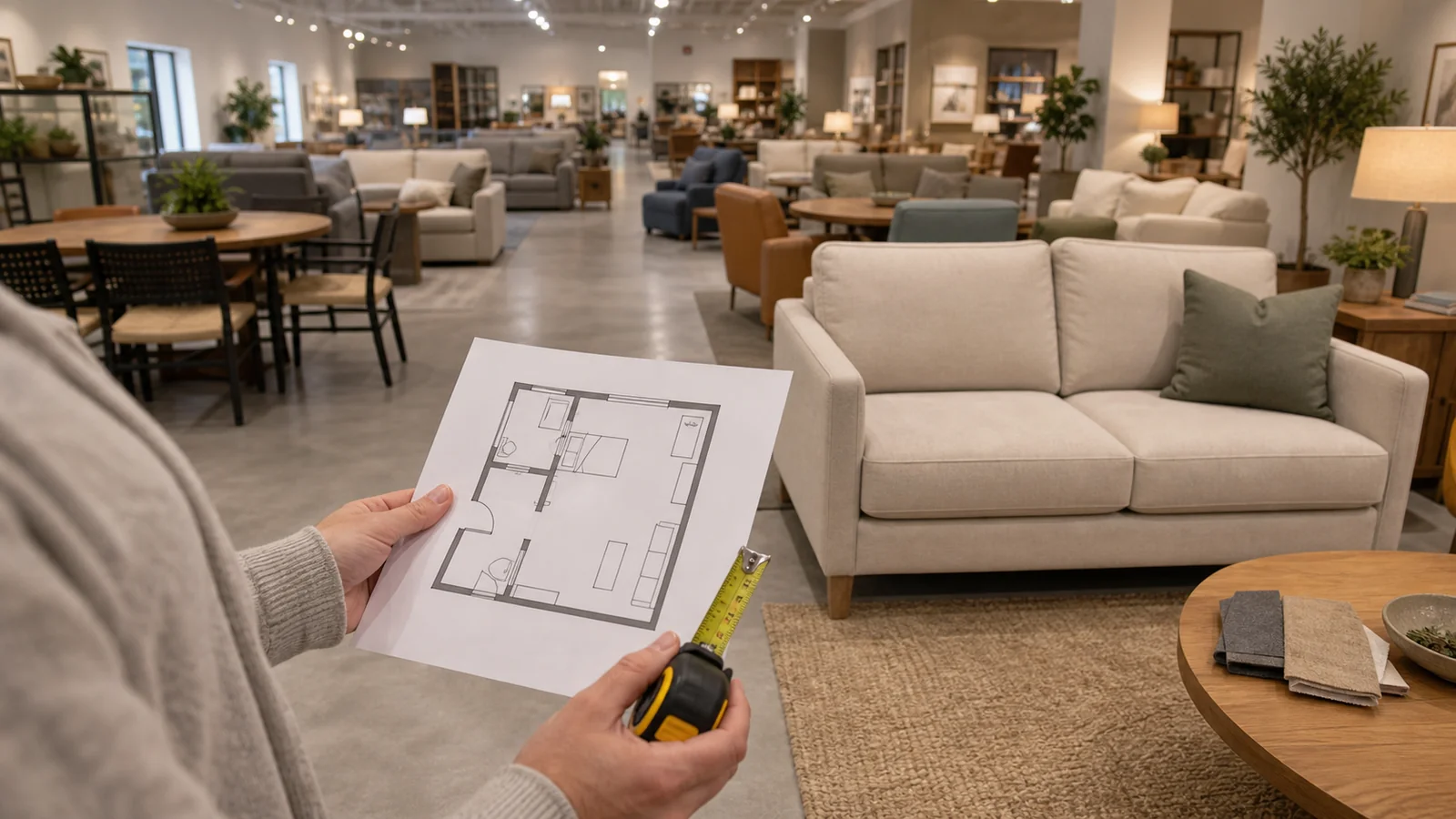
Becker Furniture: Small-Room Shopping Guide
Use a Becker Furniture search wisely by checking store identity, scale, delivery, floor samples, and compact-room fit.