Becker Furniture: Small-Room Shopping Guide
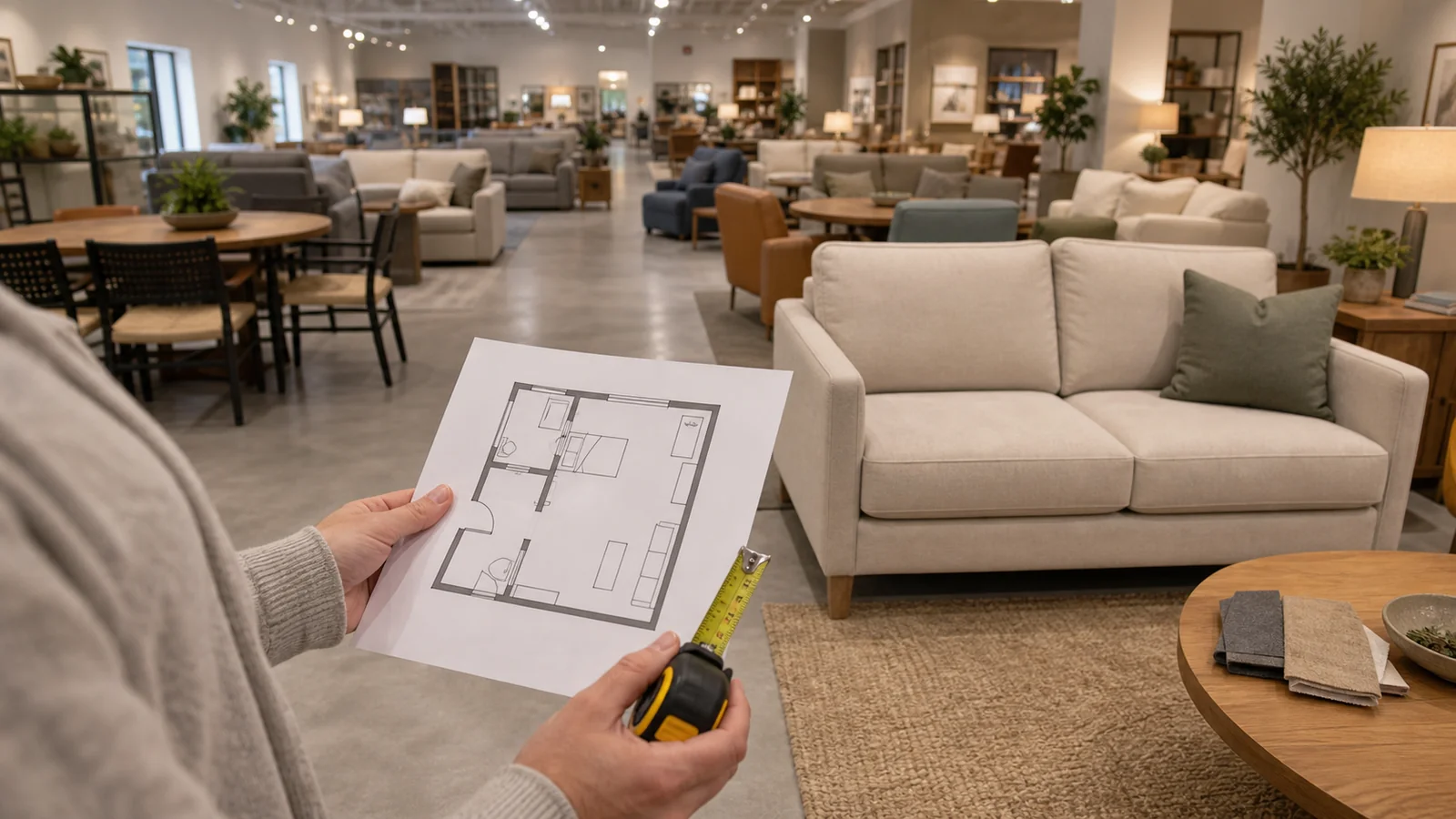
Treat the store search as the first filter
Searching for Becker Furniture can mean you are looking for a known regional furniture name, a specific local store, a former store name, or a nearby result that uses a similar phrase. Before you compare sofas, recliners, dining sets, or bedroom furniture, confirm which store you are actually viewing.
That first step matters for small rooms. A compact home does not need the nearest result or the biggest showroom. It needs clear dimensions, realistic delivery terms, and furniture that will fit the room after it leaves the sales floor.
This guide uses Becker Furniture as the search starting point, not as a promise about one exact inventory list. Use it to evaluate any Becker result, regional furniture showroom, outlet page, or store listing through a small-space lens.
Confirm the exact store before you drive
Furniture store names can overlap, change, or appear in old search results. A result may show a legacy name, a related regional retailer, a location page, a social listing, a warehouse sale, or an unrelated business with a similar name.
Before visiting, confirm:
- The current store name.
- The exact address.
- Whether the location is a showroom, outlet, warehouse, or clearance center.
- Hours for the day you plan to visit.
- Whether the product you saw online is available at that location.
- Delivery area and pickup rules.
- Return or exchange policy.
Do not rely only on a map pin. Click through to the official store page when possible, then call if you are looking for a specific category such as apartment sofas, compact recliners, small dining tables, dressers, or sleeper chairs.
Bring room limits, not just inspiration photos
Large furniture stores can make big pieces look normal. A deep sofa may seem moderate under high ceilings. A dining table may look small when it is surrounded by open showroom floor. A recliner may look compact until the footrest opens.
Bring a simple measurement set:
| Room limit | Why it matters in a showroom |
|---|---|
| Maximum sofa width | Prevents buying a piece that overfills the wall |
| Maximum seating depth | Protects walkways and coffee-table clearance |
| Door and hallway widths | Prevents delivery problems |
| Table diameter or length | Keeps dining chairs usable |
| Window and sill heights | Helps avoid blocking natural light |
| Elevator or stair limits | Matters for large boxed furniture |
If you are not sure what to measure, start with our room measuring guide. A few numbers on your phone can save you from choosing a piece that only works in a showroom.
Shop by category with small-room priorities
Instead of wandering every section, decide which type of furniture deserves your attention.
For sofas, look at overall width, arm bulk, seat depth, and whether the sofa sits visually light enough for the room. Apartment-scale sofas, loveseats, and smaller sectionals can work when the proportions are honest.
For recliners, measure the open footprint. A chair that looks compact when closed may need much more space when reclined. Power features also need a nearby outlet.
For dining tables, check chair clearance before judging style. Round tables can soften tight rooms, but pedestal bases, leg placement, and chair width still matter.
For bedroom furniture, avoid buying a full matching set before measuring drawer clearance, bed path, and nightstand width. A compact bedroom often works better with fewer pieces.
For storage, look for narrow chests, low cabinets, benches, and ottomans that solve a real problem. Storage furniture should not make every path tighter.
Use floor samples carefully
Becker Furniture searches may lead you to sales, outlets, clearance pages, or floor samples depending on the store and region. Floor samples can be useful for compact homes because you can inspect the exact piece and sometimes take it sooner than a special order.
They also need slower checking.
Inspect:
- Fabric wear on arms, seats, and headrests.
- Cushion shape and sagging.
- Drawer glide smoothness.
- Tabletop scratches and finish marks.
- Chair wobble.
- Hardware, legs, and missing parts.
- Recliner mechanisms and power cords.
- Tags with model numbers and dimensions.
Ask whether the floor sample is final sale, whether delivery is included, and whether the warranty is the same as a new order. A discount is only helpful when the condition, size, and terms all still work.
Our furniture deals guide has a fuller checklist for judging whether a discount is actually useful.
Ask about delivery before deciding
Delivery is often where a small-space furniture purchase becomes stressful. A sofa may fit the room but fail at the stair turn. A dresser may clear the door but block a hallway while it is being assembled. A dining set may arrive in more cartons than expected.
Before you buy, ask:
- What are the boxed and assembled dimensions?
- Do backs, legs, shelves, or hardware detach?
- Does the delivery team bring the piece into the room?
- Is assembly included?
- What happens if the item does not fit through the building?
- Are there extra fees for stairs, elevators, distance, or scheduling?
- Can delivery be delayed if you need to clear the room first?
If you live in an apartment or condo, check building rules before scheduling. Elevator reservations, loading dock times, service entries, and proof of insurance can affect delivery more than the furniture store does.
Compare online listings with in-store reality
Online photos are useful, but they can hide scale. Wide-angle room images often make furniture look smaller. Cropped product photos remove nearby reference points. Color can shift on screens.
When comparing a Becker Furniture listing or any regional store page, look for:
- Full dimensions.
- Seat dimensions.
- Material description.
- Care instructions.
- Weight or boxed weight when available.
- Manufacturer model number.
- Delivery and return terms.
- Whether the item is stocked locally or ordered.
In store, sit on the piece the way you live. If it is a sofa, sit at the end and in the center. If it is a recliner, open it fully. If it is a table, pull the chair out and pretend someone is walking behind you. If it is a storage cabinet, open every drawer or door.
Keep the store route focused
A large furniture showroom can make every option feel possible. Small rooms need more editing.
Before visiting, choose a short target list:
- One main piece you actually need.
- Two backup categories if the first piece is not right.
- A maximum size for each category.
- A color or material direction.
- A delivery question you must answer.
- A budget range that includes delivery, protection plans, and taxes.
If the visit is mostly research, take photos of tags and dimensions instead of buying on the spot. Step outside, check the measurements against your room, and look at your route again. The calmer decision often happens after you leave the sales floor.
Avoid full-room matching sets by default
Furniture stores often display coordinated rooms. A matching sofa, loveseat, chair, coffee table, end tables, rug, lamps, and console can look finished in a showroom. In a compact home, the same set can feel crowded and impersonal.
Choose the main piece first. Then add only what the room still needs.
For a small living room, that might mean:
- One sofa instead of a sofa and loveseat.
- One comfortable chair instead of two matching chairs.
- A round side table instead of a full coffee table.
- A storage ottoman instead of a bulky table.
- A wall-mounted shelf instead of another cabinet.
For a small bedroom, it might mean a bed, one nightstand, and one dresser rather than the entire suite. Matching is less important than scale, paths, and daily use.
Know when a local store is the right choice
A regional furniture store can be a strong choice when you need to sit on pieces, compare fabrics, confirm delivery, or resolve service questions with a real location. It is especially useful for sofas, recliners, mattresses, dining chairs, and anything with moving parts.
It may be less useful when the available inventory skews too large for your home, when policies are unclear, or when a salesperson pushes a set instead of listening to your room limits.
Good signs include:
- Staff who can find dimensions quickly.
- Clear delivery answers.
- Willingness to check model numbers.
- Floor samples in honest condition.
- Options at more than one scale.
- No pressure to buy the whole room.
If the store cannot answer basic fit and policy questions, keep shopping. A compact room has less room for regret.
A Becker Furniture shopping checklist
Before buying from a Becker Furniture result or similar regional showroom, confirm:
- The store identity, address, and current hours.
- The item is available at that location or can be ordered clearly.
- Dimensions work in the room and delivery path.
- Floor samples have been inspected in person.
- Delivery, assembly, returns, and final-sale rules are written down.
- The piece solves one room problem instead of filling space.
- You have compared the open footprint for recliners and dining chairs.
A Becker Furniture search can be a helpful starting point when you use it with discipline. Confirm the store first, measure the room second, and let scale lead the purchase. The best furniture store visit is not the one where you see the most options. It is the one where you leave with fewer, better choices for the room you actually have.
You might also like
Ashley Furniture Couch: Small-Room Buying Guide
Choose an Ashley Furniture couch by checking width, depth, arms, upholstery, delivery terms, and how it fits your room.
Acme Furniture: Small-Space Buying Guide
Use Acme Furniture listings carefully by checking scale, materials, assembly, retailer terms, and room fit before you buy.
80-Year-Old Furniture Business Closing: Shop Carefully
Use a furniture business closing sale carefully by checking dimensions, final-sale terms, delivery, damage, and room fit.