Antique Furniture Stores Near Me: Small-Room Guide
Use “near me” as the beginning, not the decision
Searching for antique furniture stores near me can turn up antique malls, curated dealers, consignment shops, estate stores, salvage warehouses, auction houses, and small vintage rooms inside larger shops. The closest result is not always the best place to buy furniture for a compact home.
Small rooms need antique pieces with the right footprint, stable construction, manageable delivery, and enough practical use to earn their space. A charming dresser that smells musty, blocks a doorway, or needs costly repair can quickly become less romantic.
Use local search to build a short route, then shop with measurements and questions. The goal is not to find the oldest piece. It is to find the one antique that makes your room feel more personal without making daily life harder.
Know the store type before you drive
Different antique furniture stores behave differently. Some are carefully edited showrooms with restored pieces and delivery help. Some are multi-vendor antique malls where each booth has its own style and pricing. Some are estate shops or warehouses with changing inventory and limited service.
Before visiting, check what kind of store you are dealing with:
| Store type | Why it can help | What to confirm |
|---|---|---|
| Curated antique dealer | Better editing, expertise, often cleaner condition | Pricing, restoration details, delivery |
| Antique mall | Wide variety in one stop | Vendor rules, holds, return policy |
| Estate store | Interesting pieces, changing stock | Condition, odor, pickup timing |
| Salvage warehouse | Architectural and sturdy finds | Size, repairs, cleaning needs |
| Consignment shop | More modern mix with older pieces | Terms, markdowns, pickup rules |
| Auction preview | Potential value | Fees, no-return terms, transport |
If a store’s photos show only small decor, call before driving for furniture. If the listing says furniture but shows mostly large hutches and dining sets, ask whether they carry apartment-scale pieces.
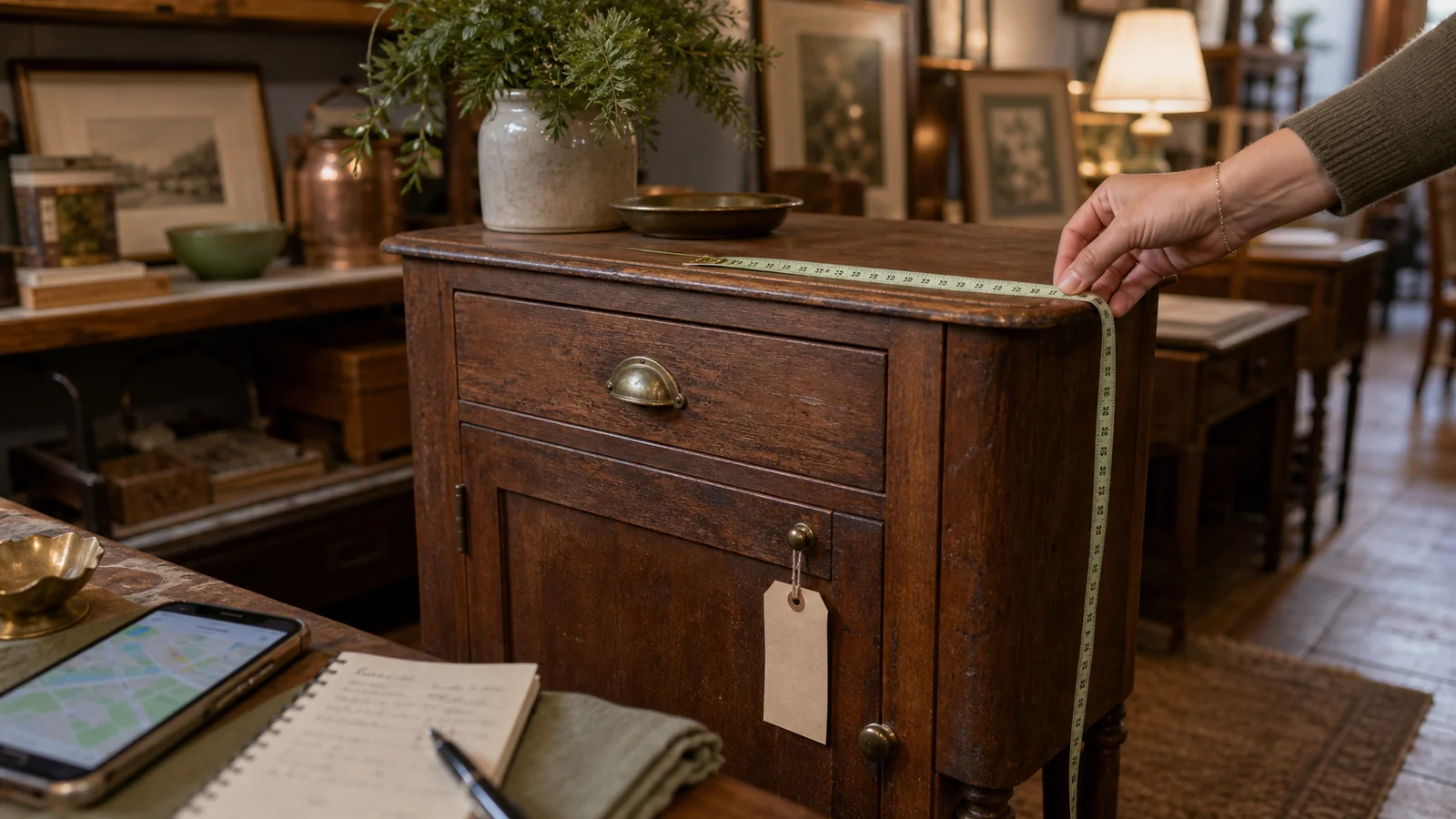
Bring measurements that match your real room
Antique stores can make scale feel strange. A small chest may look tiny in a warehouse and huge in a bedroom. A chair may look delicate until you measure the depth. A table may seem compact until you add chairs and walking room.
Bring:
- Maximum width, depth, and height for the spot.
- Doorway, stair, elevator, and hallway measurements.
- Photos of the room from several angles.
- Rug size and nearby furniture heights.
- A tape measure.
- A short list of pieces you actually need.
If you are buying a table, cabinet, or seating piece, write down both the ideal size and the absolute maximum. The maximum is not a goal. It is the point where you stop.
Our guide to antique furniture for small rooms can help you decide which antique role is worth pursuing before you browse.
Inspect condition slowly
Antique furniture often carries age beautifully, but not every mark is harmless. Patina is different from damage that affects use, safety, smell, or cost.
Check:
- Wobble in legs, chairs, tables, and case goods.
- Drawers that stick, twist, or smell musty.
- Veneer lifting, bubbling, or missing.
- Splits in tabletops, panels, or seats.
- Loose joints or fresh glue marks.
- Signs of pests, powdery residue, or active damage.
- Strong odors from smoke, damp storage, or perfume.
- Hardware that is missing, mismatched, or hard to replace.
- Repairs that are honest and stable.
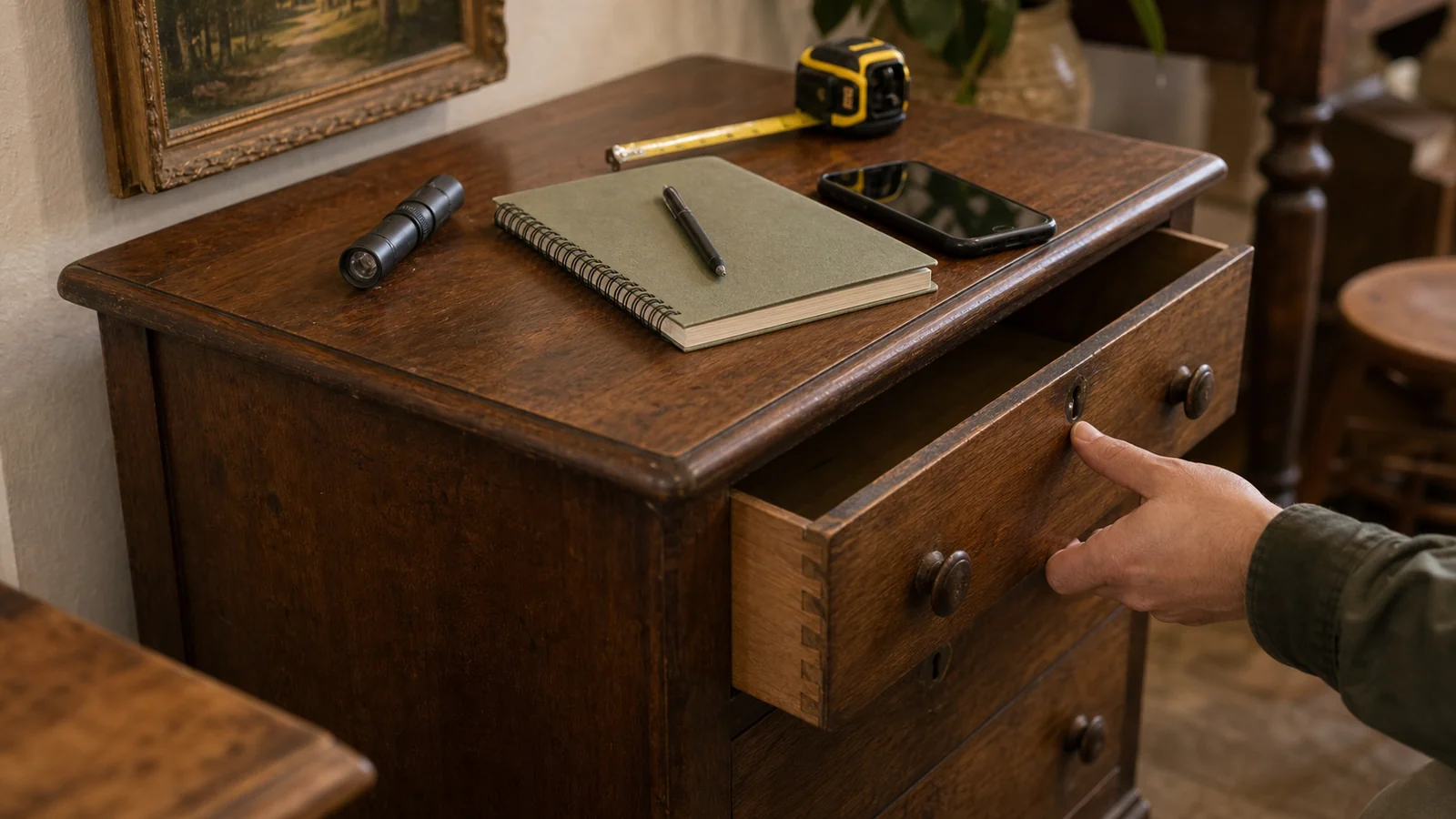
Use your phone flashlight. Open drawers. Look underneath. Step back and check whether the piece sits level. If a seller discourages basic inspection, keep looking.
Separate useful patina from future repair
Small homes have less room for “project someday” furniture. If a piece needs refinishing, re-caning, reupholstery, odor treatment, drawer repair, or professional transport, those needs become part of the real cost.
Useful patina might include:
- Soft finish wear on a side table.
- Small dents that do not affect structure.
- Darkened brass hardware.
- A mellow wood tone that suits the room.
- Honest age marks in low-contact areas.
Future repair might include:
- A chair frame that moves when you sit.
- Veneer lifting across a visible front.
- Water rings that have gone through the finish.
- Drawers that cannot open without force.
- A table that rocks after floor adjustment.
- Fabric with odor, stains, or failing padding.
If you are unsure, take photos and pause. A good antique store will often hold an item briefly, but policies vary. Ask before assuming.
Ask about delivery before you fall in love
Furniture is not truly available until you know how it gets home. This matters even more with antique furniture because pieces may be fragile, heavy, awkward, or final sale.
Ask:
- Does the store deliver?
- Is delivery handled by the store or a third party?
- What areas do they serve?
- Can they navigate stairs or elevators?
- Do they wrap and protect older pieces?
- Is there a pickup deadline?
- Can the piece be held after payment?
- What happens if damage occurs during delivery?
If you need to arrange your own mover, confirm the item’s exact dimensions and weight before booking. Do not rely on a quick visual estimate. A marble-top table, iron bed, or solid wood dresser can be much heavier than it looks.
Understand returns, holds, and vendor rules
Many antique and vintage stores have stricter terms than new furniture retailers. Pieces may be final sale. Holds may be short. Vendors inside the same antique mall may set different rules. Delivery fees may be separate. Condition may be sold as-is.
Before paying, get clear answers on:
- Return or exchange policy.
- Hold length.
- Payment methods.
- Sales tax and extra fees.
- Whether measurements are approximate.
- Whether restoration or repairs are guaranteed.
- Whether all parts are included.
- Whether the seller can provide provenance or maker information.
You do not need a museum-level history for every piece. You do need practical clarity. A calm shop will answer ordinary furniture questions without making you feel rushed.
Shop for the role, not the fantasy
Antique stores are full of tempting objects. A compact home needs editing. Decide the role before the route.
Antiques often work well as:
- A narrow bedside table.
- A small chest in an entry.
- A writing desk used as a console.
- A compact dining chair pair.
- A low cabinet under a window.
- A stool or bench with real function.
- One old mirror with a quiet frame.
They are harder when they are oversized, overly delicate, difficult to clean, or too precious for daily use. If a piece will only make you anxious, it may belong in someone else’s home.
For nearby secondhand options beyond antiques, our furniture consignment shop guide explains how to compare store editing, terms, and delivery in a similar way.
Build a small local route
Instead of visiting every result from a near me search, build a route of three to five strong stops. Look for stores that show furniture photos, mention delivery or pickup policies, update inventory, and fit your style. Call first if you need a specific category such as nightstands, small dressers, dining chairs, or compact desks.
A good route includes variety:
- One curated antique dealer.
- One antique mall with several vendors.
- One consignment or vintage store.
- One estate or warehouse-style stop if you can handle rougher finds.
Bring measurements, but also bring a mood direction. Soft Room Edit rooms tend to work best with one warm wood piece, muted textiles, and enough air around the furniture. The antique should add character, not turn the room into a storage room.
Leave without buying when the fit is not right
The hardest part of antique shopping is walking away. Inventory is one-of-a-kind, and that can create pressure. But small rooms punish impulse buys quickly.
Leave it if:
- The size is close but not comfortable.
- The odor is strong.
- The seller cannot answer basic condition questions.
- Delivery is uncertain.
- The repair cost is vague.
- The finish or fabric fights the room.
- You are buying because it is rare, not because it works.
Take a photo, note the measurements, and revisit if the piece still makes sense after you return home. The right antique usually survives a calmer second look.
A better way to search antique furniture stores near me
Before your next local route, use this checklist:
- Search by store type, not only distance.
- Call ahead for furniture categories and delivery.
- Bring exact room and doorway measurements.
- Inspect condition, odor, joints, drawers, and veneer.
- Ask about holds, returns, vendor rules, and pickup.
- Budget for repair or professional moving when needed.
- Buy one useful piece before collecting many small maybes.
Antique furniture stores near you can be wonderful sources for compact homes when you shop with restraint. Let the local search open the door, then let the room’s measurements make the decision. A good antique should feel like it has always belonged there, not like it is asking the whole room to rearrange itself.
You might also like
Ashley Furniture Mattress: Small-Bedroom Guide
Choose an Ashley Furniture mattress by checking size, height, support, delivery terms, and how the bed fits your room.
Ashley Furniture Couch: Small-Room Buying Guide
Choose an Ashley Furniture couch by checking width, depth, arms, upholstery, delivery terms, and how it fits your room.
Antique Furniture Near Me: Small-Space Checklist
Use this antique furniture near me checklist to judge scale, condition, odor, repairs, delivery, and daily use before buying.