Aluminum Patio Furniture for Small Balconies
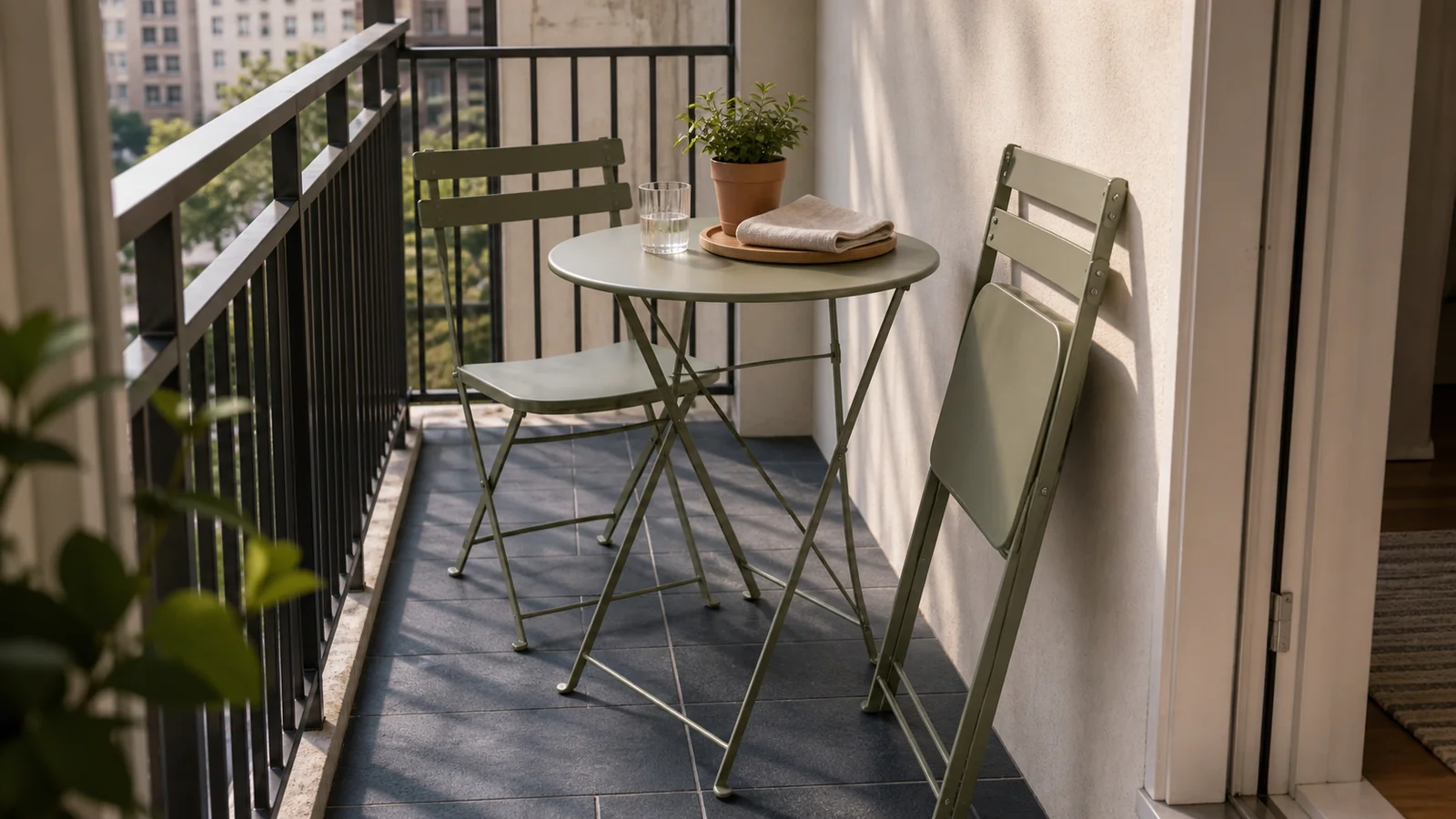
Aluminum is useful when the balcony has to stay flexible
Aluminum patio furniture makes sense for many small balconies because it is usually lighter than steel, less maintenance-heavy than some woods, and easier to move than deep woven lounge furniture. A compact aluminum bistro chair can fold away. A small aluminum table can shift when you need to water plants. A powder-coated frame can handle outdoor life better than indoor furniture dragged outside.
That does not mean every aluminum piece is right for a balcony. Some are too light for wind. Some get hot in strong sun. Some need cushions to feel comfortable. Some look slim online but still block the door once the chairs are pulled out.
Use this as an evaluation guide, not a promise that one material solves every outdoor problem.
What aluminum patio furniture does well
Aluminum has several practical advantages for renters and small-space households. It does not rust in the same way steel or iron can, and powder-coated finishes add another protective layer. It is often light enough to move for cleaning, storage, storms, or winter. It can be shaped into slim frames that do not visually crowd a balcony.
It is especially useful when you need:
- A small bistro set.
- Stackable or folding chairs.
- A table that moves easily.
- Outdoor seating that is not visually heavy.
- Furniture you can carry through an apartment without help.
Aluminum also pairs well with other materials. You may see it with sling fabric, mesh, wood-look tops, cushions, rope, or synthetic wicker. The frame gives structure while the seat material decides comfort and style.
What aluminum does not automatically solve
Lightness is helpful until the balcony is windy. A hollow aluminum chair can shift, scrape, or tip if it is too light for the exposure. A dark metal seat can become hot in direct sun. A thin metal chair may need cushions for comfort. And if the powder coating chips, the exposed area can stain, dull, or look worn faster than expected.
Aluminum patio furniture also varies widely. Cast aluminum, tubular aluminum, extruded aluminum, and mixed-material frames can all behave differently. A heavy cast chair may feel stable but be harder to store. A slim folding chair may be easy to move but less comfortable for long sitting. A sling chair may dry quickly, while a cushioned chair may feel softer but require storage.
The material is only the first filter. The shape, finish, joints, seat design, and balcony conditions decide whether the piece works.
Choose the form by balcony shape
Start with the balcony, not the furniture set. Measure the full area, then subtract the door swing, railing depth, planters, storage boxes, wall fixtures, and any route you need for cleaning or emergency access.
| Balcony situation | Better aluminum option | Why it helps |
|---|---|---|
| Long and narrow | Two folding chairs plus a small round table | Keeps the walking path loose |
| Very shallow | One slim chair and a side table | Leaves room to step outside |
| Windy upper floor | Heavier frame or stackable set stored inside | Reduces movement risk |
| Dining for two | Compact bistro set with chairs that tuck in | Uses less floor than lounge seating |
| Shared with plants | Folding table or wall-side bench | Makes watering and sweeping easier |
Do not buy a four-piece patio set because it looks complete. On a real apartment balcony, two chairs and a tiny table may be the calmest arrangement.
If you are still comparing outdoor materials, our wicker patio furniture guide covers woven options and cushion storage.
Check powder coating carefully
Most aluminum patio furniture depends on its finish. Powder coating gives the frame color and helps protect it from moisture, heat, and everyday wear. A smooth, even coating usually feels more reassuring than a finish with bubbles, chips, sharp flakes, or thin areas near joints.
Before buying, check:
- Whether the frame is listed as powder-coated or outdoor-rated.
- Whether the finish looks even around welds and corners.
- Whether hardware is also outdoor-appropriate.
- Whether the chair feet have caps or glides.
- Whether replacement glides, cushions, or slings are available.
If you are buying a floor sample or secondhand piece, inspect the underside, feet, arms, and folding joints. These areas show scratches first. Small cosmetic marks may be fine. Deep chips, loose fasteners, sharp metal, or wobbling frames are more serious.
Decide how much weight you need
Balcony furniture needs to be light enough to move but stable enough to stay put. This balance is different for every apartment.
Choose lighter aluminum furniture when:
- You need to fold and store it often.
- You clean the balcony frequently.
- You carry pieces through narrow halls.
- The balcony is protected from strong wind.
Choose heavier aluminum furniture when:
- The balcony is exposed or high up.
- Chairs will stay outside most of the season.
- You want a more permanent lounge setup.
- The table must hold planters, dinner plates, or a laptop.
If wind is a concern, avoid leaving lightweight chairs loose near railings. Follow building rules, use covers carefully, and bring foldable pieces inside before storms when needed.
Comfort comes from the seat, not only the frame
Aluminum frames can be sleek, but comfort depends on the seat design. Sling fabric, mesh, cushions, curved backs, armrests, and seat depth all change the experience.
For morning coffee, a simple bistro chair may be enough. For reading, you may need a deeper seat, supportive back, and cushion. For meals, the table height and chair height matter more than lounge comfort. For working outside, a stable table and upright chair are more important than a reclined seat.
Try to answer the real use:
- Will you sit for five minutes or one hour?
- Will you eat there?
- Do cushions have a dry storage spot?
- Can the chair tuck under the table?
- Does the back support your posture?
- Are the arms narrow enough for the balcony?
Outdoor cushions make aluminum furniture softer, but they also add maintenance. If rain blows sideways onto the balcony, cushions may need to come inside often. If you do not want that chore, consider sling or mesh seats instead.
Watch heat, glare, and color
Metal outdoor furniture can heat up in strong sun, especially darker finishes. This matters on south-facing balconies, rooftops, and spaces with little shade. A black aluminum chair may look crisp from inside the apartment but feel too hot at midday. Pale finishes can feel cooler visually, though they may show dirt faster.
Color also changes how the balcony feels from inside. White and light gray can look airy. Sage, clay, and muted green can soften the view. Black can frame plants nicely but may feel heavy on a tiny balcony. Bright colors can be cheerful, but they may dominate the room view when the balcony doors are open.
If the balcony is visible from your living room or bedroom, choose a finish that works with the interior palette too. The furniture becomes part of the room even when you are not sitting outside.
Compare aluminum with wicker, wood, and steel
Aluminum is not the only balcony option. It is simply one practical material.
| Material | Strength | Small-space caution |
|---|---|---|
| Aluminum | Light, rust-resistant, easy to move | Can be too light in wind or hot in sun |
| Steel or iron | Stable and often slim | Can rust if finish fails; heavier to move |
| Wood | Warm and natural | Needs more care and weather protection |
| Synthetic wicker | Soft, textured, comfortable | Can be bulky and cushion-heavy |
| Plastic or resin | Lightweight and low maintenance | May look less refined or fade over time |
For renters, aluminum is often appealing because it moves easily. For windy balconies, heavier steel or cast aluminum may feel safer. For a softer lounge feeling, synthetic wicker or wood may look warmer but need more storage planning.
Care for it before the finish fails
Aluminum patio furniture is relatively easy to care for, but the finish still needs gentle handling. Dirt, pollen, salt air, sunscreen, bird droppings, and standing water can all dull the surface over time.
Use a simple routine:
- Rinse or wipe off dust and pollen regularly.
- Clean with mild soap and water.
- Use a soft cloth or soft brush.
- Rinse away soap residue.
- Dry the surface to reduce water spots.
- Avoid abrasive scrubbers, bleach, harsh solvents, and pressure washing.
- Touch up chips according to the manufacturer’s guidance when possible.
Store cushions separately when wet, and avoid covering damp furniture so tightly that moisture gets trapped underneath. If you use a cover, choose one that fits and allows some airflow.
A calm aluminum patio furniture checklist
Aluminum patio furniture can be a smart choice for small balconies when it is the right weight, finish, size, and comfort level for the space. Look for outdoor-rated coating, stable joints, chairs that tuck or fold, and a layout that leaves the door and walkway clear.
Choose it when you want flexibility and easy movement. Be more cautious when the balcony is windy, intensely sunny, or too shallow for pulled-out chairs. The best aluminum piece is not the most complete patio set. It is the one that makes your small outdoor space usable without turning it into storage.
You might also like
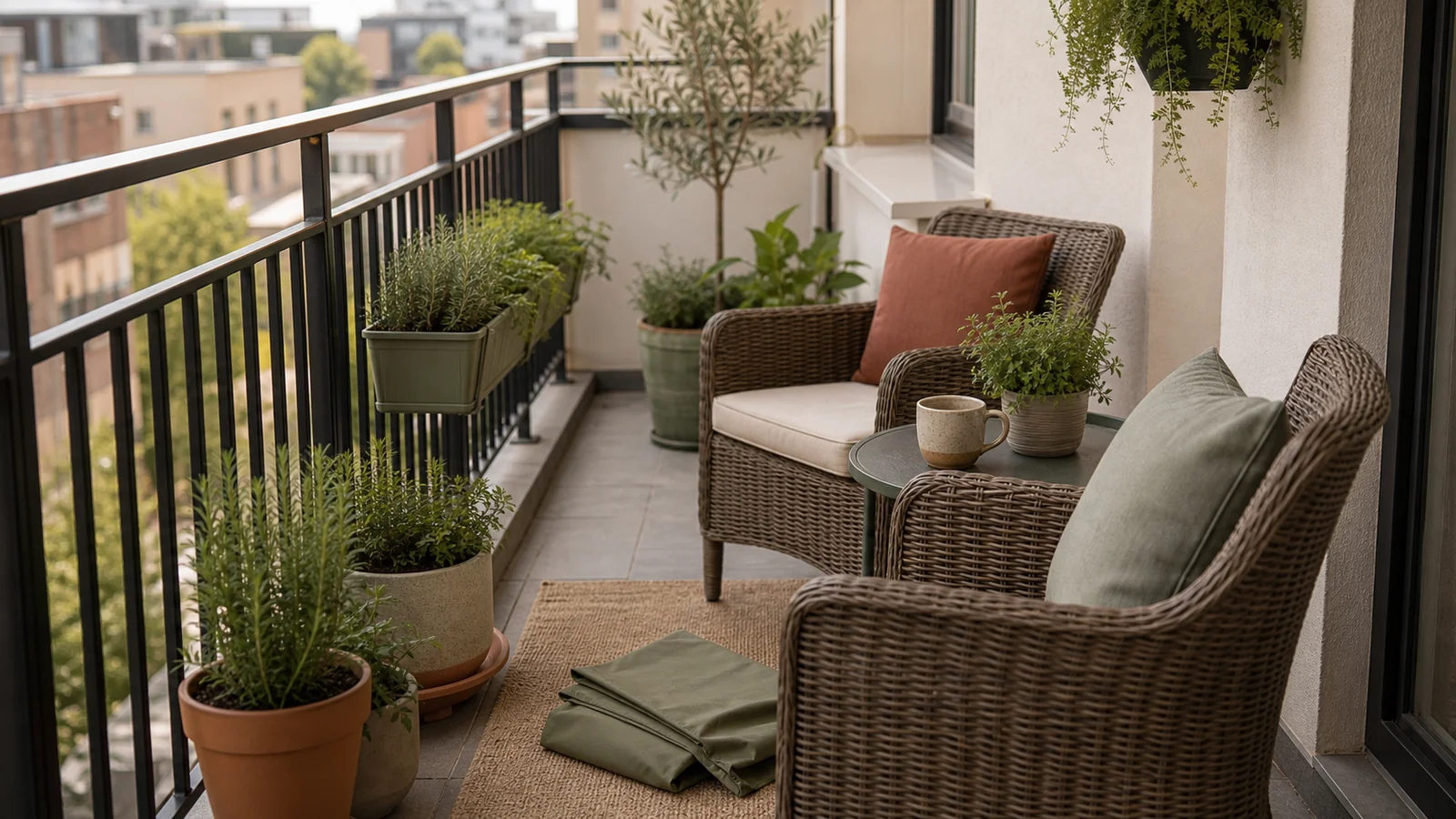
Wicker Patio Furniture for Small Balconies
Choose wicker patio furniture for a small balcony by checking material, frame, cushion storage, weather exposure, and room to move.
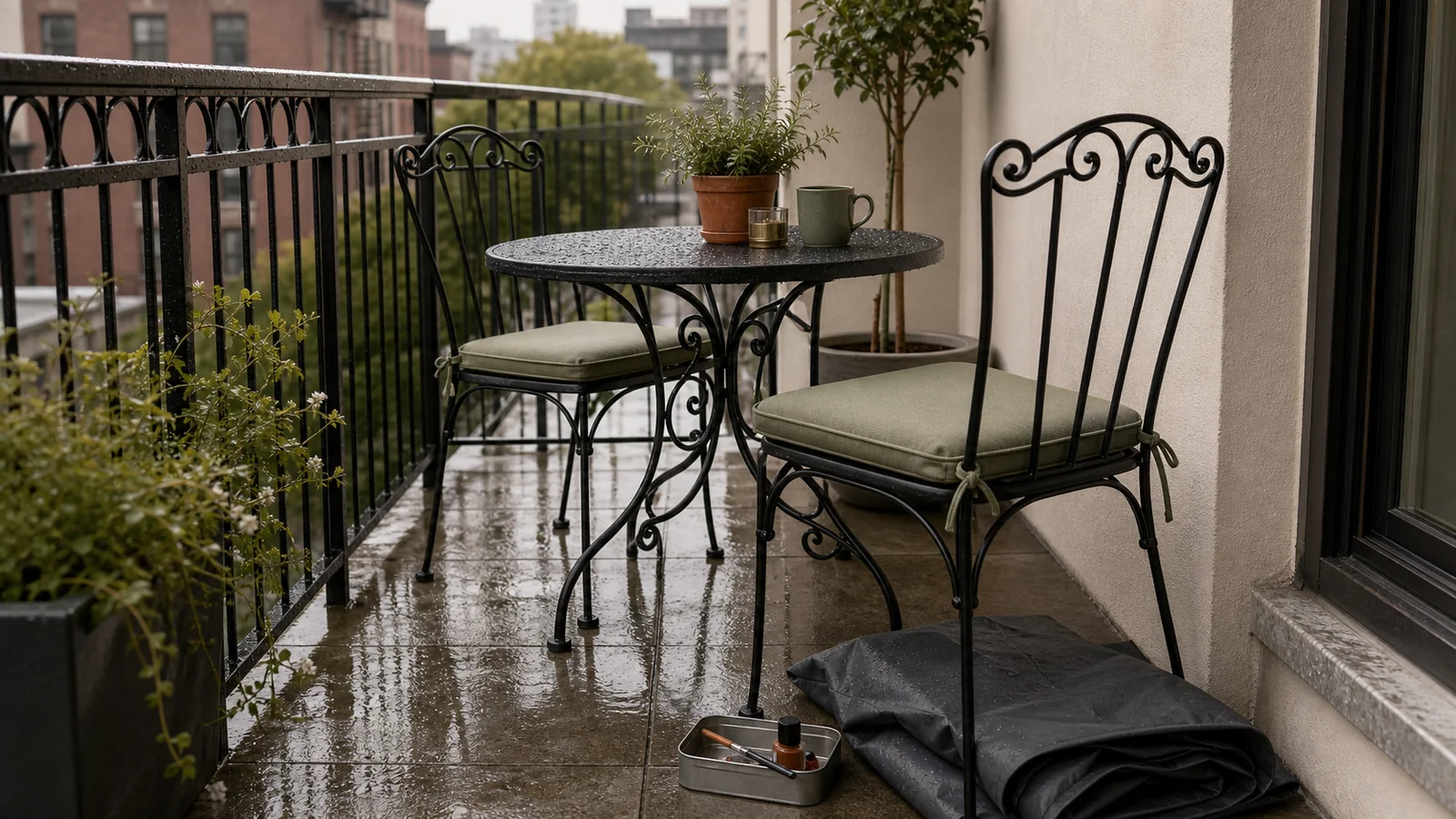
Wrought Iron Patio Furniture for Small Balconies
Choose wrought iron patio furniture by checking weight, rust protection, cushion comfort, balcony limits, and seasonal care.
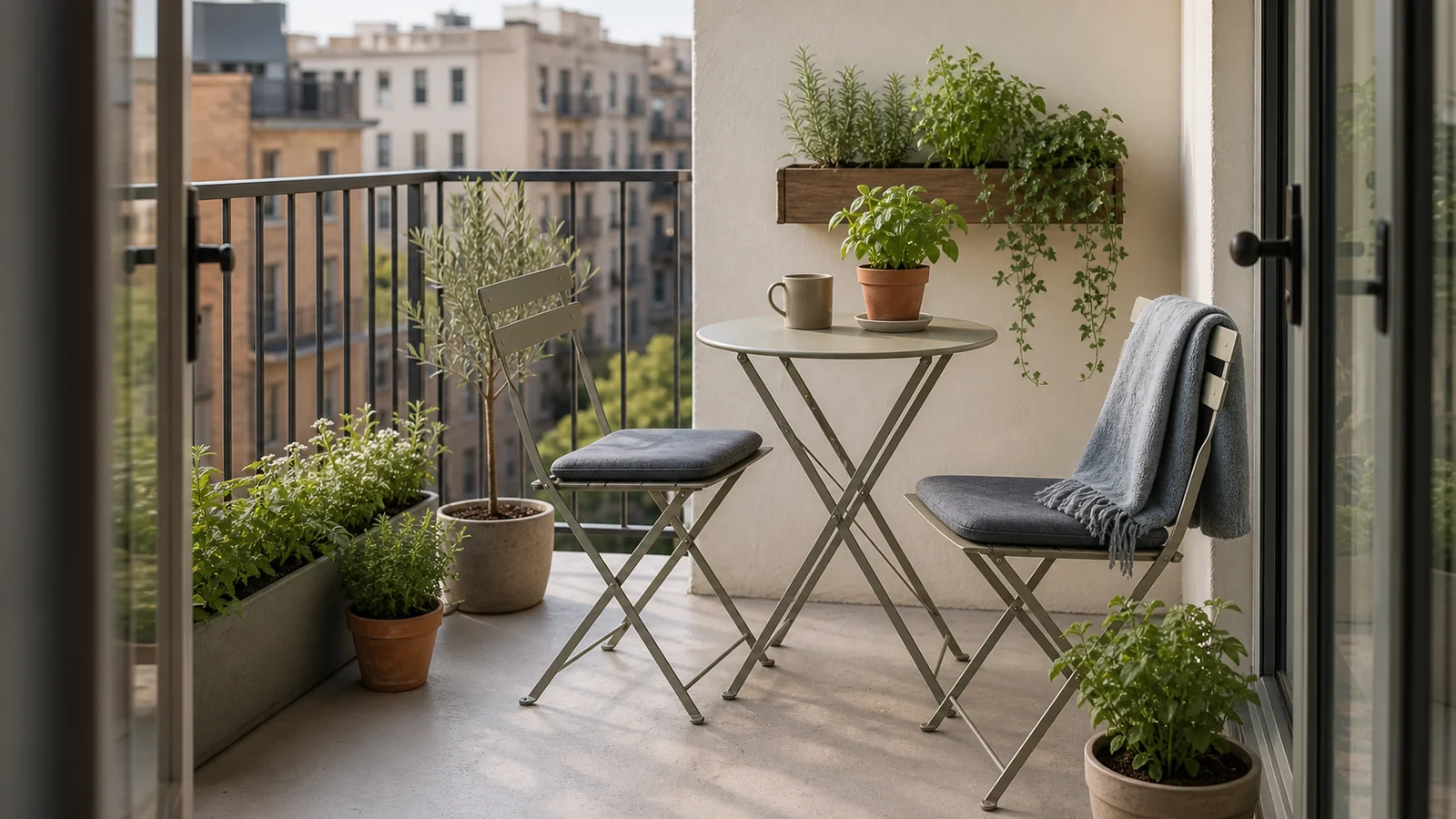
Outdoor Furniture Store Guide for Small Balconies
Shop outdoor furniture stores with a renter-friendly checklist for balcony size, weather, storage, comfort, and delivery.