Stickley Furniture for Small Rooms: A Buying Guide
Start with scale, not reputation
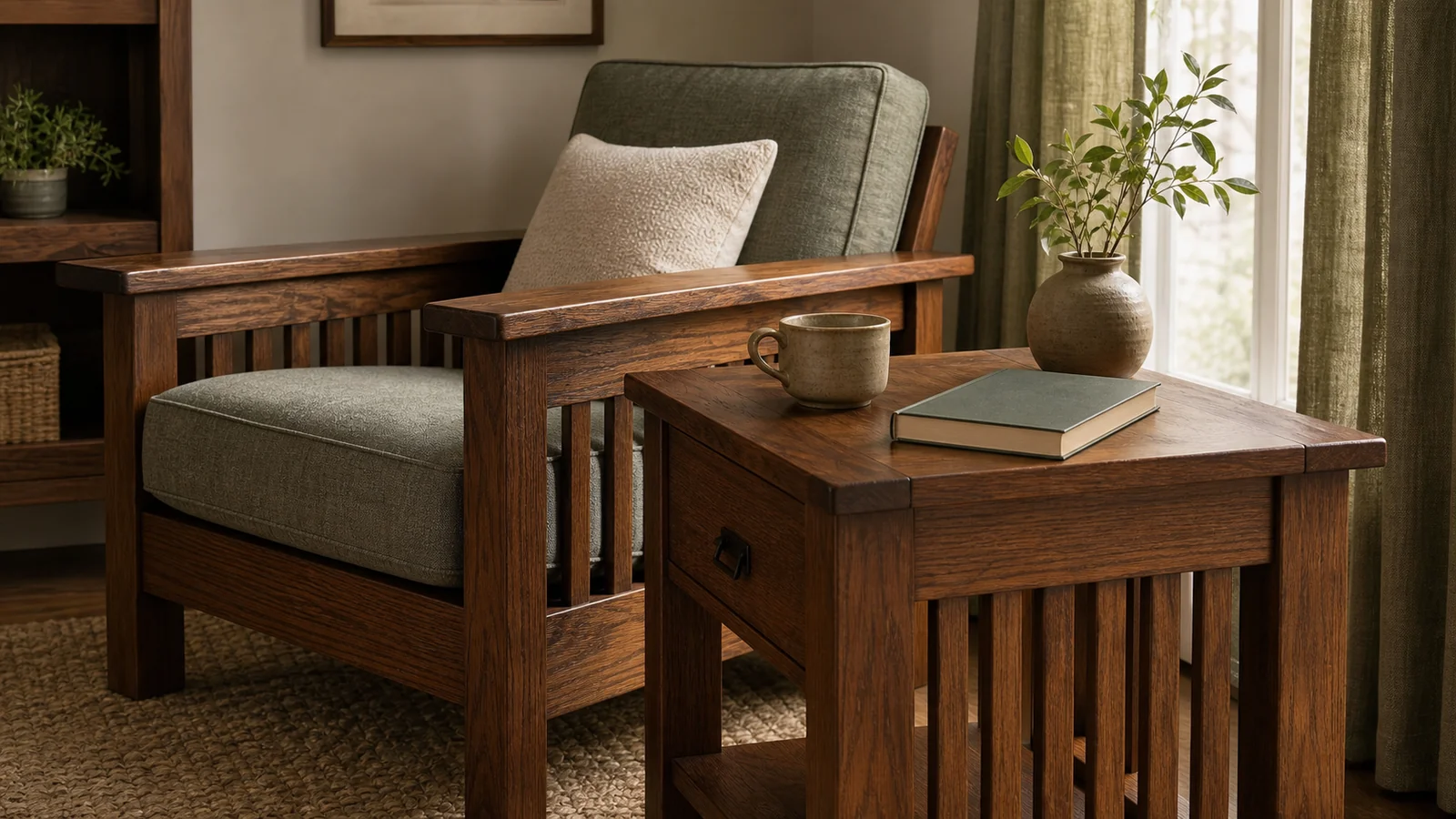
Stickley furniture has a strong place in American furniture history, especially through Mission and Arts and Crafts-inspired pieces with clean lines, visible wood grain, and substantial construction. That reputation can make a piece feel like an automatic investment. In a small room, though, the better question is simpler: will this specific piece make daily life easier or heavier?
For compact homes, solid wood furniture asks for respect. It can bring warmth, craft, and long life to a room. It can also dominate a narrow living area, crowd a bedroom path, or make a soft space feel darker than intended if the scale is wrong.
This guide is not a hands-on review of one Stickley model. It is a practical buying lens for readers who are considering new, vintage, inherited, or secondhand Stickley furniture and want it to work in a smaller apartment or home.
Understand the Stickley look before you shop
Stickley offers Mission-style furniture and modern collections, along with living room, dining, bedroom, office, rugs, and upholstery options. The classic Mission look is usually about honest construction, straight lines, sturdy proportions, visible joinery, and the character of the wood itself.
That can be beautiful in a soft room because it gives the space an anchor. A wood sideboard, armchair, desk, or bed can add depth where too many pale pieces feel flat. But Mission and Craftsman-inspired forms can also read visually heavy, especially when the finish is dark, the legs are thick, or the piece sits low to the floor.
Before you compare prices or finishes, decide what role the piece will play:
- Anchor piece: dining table, dresser, sideboard, bed, or desk
- Supporting piece: nightstand, side table, small bookcase, or bench
- Comfort piece: lounge chair, sofa, recliner, or upholstered chair
- Storage piece: cabinet, chest, media unit, or dresser
Small rooms usually handle one strong anchor better than several. If every piece is weighty, the room can lose air.
Measure both the footprint and the visual weight
A Stickley piece may technically fit while still feeling too dominant. That is why you need to measure more than width and depth.
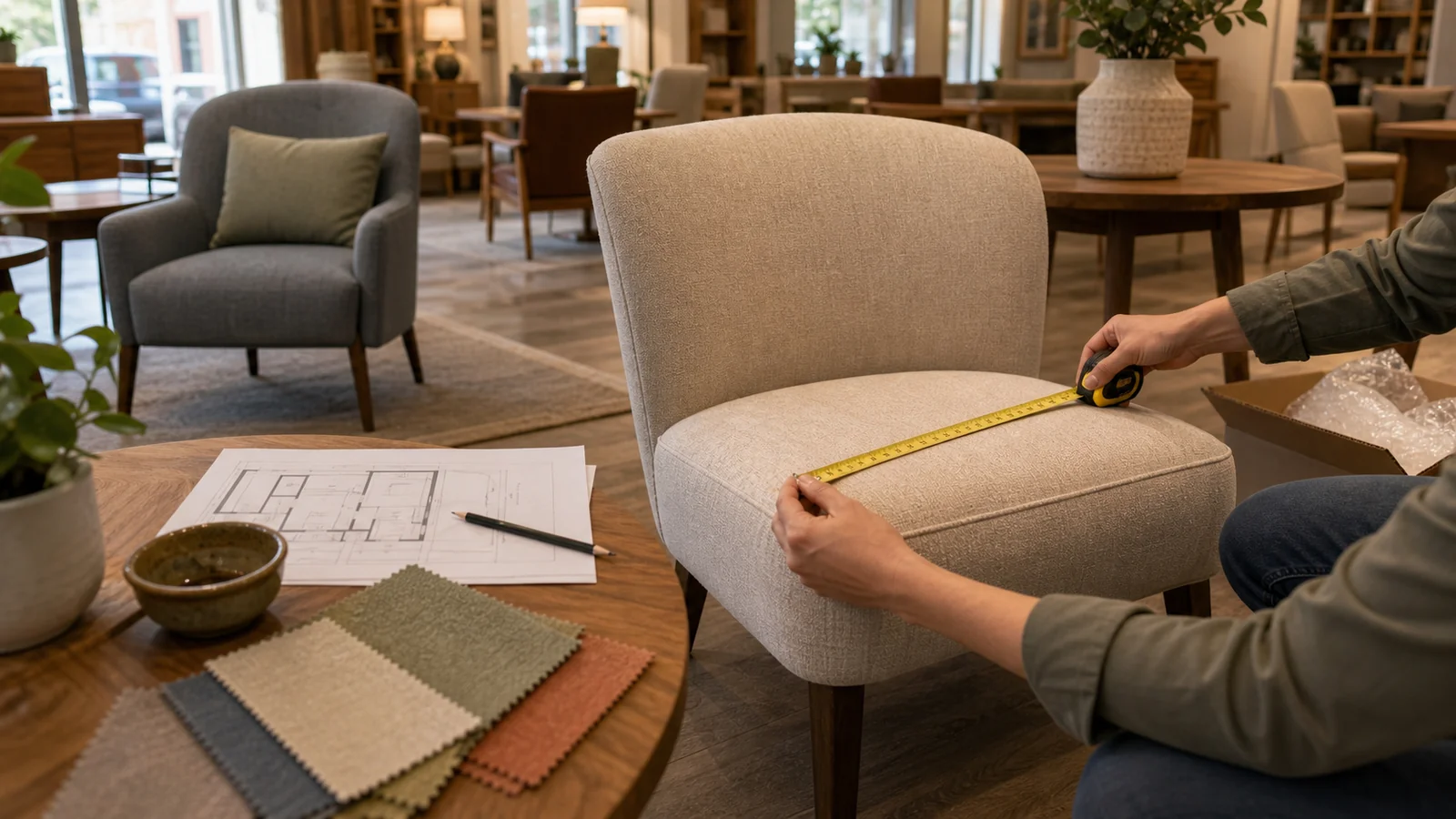
Start with the standard checks: overall width, depth, height, drawer clearance, chair pull-out space, and delivery path. If you need a step-by-step process, use our guide to measuring a room for furniture before visiting a showroom or seller.
Then judge visual weight:
| Detail | Small-room effect |
|---|---|
| Dark finish | Adds depth, but can close in a pale room |
| Thick legs or sides | Feels grounded, but may read bulky |
| Closed base | Hides floor, which can make the room feel smaller |
| Tall back | Can block windows or sightlines |
| Wide arms | Reduce usable seating without reducing footprint |
| Strong wood grain | Adds character, but competes with busy rugs or textiles |
If you love a substantial wood piece, give it breathing room. Pair it with lighter curtains, a simple rug, quieter bedding, or a leggy nearby table. The goal is contrast, not a room full of heavy notes.
Choose the room where quality will matter most
Stickley furniture often makes the most sense when the piece will be used for many years and the room can support its scale. In a compact home, that may not mean a full matching set. It may mean one excellent table, dresser, desk, or chair.
Good candidates include:
- A dining table that works for daily meals and occasional guests
- A dresser with drawers you use every morning
- A sideboard that replaces several smaller storage pieces
- A reading chair that fits your body and the corner
- A desk that supports real work without filling the whole room
- A nightstand with the right height and enough enclosed storage
Be careful with oversized beds, deep recliners, large sectionals, tall hutches, and full bedroom sets. These can be wonderful in the right house, but compact rooms need more negative space than showroom displays suggest.
Inspect new and secondhand pieces differently
If you are buying new, focus on the showroom experience, options, lead time, delivery, warranty, and finish care. Sit, open drawers, compare wood tones, and ask how the piece is delivered. If the item is made to order or has custom options, confirm the return policy before you commit.
If you are buying secondhand or vintage, slow down. A used Stickley piece may be sturdy, but condition matters. Check:
- Drawer glide and alignment
- Wobble in chairs, tables, and case pieces
- Water rings, cloudy finish, or sun fading
- Loose joints or repairs
- Odor inside drawers or cabinets
- Missing hardware
- Evidence of heavy polishing, sanding, or refinishing
- Whether the piece can be safely moved through your building
Do not let the name carry the whole decision. A well-kept smaller piece may be a better fit than a famous but too-large one.
Compare wood tone with your soft layers
Stickley furniture can bring beautiful wood into a room, but wood tone changes everything around it. Darker finishes often pair well with warm white walls, muted greens, clay, ochre, rust, deep blue, cream, and textured natural rugs. Lighter finishes can feel easier in small bedrooms, offices, and apartments that need more brightness.
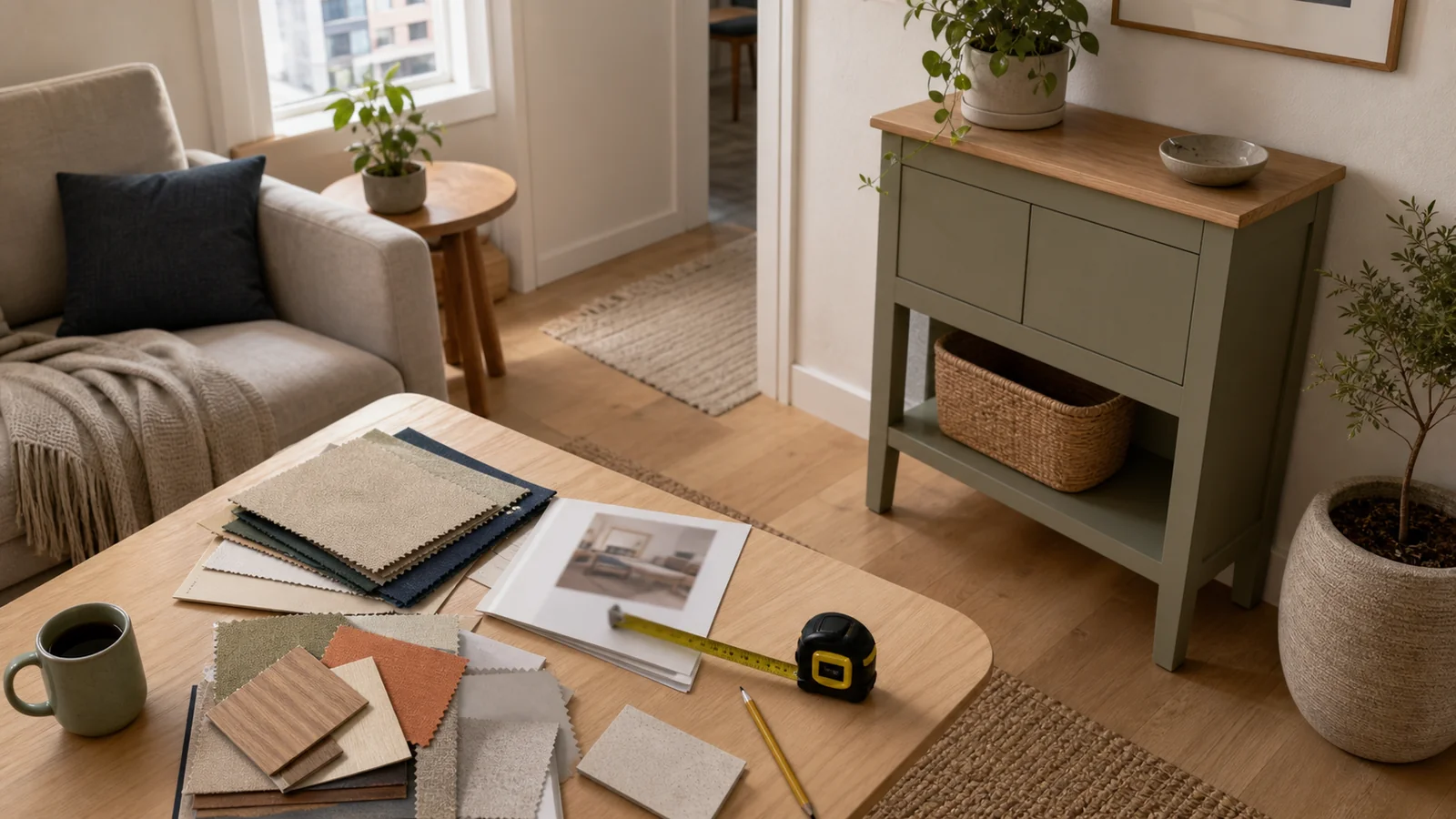
Bring fabric and paint references when you shop. A photo can help, but a real swatch is better. Compare the wood tone against curtains, rug fibers, sofa fabric, bedding, and metal finishes. Strong wood furniture does not need many decorative pieces around it. It often looks best when the materials nearby are calm and tactile.
If your room already has several wood tones, choose whether the Stickley piece will match, contrast, or intentionally stand apart. Random wood tone mixing can make a room feel unsettled. Repeating a tone at least once, through a frame, lamp, tray, or chair leg, helps the room feel edited.
Ask care questions before you buy
Fine wood furniture usually needs simple but consistent care. Stickley’s own care guidance emphasizes dusting, gentle damp wiping, drying, protection from extremes, and periodic polishing for appropriate finishes. The exact care depends on the piece, finish, age, and use.
Before buying, ask:
- What finish is on this piece?
- What cleaner or polish is recommended?
- How should spills be handled?
- Should it be kept away from direct sun, heat, or humidity swings?
- Are placemats, coasters, or pads recommended?
- Can the store help with future repair or refinishing questions?
This matters in small homes because furniture often works harder. A dining table may also be a desk. A sideboard may sit near a sunny window. A nightstand may hold water, skincare, books, and charging cables. Choose care routines you will actually follow.
Plan delivery like the piece is already yours
Solid wood furniture can be heavy. Before ordering or arranging a secondhand pickup, measure the full route. That includes building doors, stairs, elevators, hall turns, ceiling height, and the room doorway. Confirm whether the piece can be disassembled, whether drawers can be removed, and who is responsible if it cannot fit.
For apartment dwellers, ask about:
- Elevator booking rules
- Delivery insurance or building requirements
- Stair fees or narrow-hall limits
- Room placement and packaging removal
- Return rules for special orders
- Pickup help for secondhand purchases
A long-lasting piece is only useful if it can enter the room without damage or drama.
A quiet verdict for small homes
Stickley furniture can work beautifully in small rooms when you choose one piece with intention, measure carefully, and leave enough softness around it. It is less successful when the brand name pushes you toward a piece that is too large, too dark, too deep, or too formal for the way you live.
Use this final checklist:
- The piece solves a real daily need.
- The dimensions fit the room and delivery path.
- The visual weight leaves the room calm.
- The wood tone works with your textiles and walls.
- The care routine is realistic.
- The price makes sense for how long you expect to keep it.
- The piece can move with you if you rent or plan to relocate.
Good furniture does not have to fill the room to prove its quality. In a compact home, the best Stickley piece is the one that earns its place slowly: useful every day, beautiful up close, and calm from across the room.
You might also like
Acme Furniture: Small-Space Buying Guide
Use Acme Furniture listings carefully by checking scale, materials, assembly, retailer terms, and room fit before you buy.
80-Year-Old Furniture Business Closing: Shop Carefully
Use a furniture business closing sale carefully by checking dimensions, final-sale terms, delivery, damage, and room fit.

Galleria Furniture: Small-Room Shopping Guide
Use a Galleria Furniture search to compare store identity, showroom scale, delivery terms, and compact furniture fit.